The universalisation of AI
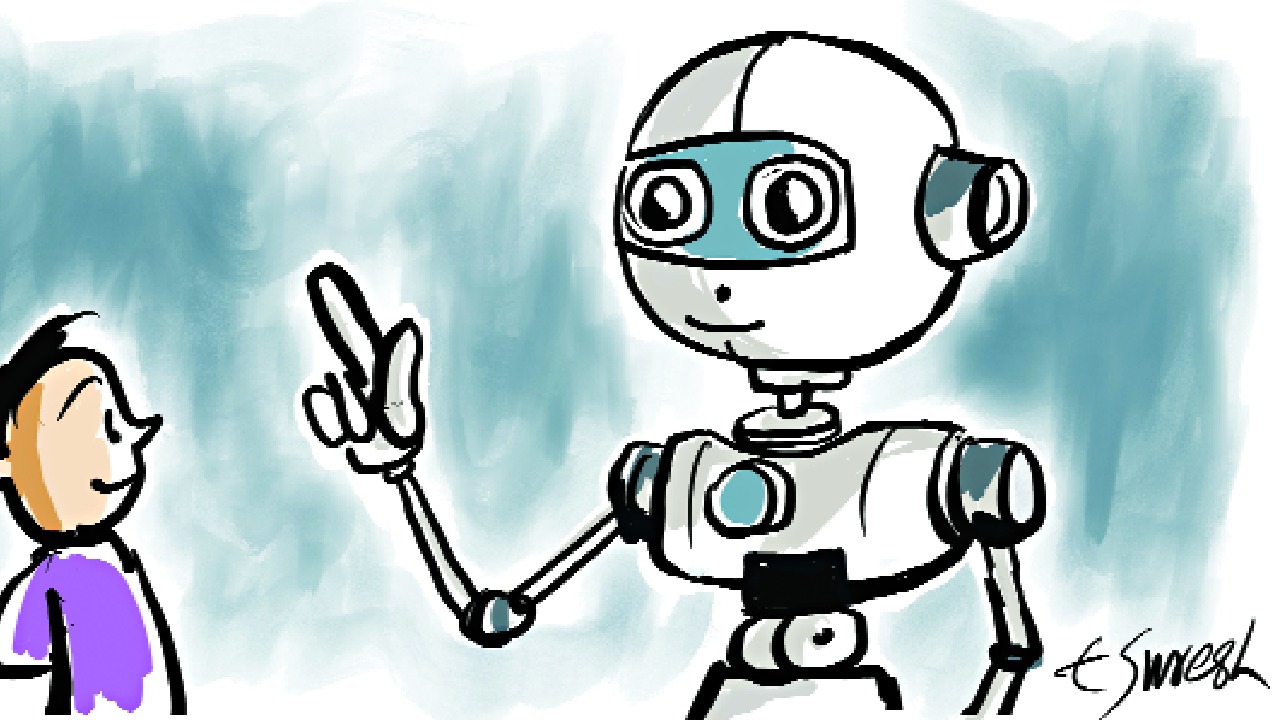
The India AI Impact Summit, held from February 16-21, 2026, attracted considerable attention not only within the nation but also internationally. It has inspired numerous young people, entrepreneurs, multinationals and, expectedly, the doyens of the world of commerce and business. The event enhanced India's global reputation as a lead nation, not only in accepting and utilising new knowledge, but also in its resolve to play a leadership role in creating new knowledge. It has adequate manpower imbued with scientific temper and dedicated to the 'search for Truth'!
Top experts gathered for the event were busy envisioning the implications of rapidly expanding new horizons after the arrival of AI, and these deserve incisive 360 ° scrutiny. Clearly, AI and its allotropes would have a comprehensive impact on every aspect of human life. The churning so generated has already begun to pose not only encouraging possibilities ahead but also the issues of considerable concern emerging before the learners, parents, societies and the nations. It has serious implications for international collaboration, which would become more demanding in the years ahead.
On the sidelines, the Summit also witnessed how a 'Robot Dog' - purchased from the market, but displayed and claimed as conceptualised, tested and produced by a private deemed university emerged as an embarrassing aspect in an otherwise inspiring environment. For anyone familiar with quality concerns, it would be agonising to wish it away as one of the glitches that creep into such major international gatherings. It would be imprudent on the part of the higher education system not to treat it as an eye-opener, particularly for all those entrusted with preparing the generations ahead in schools, colleges and universities. Unfortunately, this aspect did not receive the attention it deserved in the media, and learned articulations on it. The Robot Dog has educated us on the decline in the moral and ethical fibre, and also the need to scrutinise the scenario in terms of quality and excellence in education, and particularly higher education.
According to a tentative estimate, India has around 1.1 -1.2 billion mobile phones, and almost the same number of literate people, estimating roughly at a literacy rate of 80%. The universalisation of education is yet a distant dream, but the rise of the mobiles from around a mere one million only in 2001-02 to their universalisation indicates the pace of change that is the major characteristic of the 21st century. The mobile phone has successfully integrated itself as a necessary component of every individual's life. Consequently, the fascination now is no longer for the mobile phone, but for AI, chatbots, new gadgets, and much more! Just recall how the mere availability of a mobile phone and Wi-Fi transformed the entire learning scenario, the social scenario, and much more! As the mobile phone made its presence felt, children got glued to it! Serious concerns were expressed on various counts by concerned parents on how damaging its impact would be on their studies -- and more than that, on their growing up. COVID-19 changed it all just upside-down! Online teaching became a great support to ensure the continuity of the process of education and studies in tough times. Parental attitudes changed drastically! Scolding and frowning over too much time being spent with the mobile phone was replaced by coaxing children to spend more time on mobile studies! One had personally observed how society took it upon itself to come forward and to assist the children who needed the gadget support.
As AI gets 'universalised', the workstation scenario would again change drastically, and sharing will remain necessary even in the emerging context. Institutional collaboration would become much more prominent in the years ahead. In the changed environment, the quality of education, particularly of innovations and research, must attract serious attention.
During the period 2002-25, the IITs collectively applied for 6,558 patents, and got 2,806 approved. During the same period, the deemed to be university that attracted attention because of the Robot Dog applied for 2,233 patents, got only 2 approved! The comparative success rates are 42.8 and 0.8 per cent! This is an eye-opener for the regulatory bodies in higher education. AI is now knocking at the doors of every learning place- every school and university! The elusive - vehemently assured and repeatedly promised - equality of opportunity is not achieved merely by providing access and enrolment! India's initiatives in AI are being globally appreciated; our higher education institutions are moving ahead in the right direction with reasonably acceptable speed. The nation must ensure that the lack of resources does not impede the pace of change, and the intent of the NEP-2020 is put into practice, forgetting avoidable differences that creep in for non-academic considerations.
TheNEP-2020 assures the availability of motivated, energised and capable faculty. After five years of implementation, the scenario is still deficient in the availability of adequate faculty even in central government-managed institutions. The availability of faculty in state-managed universities is, to say the least, disappointing. In most of the cases, the Vice-Chancellor requires permission from the State government secretariat to make any appointment, even against the posts that are already sanctioned to the university! Most of these universities are starved of resources, both of infrastructure and personnel. Autonomy -exceptions apart - stands reduced to a cypher. About the private 'deemed universities', less said the better. The minority institutions established under the constitutional provisions are practically 'islands in isolation', they manage things in their own way.
If the universalisation of AI is to be achieved without depriving a sizeable number of young persons in higher education, even the school teachers have to be in a position on a regular basis, and in the right teacher-taught ratio! One of the disturbing aspects that directly and adversely impacts the quality is the decline in the credibility of the regulatory bodies across the board. Universities are the places where morals, ethics, values, national ethos, respect for diversity and much more are learned, apart from the prescribed syllabi! This just cannot be ignored! All these aspects are being mentioned as significant tangible pedagogical changes are already taking place at each stage, and at an unprecedented pace. Whatever is accepted in the policy must be put into practice in full and at the earliest. There are issues of equity and inclusion that just cannot be addressed if the gap in the quality of education imparted in institutions of higher education remains too glaringly disturbing! A nation that has created IISc, IITs, IIMs, just can't afford universities that may not have even a regularly appointed faculty of a couple of academics!
There are several other implications that could impact the employment scenario, social context, and aspects related to socio-cultural implications. The central government, through its various bodies and institutions, launched several varied encouraging programmes for orienting and re-orienting academics, which have created positive impacts, but institutions need an adequate number of academics also to ensure quality, innovations and excellence. Much more activity in the duration sector needs to become visible in the months and years ahead.
The author is an educationist, a Padma Shri awardee, and works in religious amity and social cohesion; views are personal