The plate next to mine that changed everything
I thought I understood good food-until Alu Sheddo Bhat proved me wrong. I remember the plate before I remember the city.
It was my first proper meal in Kolkata, and it came not as a dish, but as a sequence. I was sitting cross-legged on the floor, as is often the case in Bengali homes during Durga Puja, when eating becomes part ritual, part rhythm.
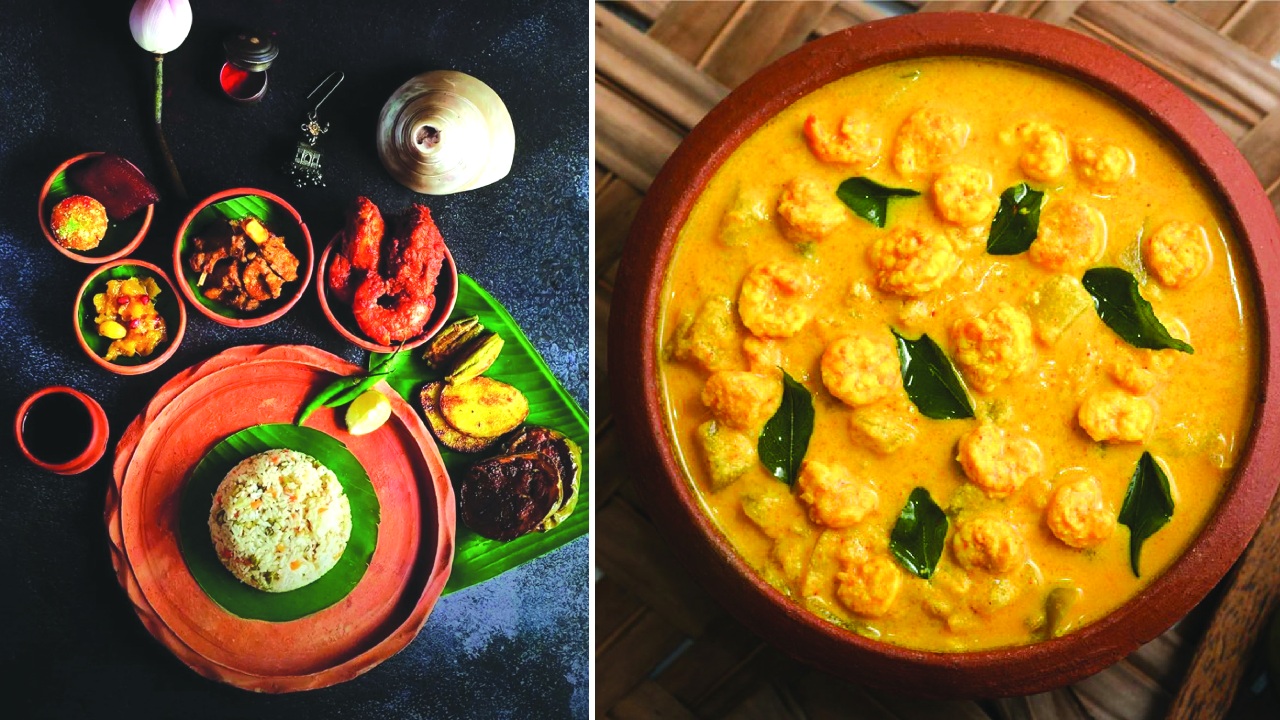
The rice arrived first-steaming, soft, almost luminous. Then everything else followed, without voice but with presence. Ilish mach, carrying that unmistakable sharpness Bengalis swear by. Prawns in a thick, coconut-laced gravy. Crisp vetki fish pakoras, golden at the edges, waiting to be broken. It was the kind of meal that tells you, without saying it, that you are somewhere important. I leaned into it. I wanted the full experience-the flavours, the abundance, the sense of occasion.
And then I noticed another plate. It sat beside the rest, silent, almost reluctant to be seen. Rice. A single green chilli. A drizzle of mustard oil. A pinch of salt. Two boiled potatoes. Nothing more. For a moment, I thought it had been placed there by mistake. Then I realised-it was mine.
There is a particular kind of disappointment that does not express itself. It does not complain. It does not protest. It simply lingers. I felt it then.
Not because I was hungry-I was not. But because something in me had already decided what a “real meal” should look like. And this did not match it. I did not say anything. No one around me would have noticed. But internally, I had already made a judgement.
This is not enough. That thought came quickly. Too quickly. I picked at the rice first, almost absent-mindedly. The mustard oil rose immediately-sharp, unfamiliar, slightly aggressive to a palate trained elsewhere. I hesitated with the chilli. The potatoes looked too plain, too soft, too… unfinished. I was surrounded by dishes that demanded attention. This one did not. So I almost ignored it.
“What happened?” someone asked, noticing my hesitation. I do not remember who it was-only the tone. Casual. Curious. Not defensive.
I gestured slightly towards the plate. “This… is it?” They smiled-not in offence, but in recognition. As if they had seen this reaction before. “Mix it properly. Use your hand. Otherwise, you will not understand it,” they said. So I did. I mixed the rice with the potatoes, pressing them together lightly. The mustard oil spread through it, carrying its sharpness evenly now. I broke a small piece of chilli, hesitated, then added it in.
The first bite was not fair. There was no immediate revelation, no sudden burst of flavour. But there was something else. Coherence. Everything sat where it was supposed to. Nothing dominated. Nothing competed. The mustard oil no longer felt aggressive — it felt necessary. The chilli did not overpower-it clarified. It was not a dish trying to impress me. It was a dish asking me to meet it halfway. What I was eating was Alu Sheddo Bhat-one of the most unassuming, and perhaps most misunderstood, expressions of Bengali food.
No complexity in the way I had defined it. No layering meant to surprise. No visible effort to elevate it. And yet, it carried something the other dishes did not. It carried certainty.
I had come to Kolkata expecting excess. The city has built its reputation on intensity-intellectual, cultural, emotional. During Durga Puja, that intensity becomes visible everywhere. Pandals rise overnight. Streets reorganise themselves around movement. Food multiplies, expands, overflows.
In that environment, it is easy to assume that more is always better. That value must be visible. That richness must declare itself. But Bengali food culture resists that assumption. Because alongside its celebrated dishes-the hilsa, the kosha mangsho, the chingri malai curry-exists another way of eating. One that does not rely on spectacle. One that does not need validation through variety. Alu Sheddo Bhat sits firmly in that space. It is not trying to compete with anything else on the table. It simply refuses to.
Native to Delhi, I had grown used to a different grammar of food. A meal was complete when it was-multiple dishes, contrasting textures, visible richness. Celebration meant abundance. Satisfaction meant variety.
That grammar works. But it is not universal. And that afternoon, I realised I had been treating it as if it were. There is a small arrogance in assuming that what feels complete to you must be complete for everyone. I carried that arrogance into that room without noticing it. It revealed itself in a single thought: this is not enough.
And it broke just as fast. Because the more I ate, the less I missed anything else. There was no absence. No gap waiting to be filled. The dish did not expand outward — it settled inward. It did not try to hold my attention. It changed how I paid attention. Travel is often described as exposure-to new places, new people, new cultures. But more than that, it is exposure to your own assumptions. That afternoon, I did not just encounter a new dish. I encountered the limits of my own understanding. I saw how quickly I assign value. How easily I confuse familiarity with correctness. How instinctively I trust what looks complex over what is quietly complete. The plate did not change. I did. Even now, when I think of Kolkata, I do not remember the grandeur first. Not the pandals, not the crowds, not even the elaborate spread that had initially captured my attention. I remember that smaller plate. The one I almost dismissed. The one that did not argue, did not explain, did not try to prove anything. The one that simply waited. Because the truth is — there was never anything missing from that meal. Only from the way I was looking at it.
The writer is a theoretical physicist at the University of North Carolina at Chapel Hill and a columnist on AI, infrastructure, and global systems; views are personal