The India-Israel-Iran conundrum
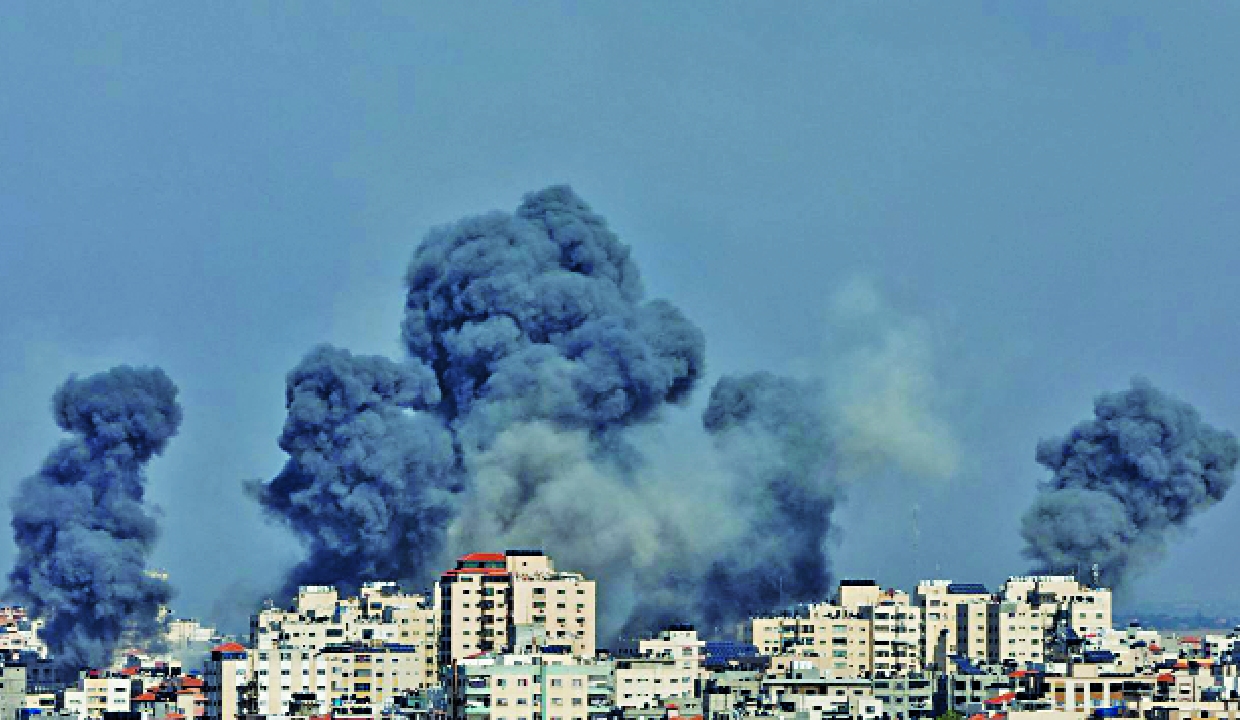
As West Asia enters a new phase of volatility, India’s priority must be safeguarding its territorial integrity, ensuring energy security, protecting sea lanes, and strengthening defence capabilities. In that calculus, alignment with Israel while maintaining working transactional relations with Iran better serves India’s long-term national interest
The current turbulence in West Asia has revived an old debate in New Delhi’s strategic circles: where should India’s long-term interests lie when tensions sharpen between Iran and Israel? While India has traditionally pursued a policy of balance, there are compelling arguments rooted in history, geopolitics, security cooperation, and strategic alignment that suggest India’s interests today align more closely with Israel than with Iran.
India’s civilisational links with Persia are deep and culturally significant. Yet history also carries harsher episodes. The 18th-century invasion of India by Nadir Shah culminated in the sack of Delhi in 1739, leaving scars that entered India’s historical memory. While modern Iran is not defined by that episode, it remains a reminder that geopolitical alignments are shaped by power realities, not sentiment.
In the post-independence era, India has fought multiple wars with Pakistan in 1948, 1965, 1971, and during the 1999 Kargil conflict. Throughout these crises, Iran’s posture has often been cautious or ambiguously sympathetic toward Pakistan, particularly in the context of Muslim solidarity. In contrast, Israel has steadily deepened security ties with India since full diplomatic relations were established in 1992. India and Israel share converging security concerns: terrorism, cross-border militancy, and hostile non-state actors. Israel emerged as a key defence supplier to India, especially during moments of urgency. During the Kargil conflict, Israel reportedly expedited surveillance drones and precision-guided munitions to India. Over time, cooperation expanded into missile defence systems, border surveillance technology, counter-terror training, and cyber security. Iran’s leadership, especially the late Supreme Leader Ali Khamenei, has in the past criticized India’s policies in Kashmir on humanitarian grounds. In speeches over the last decade, Khamenei has linked the plight of Kashmiri Muslims with other Muslim-majority regions and said the world should support their rights, framing it in moral and religious terms, though not always calling directly for political support or intervention against India.
The personal rapport between Indian and Israeli leaderships, notably between Narendra Modi and Benjamin Netanyahu, has further elevated the partnership to a strategic level. Today, Israel is among India’s top defence partners, alongside Russia, the United States and France. Intelligence sharing and homeland security cooperation have strengthened India’s counter-terror capabilities, particularly in Kashmir and along sensitive borders.
Iran’s Supreme Leader, Ali Khamenei, has on multiple occasions commented on Kashmir, sometimes invoking Muslim solidarity. Such statements, even if rhetorical, complicate India-Iran relations. In moments of heightened tensions between India and Pakistan, including more recent crises, Tehran’s messaging has often reflected a balancing act that leans toward religious solidarity narratives rather than unequivocal support for India’s sovereignty.
India’s Iran dilemma has long puzzled strategic thinkers. Despite repeated sectarian violence and attacks on Shia communities by Sunni-majority Pakistan, incidentally backed by Iran’s bitter rival in the Gulf region, Saudi Arabia, Tehran has often chosen to overlook these realities in favour of broader Islamic solidarity and geopolitical convenience. Pakistan’s military alliance with the USA further complicates the scenario for understanding Iran’s love for Pakistan when Iran and the USA have been battling a narrative war for the last five decades. Time and again, Iran has aligned with Pakistan on issues sensitive to India, particularly Kashmir, even when such positions run contrary to New Delhi’s core national interests. For India, Kashmir is a sovereign and non-negotiable internal matter. Any external attempt to frame it through a religious or sectarian lens inevitably creates diplomatic friction. Yet Iran has periodically echoed narratives that resonate more with Islamabad than with a country that has maintained civilizational ties with Persia for centuries.
The contrast with Israel is striking. Despite deep disagreements on several international issues, Israel has consistently respected India’s sovereignty and refrained from commenting on internal constitutional decisions, including the abrogation of Article 370. In diplomacy, strategic partnerships are often measured not merely by shared interests but by mutual respect for each other’s red lines. It is this distinction that continues to shape India’s complex balancing act between Israel and Iran. Iran has historically been an important energy supplier to India. However, India’s energy basket is diversified, including major imports from Saudi Arabia, Iraq, the UAE, the United States, and Russia. Sanctions on Iran have already reduced India’s oil imports from Tehran in recent years.
Meanwhile, Israel offers high-technology cooperation in sectors that are central to India’s future growth: agriculture, technology, water management, artificial intelligence, cyber security, and defence innovation. These partnerships are less vulnerable to sanctions politics and align with India’s aspiration to become a technology-driven power. India’s foreign policy doctrine has long emphasized strategic autonomy. Supporting Israel does not necessarily mean abandoning ties with Iran. India has invested in Iran’s Chabahar Port as a gateway to Afghanistan and Central Asia, balancing its continental ambitions against maritime constraints.
However, in a scenario where regional polarisation intensifies, India must assess where its core national interests are most secure. Israel has demonstrated operational reliability in defence cooperation and diplomatic alignment in multilateral forums. Iran, by contrast, remains constrained by sanctions, regional proxy conflicts, and an ideological foreign policy that occasionally intersects uncomfortably with Pakistan’s positions. Both India and Israel face threats from radical extremist networks. Cooperation in intelligence, surveillance technology, and counterinsurgency doctrine has been mutually reinforcing. Israel’s experience in border fencing, UAV technology, and missile defence has tangible applications for India’s national security. In contrast, Iran’s strategic engagement with groups across the Middle East, including proxy militias, reflects a security doctrine that India cannot endorse. New Delhi’s interest lies in stability, open sea lanes, and counter-terror coordination, not in proxy-driven escalation. India’s foreign policy must remain pragmatic, not emotional.
While civilisational ties with Iran endure and should be preserved, contemporary strategic realities suggest that Israel has been the more consistent and reliable partner in matters central to India’s sovereignty and security. As West Asia enters a new phase of volatility, India’s priority must be safeguarding its territorial integrity, ensuring energy security, protecting sea lanes, and strengthening defence capabilities. In that calculus, alignment with Israel while maintaining working transactional relations with Iran better serves India’s long-term national interest.
The writer is a public policy expert and columnist; Views presented are personal.