The empire forgets, Iran remembers
As Iran returns to the global spotlight, its football team has become an unlikely vessel for national memory, resilience and a civilisation’s refusal to forget
FIFA’s 20th-ranked team, ie, Iran, is not amongst the frontrunners to win the 2026 Football World Cup. Yet it is amongst the most talked-about teams participating. Much like the nation in the midst of its war with the United States of America and Israel, it is built around a solid control framework, with a highly defensive ability to counterpunch and transition through its battle-hardened players. It can spring surprises when least expected.
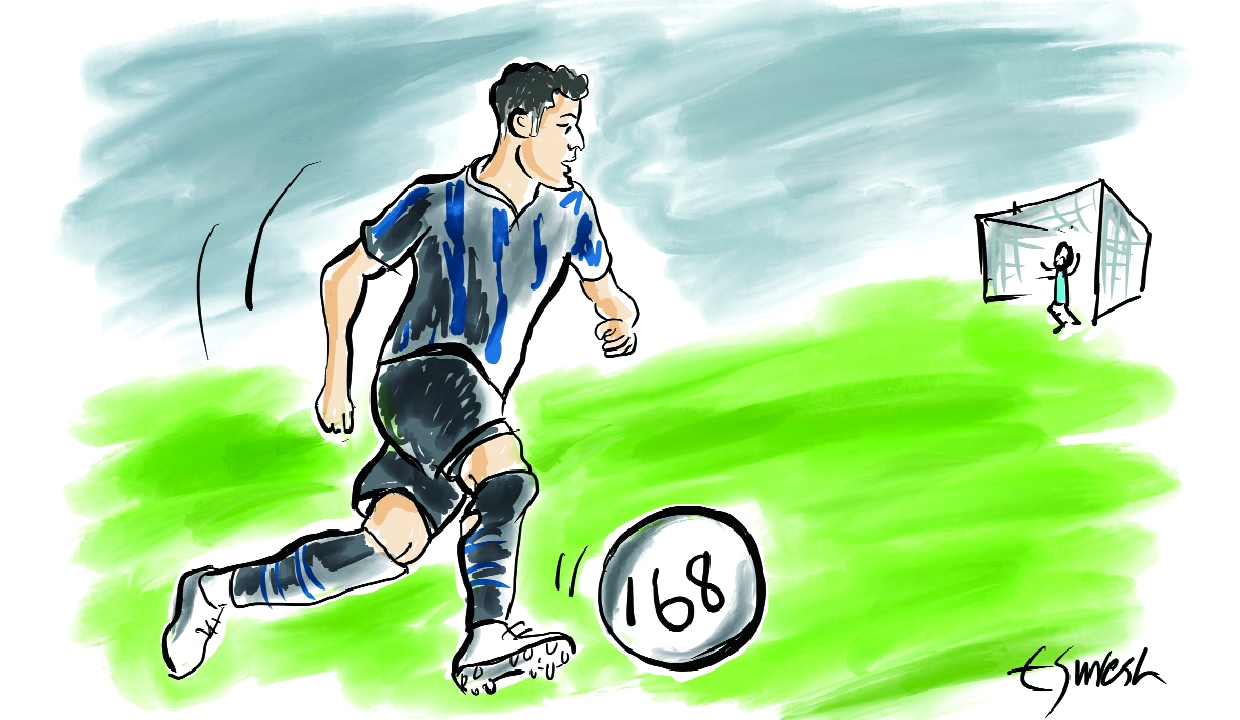
Perhaps the most symbolically poignant image to come out of the tournament was the sight of Iranian footballers wearing “#168” lapel pins, a silent homage to the memory of 168 schoolgirls killed in the deadly missile airstrike by the United States of America on a school in Iran. It was a continuation of an effort to memorialise the conscience and wounds imagined by a hurt (but not defeated) people. Weeks earlier, Iranian footballers had movingly held up pink and purple school backpacks while their national anthem played in a warm-up game in Turkey. Even Team Melli’s (Iranian National Football Team) anthem is a telling ode to perseverance, pride and fighting spirit, with the evocative lyrics “until the last breath”!
In Shi’a sensibility, symbolism and remembrance of suffering are fundamental because they keep alive the memory of Karbala and the moral struggle against injustice, wherein Karbala becomes the universal metaphor, as every age has its Husayn and its oppressors (in this case, the United States of America). The emotional power of grief, martyrdom and historical memory gives Shiite religious culture much of its distinctive character and resilience. Therefore, the emergence of a popular phrase, “Angels of Minab”, serves to internalise and institutionalise the tragic loss in national character and conscience. But such profound religio-cultural nuance is not expected to cut ice with an insensitive ignoramus like the President of the United States of America, Donald Trump. In the deep recesses of Iranian-Shiite belief systems, never (ever) forgetting and preserving memory is viewed as a way of giving enduring meaning to loss.
When two conflicting nations contest, each carries a book of grievances where the first page is never the same. Very selectively and conveniently, the American imagination of the tensions starts with the Iranian Revolution in 1979 in order to begin where innocence is easiest to claim. For the Iranian psyche, the US’s unwarranted meddling in its internal affairs started much earlier, in 1953, when a CIA-inspired coup deposed a popular nationalist, Mohammad Mosaddeq. For proud Iranians, the wound was not just the American interference but the deep-rooted sense that it was never fully acknowledged, let alone atoned for. History moved on; Iranian memory of humiliation and hurt did not.
There are countless instances of Americans dishonouring the Iranian nation, and yet those never feature in the Western narrative. From supporting the Shah’s dictatorial excesses, to supporting Saddam Hussein in the Iran-Iraq War (despite the known usage of chemical weapons), shooting down Flight 655 that killed 290 innocent civilians, perpetuating debilitating sanctions, reneging unilaterally on the Iran Nuclear Deal despite Iran meeting all provisions of the agreement, to killing the likes of General Qasim Soleimani, who was at the forefront of taking on ISIS — these remain unhealed scars that haunt the Iranian psyche, especially the fact that Americans act as if these incidents never happened. Little wonder that while the average ignorant American wonders why Iranians distrust them so much, the average Iranian wonders why Americans are surprised at the lack of trust at all. Empires remember the wound; others remember the hand that struck first.
The role of hurt and suffering is integral to Shiite identity. They unfailingly remember the suffering endured by Ali ibn Abi Talib, Fatimah, Hasan ibn Ali, Husayn ibn Ali, the family of the Holy Prophet after Karbala, etc. In many ways, these footballers seek to immortalise the sacred memory of 168 little lives by identifying emotionally with their worldly absence as part of their “martyrological” worldview.
For the overwhelming Shia majority in Iran, memory (Dhikr) is a moral duty — the lesson of Karbala is: “never forget what happened when people looked away”. That is exactly the message these Iranian footballers bring to television screens as they beseech the fleeting humanity in most, who would rather “forget the past and move on”, as is the wont of modern times. However, for the Iranian Milli, the players may wear the jersey. The 168 little schoolgirls wear the memory. Together, they walk onto the pitch and shame a boorish Empire.
Following the much-bandied peace talks, a semblance of normalcy may return before trust returns. Nations can sign peace treaties, but in a civilisational land like Iran, memories are respected, nurtured and carried for generations. The world at large may see the reopening of the Strait of Hormuz and the resumption of flight routes when the war finally ends and the guns fall silent, but historical wounds will fester and endure until they are acknowledged. History is equally instructive that a small-spirited and uncouth leader like Donald Trump will never admit the wrong and injury inflicted upon Iranian pride. Thankfully, the Iranian football team is seemingly cut from a better cloth, and they will never forget.
The world at large may see the reopening of the Strait of Hormuz and the resumption of flight routes when the war finally ends and the guns fall silent, but historical wounds will fester and endure until they are acknowledged
The writer is a former Lieutenant Governor of the Andaman and Nicobar Islands and Puducherry, and a military veteran; Views presented are personal.