Super El Niño: A brewing climate shock
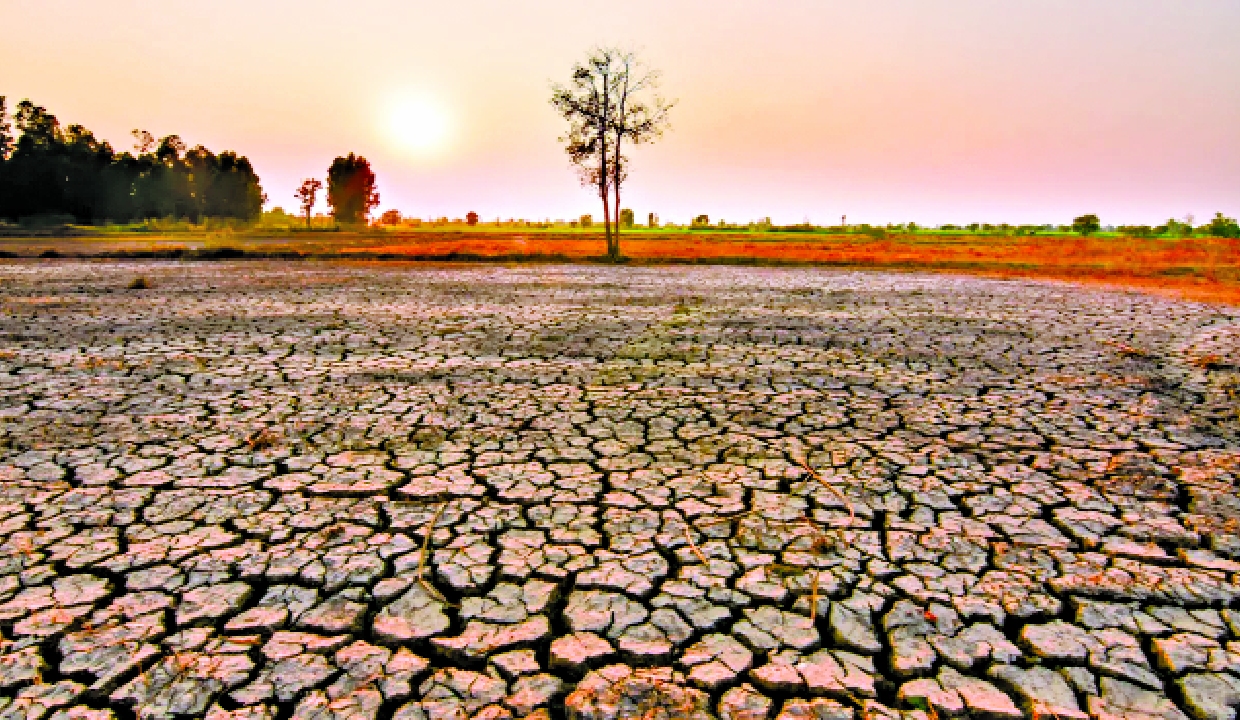
There is a high probability of El Niño forming later this year. With global temperatures already near record highs, this evolving pattern could disrupt monsoons, strain agriculture, and trigger extreme weather worldwide—placing economies on edge.
National Oceanic and Atmospheric Administration (NOAA) on April 9, has predicted that there is 61% chance that El Nino will be formed in late summer and fall towards the end of this year and there is 33% chance that it would be a strong one, typically known as "Super El Nino". There have been only 5 such El Nino have been registered since 1950 and the last one was formed in 2015-16. The Copernicus Climate Change Service has also confirmed that 2026 March has registered second highest Sea Surface temperature, which points towards the possibility of El Nino conditions forming later inn summer this year.
April 9, advisory of NOAA has confirmed that an eventful La Nina winter, when powerful storms have disrupted the lives of the people on American and European continents, is concluded and Pacific Ocean has shifted into a neutral pattern such that Sea surface temperature in central and east-central tropical Pacific has become average.
La Nina, neutral and El Nino are three phases of El-Nino southern oscillation (ENSO) cycle formed on account of natural changes in Pacific Ocean temperature and atmospheric circulation. El Nino typically means less activity in Atlantic basin and more activity in central and eastern equatorial Pacific. During El Nino cycle more tropical cyclones is experienced in Pacific and lower than the average in Atlantic. A super El Nino acts as a shield bringing higher pressure and vertical wind shear that suppresses hurricane formation in Atlantic. The weather pattern in this cycle in the equatorial Pacific region experiences droughts, floods, extreme heat, hurricanes and declining Sea ice. The sea surface temperature rises by more than 2 degrees Celsius, resulting in hotter than average summer in Western United States, parts of Africa, Europe and India. Further, the tropical countries like Caribbean islands and Indonesia may experience severe drought and extreme heat.
The atmosphere is likely to trap more greenhouse gases and increase the concentration of carbon dioxide and 2027 is set to register record rise in average global temperature. So far 2024 has been the warmest, and now 2027 is likely to breach this. The experts have also forecasted that the super El Nino of 2026-27 is likely to disperse more heat than what three earlier super El Nino events in 1982-83, 1997-98 and 2015-16 have dispersed. The unusual heat and humidity may intensify the flow of atmospheric moisture. As the warmer atmosphere has huge amount of moisture carrying capacity, it will bring excessive rains and flash floods in the region. Also the heat released in super El Nino event remains trapped in the atmosphere due to increasing concentration of greenhouse gases, and thus every cycle of El Nino stair-steps the global rise in temperature.
The above average summer temperature and humidity may bring downpours in hills and a thunderstorm season in the plains of Western United States. Along with Central Africa, Australia, Indonesia, Philippines, central America, Brazil and south Pacific islands, the central and northern part of India is likely to have monsoon suppressed causing a severe impact on agriculture production.
Indian Meteorological Department (IMD) has also issued advisory confirming the predication of NOAA and the strong link between Pacific Ocean condition and India's June to September rainfall. It has suggested the weakening of monsoon this year, as 7 out of 10 El Nino years have registered poor monsoon. Besides the human health in the region will be impacted, the El Nino cycle has potential to disrupt the lives and livelihood of the people in the region. Unpredictable disruptions are also expected in global travel.
Indian Ocean Dipole (IOD) may turn favorable in August, which may counter the impact of El Nino in second half of monsoon season. However, IOD is generally unpredictable, but the loss of snow covers in 2026 (January to March) in northern hemisphere may brighten the chances of southwest monsoon.
Historically El Nino brings lower GDP growth due to a contraction in agricultural output, affecting overall economy. The 2023-24 El Nino, which was not a super El Nino, had caused a drop of 6.1% in agriculture production of the country. Promoting drought resistant crops and sustainable farming practices as well as soil and water conservation measures are the basic mitigation measures suggested for farming communities. IMD must continue to predict rainfall trends as well as issue of early warning.
Keeping a check on the water levels of the reservoirs and managing it for urban water supply, irrigation and power projects will have to be monitored by central and state governments till Pacific attains a neutral condition and El Nino conditions vanish in later part of 2027. Some urban and rural areas may encounter drinking water problem, which has to be managed by agencies judiciously. A cap on the rent of the water tankers may be imposed to ensure that water-tanker mafias are not allowed to take advantage of the situation and the population is not put further into the hardships.
The rising temperature of the planet can lead to devastating wildfire in different regions. While the burning of forests of California, Boreal and Amazon forests can damage the global lung spaces by reducing the capacity of Carbon dioxide sequestration, the continued fire can disrupt the lives and livelihood of the communities' dependent on forest resources.
Strait of Hormuz is already a choke point, where 20% of oil and gas from GCC countries flows to the world market. A sizable proportion of fertilizer and helium also flow through this point. Many economies have taken a hit owing to the trade disruption at the strait. El Nino is predicted to create another choke point at Panama Canal.
El Nino events are associated with rainfall deficit in Central America, which may directly impact water levels in Gatun lake - a fresh water reservoir that powers the lock system of Panama Canal. During El Nino driven drought experienced in 2023-24, the transit of ships through it was slashed down to 24 vessels per day. It also faced a shipping draft restriction of 44 feet, permitting vessels navigating shallower ports. These vessels transported reduced cargo due to fallen water level in Gatun Lake. The prolonged disruption had ripple effect in global supply chains, driving congestion, higher transit cost and several re-routing of the cargo vessels. However, a shift to La Nina and a sustained rainfall restored water level in Gatun reservoir and the Canal could transport nearly 36 vessels with full 50 feet draft. NOAA has forecasted that 2026-27 El Nino could again reduce water level in Gatun reservoir and bring down the daily transit slots as well as the cargo loads.
Once the number of vessels are restricted, the powerful countries defy the order and attempt to control the canal. Trump in his second term has already expressed once to take over Panama Canal. This was to counter China - the country which booked maximum number of slots for its vessels to transport cargo during the water stress period in 2023-24. The catchments for Gatun Lake spreads over 2313 sq km and is fed by Chagres, Trinidad, Ciri Grande Rivers. Since US is a dominant force in the region, it must add the Indio River to water supply system to counteract low water levels during drought. World leaders should also protect the tropical rainforests included in Soberania National Park, Barro Colorado Island and Chagres National Park. If these forests are continued to be plundered by local communities for expanding agriculture and beef production, El Nino can disrupt the global trade and damage the economy considerably.
El Nino events are associated with rainfall deficit in Central America, which may directly impact water levels in Gatun lake - a fresh water reservoir that powers the lock system of Panama Canal
B K Singh ex Head of Forest Force, Karnataka and teach "Economics" in Karnataka Forest Academy; Views presented are personal.