Remembering valour through the cuisine of Mewar
Maharana Pratap Jayanti is a remembrance of courage, honour, and the unbending spirit of Mewar. In the civilisational memory of Bharat, Maharana Pratap occupies a place of rare reverence because his life was shaped not by comfort or compromise, but by duty towards his land, his people, and his inherited values. He belonged to the Sisodia Rajput house of Mewar, a lineage that carried within it the ideals of sovereignty, sacrifice, restraint, and dignity. His name continues to evoke the rugged hills of the Aravallis, the soil of Haldighati, the loyalty of Chetak, the sacrifice of warriors, and the moral strength of a ruler who chose hardship over submission. His Jayanti, therefore, is more than an occasion of public tribute. It is a moment to reflect upon the ideals of self-respect, courage, and cultural pride that continue to inspire generations. These values also find reflection in the culinary traditions associated with the land of Mewar, where simple yet nourishing foods, shaped by a demanding landscape and a spirit of self-reliance, stand as reminders of the resilience and fortitude that Maharana Pratap came to embody.
Born in 1540 at Kumbhalgarh, Maharana Pratap inherited a kingdom that stood at the heart of one of the most difficult political periods in medieval Indian history. While Kumbhalgarh is not associated with one exclusive ceremonial dish, its location within the Mewar landscape allows the remembrance to be naturally connected with the sturdy grains, preserved foods, rustic breads, and nourishing preparations of the wider regional kitchen of Mewar and Rajasthan. Mewar was not merely a territory to be ruled, but a sacred responsibility to be protected. At a time when imperial expansion tested the autonomy of many kingdoms, Maharana Pratap refused to place convenience above honour. The Battle of Haldighati, fought in 1576, became the defining episode of his life, not only because of its military intensity but because of what it came to represent. The remembered story of the wounded Chetak carrying his master to safety, Jhala Maan’s sacrifice, the support of the Bhil communities, and the continued resistance from the forests and hills of Mewar all became part of a larger memory of resilience. Maharana Pratap Jayanti honours this inheritance through processions, floral tributes, cultural programmes, and gatherings, yet the remembrance becomes deeply personal when it enters the home through food.
The occasion does not carry one fixed ritual menu followed uniformly across households, yet its spirit finds natural expression in the food culture of Mewar and the wider culinary traditions of Rajasthan. Rajput kitchens carried a distinctive balance of austerity and refinement. They fed warriors, families, travellers, guests, and communities in a landscape where heat, distance, scarcity, and mobility shaped daily life. Food in this tradition was never merely indulgence, but nourishment that sustained strength, hospitality offered with dignity, and memory preserved through practice.
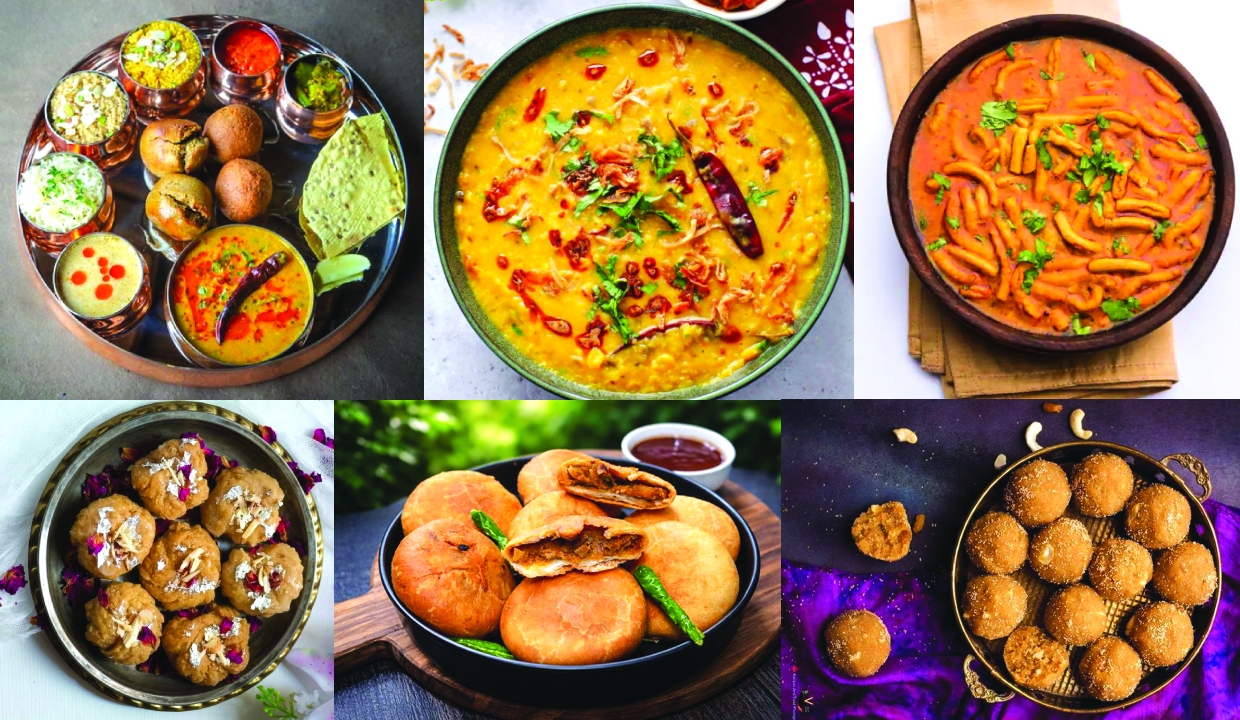
Among the most iconic dishes associated with Rajasthan is dal baati churma, a preparation that carries the character of the land. The baati is made from wheat flour kneaded with ghee, salt, and sometimes semolina or carom seeds, shaped into firm balls, and baked until the outer layer becomes crisp while the inside remains dense and nourishing. Once cooked, the baati is cracked open and enriched with ghee. It is served with panchmel dal, prepared from a combination of lentils such as moong, chana, urad, masoor, and toor, simmered until soft and tempered with cumin, asafoetida, garlic, red chilli, turmeric, and coriander. The sweet companion, churma, is made by crushing baati with ghee, jaggery or sugar, cardamom, and nuts. Together, the three create a meal that brings together grain, pulse, fat, and sweetness in a form that is both celebratory and sustaining.
Gatte ki sabzi, an iconic dish of the region, is prepared by kneading gram flour with spices, curd or oil, rolling the dough into cylinders, boiling them, and then simmering the pieces in a curd-based gravy fragrant with chilli, coriander, cumin, and turmeric. A richer festive variation, Govind gatte or shahi gatte, is often prepared by stuffing the gram flour dumplings with khoya, paneer, dry fruits, or nuts before cooking them in a creamy gravy. Ker sangri, one of Rajasthan’s most distinctive dishes, combines desert berries and beans that are soaked, boiled, and cooked with mustard oil, red chilli, amchur, turmeric, coriander, and sometimes raisins. Its tangy and earthy flavour carries the wisdom of arid lands, where preservation and resourcefulness became essential to sustenance.
The breads served with these dishes deepen the connection with the soil of Rajasthan. Bajra roti, made from pearl millet flour, is shaped by hand, cooked on a hot griddle, and often finished over flame before being brushed with ghee. It is earthy, strong, and closely tied to rural food culture. Missi roti, prepared with wheat flour and gram flour, is flavoured with cumin, ajwain, chilli, coriander, and sometimes onion, making it a fragrant companion to curd gravies and dry vegetables. Makki roti also appears in seasonal meals and is often enjoyed with ghee, jaggery, or robust curries. These breads remind us that the food of Mewar was not confined to royal courts alone but was also rooted in fields, homes, camps, and journeys, where nourishment had to be practical and wholesome. Rajasthani kitchens also transformed stored ingredients into preparations of remarkable flavour. Papad ki sabzi is made by simmering roasted or fried papad in a curd gravy tempered with cumin, asafoetida, red chilli, and coriander. Mangodi ki sabzi, prepared from sun-dried lentil dumplings, is cooked with onion, tomato, curd, and spices until the dumplings soften and absorb the flavour of the gravy.
Rabodi ki sabzi, made from dried sheets prepared with maize, buttermilk, or lentil mixtures according to local practice, carries the imprint of preservation, patience, and regional skill. Rajasthani kadhi, made from curd and gram flour, is slow-cooked with turmeric, fenugreek, mustard seeds, and dried red chillies, and is sometimes enriched with pakoras for a festive meal. These dishes reveal a culinary tradition that knew how to prepare for uncertainty without losing refinement. Festive snacks add warmth to gatherings held around Maharana Pratap Jayanti. Pyaaz kachori, with its flaky crust and spiced onion filling, is prepared by stuffing dough with slow-cooked onions, fennel, coriander, chilli, and amchur before deep frying it until crisp. Mirchi vada, made with large green chillies filled with spiced potato and coated in gram flour batter, brings heat and boldness to the table. Kalmi vada, prepared from soaked and coarsely ground chana dal mixed with spices and herbs, is fried until crisp outside and grainy within. Moong dal pakori, served with garlic chutney, green chutney, or curd, adds another familiar note of hospitality. These dishes create conversation, welcome guests, and allow remembrance to unfold through shared food.
Rajput cuisine also includes a proud non-vegetarian tradition shaped by royal kitchens, martial life, travel, and the need for bold, nourishing food. Laal maas remains one of Rajasthan’s most celebrated meat dishes, prepared with mutton, curd, garlic, whole spices, and deep red chillies, especially Mathania chillies where available. Its heat and colour give it a distinctive personality. Safed maas offers contrast through a pale and rich gravy made with curd, cream, cashew, poppy seeds, cardamom, pepper, and sometimes almond paste. Maas ke sooley brings a refined grilled character, where meat is marinated with curd, ginger, garlic, spices, and tenderising ingredients before being roasted or grilled until smoky and succulent. From the lake-influenced culinary traditions of Rajasthan, machhli Jaisamandi brings another regional dimension, with fish marinated in green herbs, ginger, garlic, coriander, and mint before being cooked into a lively preparation. Together, these dishes reflect the range of Rajput culinary heritage, from intensity and strength to elegance and restraint.
Sweets complete the commemorative table by bringing warmth, affection, and celebration to the meal. Ghevar, made from a thin batter of flour, ghee, and water poured into hot ghee to create a honeycomb disc, is soaked in sugar syrup and often topped with rabri, saffron, and nuts. Malpua, prepared from flour, milk, fennel, and sometimes khoya or banana, is fried and dipped in syrup before being served with rabri. Mohanthal, made by slowly roasting gram flour in ghee and setting it with sugar syrup, cardamom, and nuts, carries the depth of a traditional sweet prepared with patience. Besan chakki or besan barfi adds a dense, fragrant sweetness that suits ceremonial meals and family gatherings. The sweeter side of Rajasthan also includes dishes that feel close to household memory. Lapsi, prepared by roasting broken wheat in ghee and cooking it with jaggery or sugar, cardamom, and dry fruits, is simple, festive, and deeply comforting. Churma laddoo transforms crushed baati or roasted wheat flour into round sweets bound with ghee and jaggery, often enriched with nuts and poppy seeds. Mawa kachori, filled with sweetened mawa, nuts, and cardamom, fried until golden, and dipped in sugar syrup, adds a more indulgent Rajasthani note. Rabri, made by reducing milk slowly until thick and layered, may be served on its own or with malpua and ghevar. Balushahi, crisp outside and soft within, completes the sweet section with the slow craft of traditional Indian confectionery.
The beverages that accompany such a meal are most meaningful when they remain rooted not only in Mewar’s climate and memory, but also in the wider food culture of Rajasthan. Bajre ki raab or bajre ki raabdi, made with pearl millet flour and buttermilk or curd, reflects nourishment, pastoral life, and desert wisdom. It may be served warm or in a cooling form according to season and household practice. Imli ka amlana brings a tangy Marwari note through tamarind, black salt, pepper, cardamom, and mint, refreshing the palate after rich food. Makhaniya lassi, especially associated with Jodhpur, offers a thicker and more indulgent drink with its creamy curd base and festive sweetness. Kanji vada, made with fermented mustard-flavoured water and lentil vadas, brings sharpness, digestion, and regional character to a heritage spread. Khatti chaach, seasoned with roasted cumin, salt, and herbs, remains one of Rajasthan’s most honest expressions of everyday cooling wisdom, balancing the weight of ghee-rich meals while reflecting the practical intelligence of the region.
Across households and communities, these dishes may appear in different combinations, yet they carry the same message of remembrance. A simple meal of dal baati churma, ker sangri, gatte ki sabzi, bajra roti, and lapsi can become a dignified vegetarian tribute. A more elaborate spread may include laal maas, safed maas, maas ke sooley, or machhli Jaisamandi, reflecting the martial and royal dimensions of Rajput food culture. Community gatherings may serve kachoris, vadas, sweets, and chaach, while families may prepare only a few dishes and still preserve the spirit of the day. The importance lies not in abundance alone, but in the meaning attached to the meal. When elders explain why bajra mattered, why preserved foods were valued, why ghee carried strength, why hospitality was linked with honour, and why Maharana Pratap chose hardship over surrender, cuisine becomes a form of education.
Ultimately, I believe the cuisine associated with Maharana Pratap Jayanti is far more than a regional spread. It is a living reminder of the values that shaped Mewar and continue to inspire Bharat. The dishes of Rajasthan carry stories of courage, discipline, resourcefulness, hospitality, and pride. They remind us that cultural memory survives most powerfully when it is lived within families, taught to children, and carried forward through ordinary acts of preparation and sharing. In preserving these culinary traditions, we preserve not only recipes but also the dignity of Rajput hospitality, the resilience of Mewar, and the spirit of a ruler who placed honour above comfort. It therefore becomes our collective responsibility to ensure that Maharana Pratap Jayanti continues to live not only in public tributes and historical memory, but also in kitchens where food is prepared with reverence, served with pride, and passed on to future generations as an inheritance of courage, culture, and civilisational strength.
The writer is Secretary, Cuisine India Society; Views presented are personal.