Religion and Atheism: Two Sides of the Same Coin
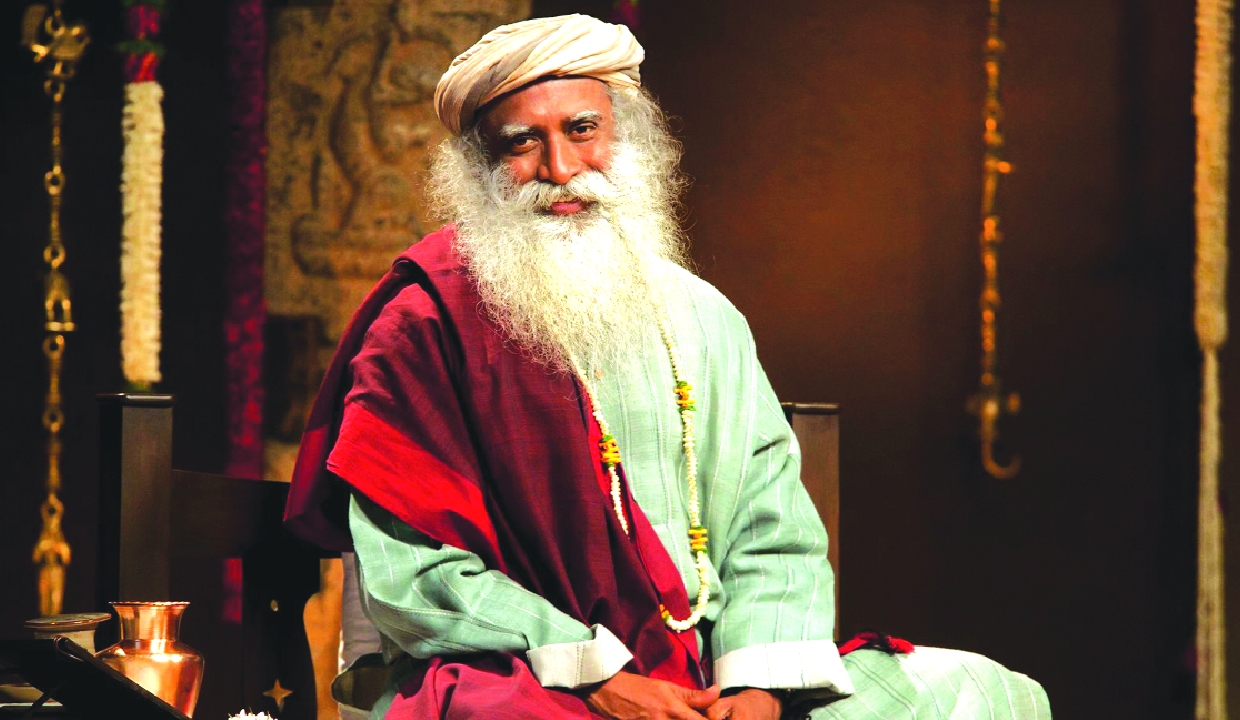
On a certain day, Gautama, the Buddha, was sitting in a congregation of his disciples, and a man came. He was a great bhakta, or devotee, of Rama. All his life, he did, “Rama, Rama, Rama.” Nothing else; his life was Rama. He not only went to the temple, but he also built many temples for Rama. But as age was passing away, a little doubt had come. He knew God existed, but he also saw many people who did not believe in God living well. They were enjoying all the pleasures of life and living more happily than he was.
He thought, “Suppose there is no God, my whole life will go to waste.” So, he wanted to know, and there was an enlightened being here; this was the opportunity. But after being recognized as a great devotee, how could he come and ask whether there is a God or not? So, early in the morning before the sun had risen, he stood in the shadows and asked the question, “Is there God?” Gautama looked at the man and said, “No.” There was a big relief in the disciples because this turmoil was on in everyone’s mind. Many a time, they had posed this question to Gautama, but whenever such questions came, Gautama just became silent and never answered. For the first time, he said an emphatic “no,” and there was a big relief.
In the evening, another man came. He was a charvaka. Charvakas are out-and-out materialists; they do not believe in anything that their two eyes cannot see. This man had proven to thousands of people that there was no God. But then, age was passing away, and a little doubt had come, “Suppose there is a God? I have proved to everyone that there is no God. What if he is there? When I die, will he leave me? And anyway, people say God is very vengeful.” So, a little fear had come.
He came in the evening after the sun had set, and once again, standing in the shadows, asked the same question, “Is there God?” Gautama looked at the man and said, “Yes.” Once again, there was turmoil among the disciples. In the morning, he had said, “No God,” and they were all happy. In the evening, he said, “There is God.” Again, there was trouble. What was the idea anyway?
The idea was to destroy all belief. Because belief means you do not know. If you know something, you do not have to believe it; you simply know it. And belief systems are of different kinds; they can be theistic or atheistic. One believes there is God, another believes there is no God, but there is no difference between the two; both believe something that they do not know.
Essentially, a belief system comes from a basic problem that you are not sincere enough to admit that you do not know. If you want to seek something, the first and foremost thing is that you realize that you do not know. When you see this, the longing to know arises, and seeking follows. Then there is a possibility of knowing.
“I do not know” is a tremendous possibility. The moment you kill it with some kind of belief that is convenient for you, you are destroying all possibilities of knowing. I want people to remain in a way where they come to terms with, “What I know, I know. What I do not know, I do not know.” Then seeking will start, and a whole spiritual process can be set forth.
Somewhere, at some point, all religions started as a spiritual process. But in their eagerness to organize, they lost the fundamentals of it. Religion is an inward step. It is a very intimate and personal process. Everyone has to pursue it in his own way; you can never organize it into a large group. You can help someone else, but fundamentally, this inward step can only be taken by an individual.
This is why in the East, spirituality or religion was never an organized process. Organization was only to the extent of making spirituality available to everyone — there was never an organized conquest. A farmer worshipped his plough; a fisherman worshipped his boat; people worshipped whatever aspect of life they related most with, and that was perfectly fine.
Essentially, in the East, religion is about you; it is not about God. Religion is about your liberation, and God is just one more tool to find your ultimate liberation. The purpose is to create reverence in a person. What you worship is not important. It is not about whether you like something or dislike it. It is just that you learn to bring reverence into your life. The object of reverence is irrelevant. If you make reverence the quality of your life, then you become far more receptive to life. Life will happen to you in bigger ways.
So, in indigenous cultures, religion was never juxtaposed against the state. In the past, religion was far more important to people than it is now, but still, there were no theocratic states; the ruler had his religion, and the subjects had the freedom to follow theirs. There was no conflict because people did not look at religion as an organized process. Today, organization is coming in even in Eastern cultures because of the examples of very ambitious and conquering religions that came from outside.
These days, politicians are openly and proudly calling themselves “Hindu leaders,” “Muslim leaders,” or “Christian leaders.” Once this is the situation, religion becomes a matter of number games and another disguise for politics.
Religion can be made into a deep science, the most fantastic science, because it is an inner science. The quality of your life and the quality of the world simply depend on how you are within yourself, not on how external situations are. Every religion has emphasized that the only place to seek is within, not somewhere else.
Once you are on an inward process, you are in no one’s way. There is no room for conflict, harmony is the only way you can be. So, religion is fundamentally aimed at making you experience that everything-the whole life process-is a part of you. When you experience everything as a part of you, harmony is the only way you can be. There is simply no other way to be. That is the basis of all religion.
And when inner turmoil stops, there will be no turmoil in society. Naturally, it will stop. Addressing the inner turmoil is a much wiser thing to do than trying to pacify social situations; that can be done for immediate purposes, but the fundamental solution is always within. When a person has a sense of completeness within themselves, then they will be in harmony. And a true revolution is only when man is willing to change himself. “I am willing to change,” this revolution will bring harmony.
Ranked amongst the fifty most influential people in India, Sadhguru is a Yogi, mystic, visionary and a New York Times bestselling author. Sadhguru has been conferred the Padma Vibhushan by the Government of India in 2017, the highest annual civilian award, accorded for exceptional and distinguished service. He is also the founder of the world’s largest people’s movement, Conscious Planet- Save Soil, which has touched over 4 billion people; Views presented are personal.