India’s journey to becoming the world’s most populous country
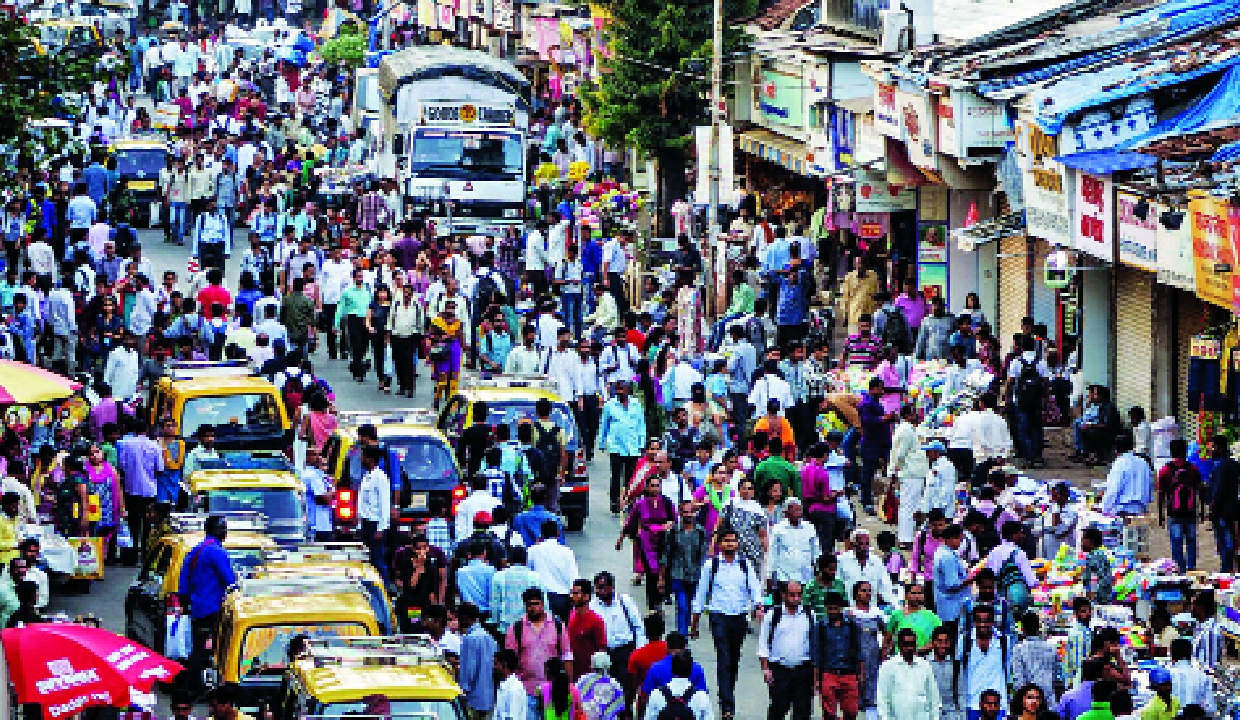
India’s population has more than quadrupled since gaining Independence in 1947, growing from approximately 34 crore (340 million) people to over 147 crore (1.47 billion) in 2026. This monumental growth has reshaped the nation’s economy, resources and governance, making India the world’s most populous country. The growth trajectory can be divided into three distinct historical phases
Phase 1: The ‘Population Explosion’ (1951–1981)
High Fertility, Crashing Mortality: Independence brought massive investments in public health, sanitation, and food security through the Green Revolution.
The Surge: While the birth rate remained high, the death rate dropped sharply.
Rapid Growth: The population grew from 36.1 crore in 1951 to 68.3 crore in 1981, nearly doubling in just three decades.
The Peak: The decade of 1961-1971 recorded the highest decadal growth rate in India’s history at 24.8 per cent.
Phase 2: Deceleration (1981–2011)
Flattening the Curve: Driven by rising female literacy, economic development, and robust national family welfare programmes, the annual growth rate peaked and began a steady decline.
The Billion Milestone: Despite a slowing percentage growth rate, the absolute population base was so large that the country crossed the 1 billion mark in 2001.
The 2011 Census: The population was officially recorded at 121 crore, showing a dropped decadal growth rate of 17.7 per cent.
Phase 3: Stabilisation & Regional Asymmetry (2011–Present)
Below Replacement Level: According to recent National Family Health Surveys (NFHS-5), India’s Total Fertility Rate (TFR) has dropped to 2.0 children per woman. This sits below the standard population replacement level of 2.1.
Two Speeds of Growth: Clear regional divides have emerged. Southern states (like Kerala and Tamil Nadu) reached stabilisation early and are dealing with an aging demographic. Conversely, northern states (like Bihar and Uttar Pradesh) drive the current expansion due to a massive base of young adults.
The Demographic Dividend: India is currently at a unique economic vantage point with a median age of approximately 29 years, meaning 68 per cent of its population is of working age.