Regulate, not merely adjudicate
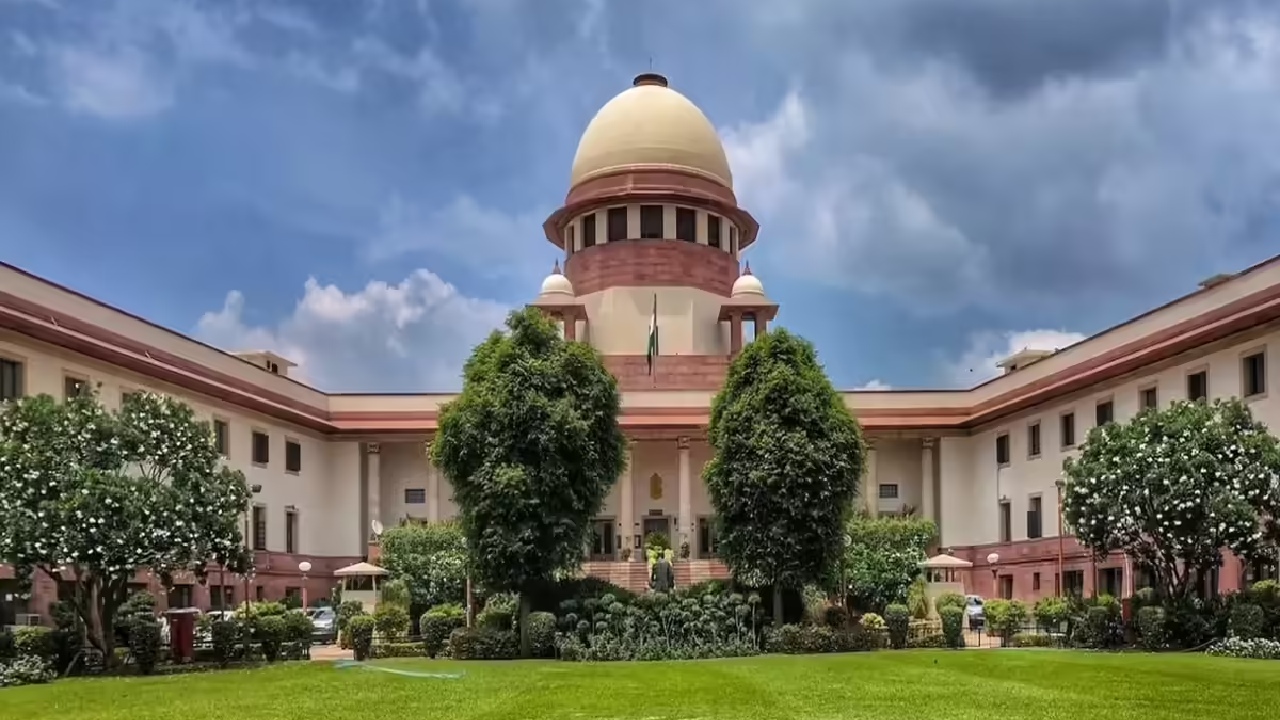
The recent observations of the Supreme Court on the functioning of Real Estate Regulatory Authorities (RERAs) should serve as a national wake-up call. When the Chief Justice of India remarks that some authorities appear to be doing little “except facilitating builders in default” and even questions whether “it may be better to abolish this institution,” the credibility of the entire regulatory architecture stands challenged.
RERA was enacted in 2016 with enormous public hope. For the first time, India’s real estate sector came under a statutory framework promising transparency, accountability, escrow safeguards, defined timelines, and parity between buyers and developers. On paper, it remains one of the strongest consumer-protection laws in any sector. Yet, nearly a decade later, the lived experience of millions of homebuyers suggests a starkly different reality: regulatory promises have not translated into timely delivery, enforceable justice, or restored trust. The gap between law and implementation is now impossible to ignore.
A sector once defined by chaos
Before RERA, real estate operated in a near regulatory vacuum. Project launches occurred without mandatory registration. Funds collected from buyers were often diverted to unrelated projects. Delivery timelines were aspirational rather than binding. Buyers faced harsh penalties for delayed payments, while developers could delay possession for years without meaningful consequences.
Consumer forums were the only recourse, but litigation often took longer than project delays themselves. Relief, when granted, rarely compensated for financial loss or psychological trauma. This systemic imbalance destroyed trust between buyers and developers. RERA was meant to correct precisely this imbalance by creating preventive regulation rather than post-facto dispute resolution.
Regulators falling short on their statutory duties
The most troubling aspect today is not merely developer non-compliance - it is regulatory non-compliance. Section 78 of the RERA Act mandates every regulatory authority to publish an annual report. This is a binding statutory obligation. Yet research by the Forum for People’s Collective Efforts (FPCE) reveals that more than 75 per cent of State RERA Authorities have either never published annual reports, discontinued them, or failed to keep them updated.
It is learnt that seven major states - including Karnataka, Tamil Nadu, West Bengal, Andhra Pradesh, Himachal Pradesh, Goa and Uttarakhand — have never published a single annual report since RERA’s implementation. Several others, including Maharashtra and Uttar Pradesh, stopped publishing after the initial years. Even the few states that are up to date have not complied with the reporting format prescribed by the Ministry of Housing and Urban Affairs (MoHUA).
The Ministry had specifically required disclosure of crucial consumer-centric data: project completion timelines, execution of refund and possession orders, recovery warrant enforcement, and lists of defaulting developers. Almost no authority has published this information comprehensively.
This raises uncomfortable but necessary questions: Why is performance transparency being resisted? And how can regulators demand compliance from developers when they themselves disregard statutory obligations? When regulators fail to follow the law, they lose both moral authority and institutional credibility.
A regulator’s primary role is preventive — to ensure problems do not arise. Instead, many authorities operate largely as quasi-judicial bodies reacting to complaints after damage has already occurred.
True regulation begins at project registration. Authorities must rigorously scrutinise developers’ financial capacity, funding sources, debt exposure and cash flow projections. Legal approvals must be verified fully — not accepted as “forthcoming”.
Environmental, zoning and land title compliance must be confirmed before registration is granted. A weak registration process effectively becomes a disaster certificate for unsuspecting buyers.
Equally critical is monitoring escrow accounts. Financial diversion remains the single biggest cause of stalled projects. Continuous monitoring and early intervention can prevent crises rather than merely adjudicate them later.
Extensions of project timelines also require a complete rethink. Extensions are often granted too easily, legitimising delay rather than solving underlying problems. They should be rare exceptions granted only when authorities are satisfied that completion within the revised period is certain.
Access to Justice Remains Illusory
Despite widespread project delays, only a fraction of affected buyers file complaints. Many fear retaliation — cancellation threats, harassment or legal intimidation. Others believe builders’ financial power will influence outcomes. A significant number assume that even favourable orders will remain unenforced paper victories. Procedural complexity, legal costs and emotional exhaustion further deter action.
True access to justice requires systemic reforms: simplified complaint filing, strict timelines, automatic execution of orders, protection from builder retaliation, and freedom to approach multiple forums without procedural barriers. Justice must mean possession delivered or money refunded — not merely orders written
Fragmented remedies across forums
Homebuyers today navigate a maze of institutions: RERA authorities, consumer courts, insolvency tribunals, civil courts and constitutional courts. No single forum offers complete and timely relief.
Real estate disputes constitute a significant share of insolvency proceedings as well, with the sector accounting for roughly one-fifth of cases under the Insolvency and Bankruptcy framework.Yet legal changes have sometimes made access harder rather than easier.The requirement that at least 100 homebuyers or 10% of allottees must jointly initiate insolvency proceedings creates nearly insurmountable coordination barriers. Ironically, a single developer can initiate insolvency for a project, but hundreds of affected buyers may struggle to do so collectively.The system has made justice costly for victims instead of default costly for defaulters.
RERA as a Marketing Badge
Perhaps the most dangerous outcome is the perception that RERA registration guarantees safety. Awareness campaigns have reinforced this belief, but reality often contradicts it. Registration has, in some cases, become a marketing badge rather than an assurance of delivery. Buyers assume protection exists when enforcement mechanisms remain weak. This false confidence risks repeating past crises.
The Reform Imperative
- The Supreme Court’s sharp remarks create an opportunity for course correction.
- Following steps are essential:
- Mandatory publication of annual reports by all authorities in the prescribed format
- An empowered mechanism under statutory powers to enforce compliance
- State government accountability for erring authorities
- Legislative provisions enabling removal of non-performing regulators
Structural reforms are equally important:
- Bar developers with chronic delays from launching new projects
- Create nationwide restrictions for repeat offenders to prevent rebranding evasion
- Strengthen escrow monitoring with real-time financial oversight
- Introduce automatic enforcement mechanisms for RERA orders
- Establish outcome-based performance metrics focused on timely completion
A bold benchmark could be a “zero-complaint” target within three years - signalling that disputes are prevented, not merely processed.
Restoring Trust is Critical:
Housing is not merely a commodity. For most families, it represents lifetime savings, emotional security, and intergenerational aspiration. When delivery fails, financial distress merges with psychological trauma.RERA was meant to restore trust in India’s housing market. The law itself remains robust; the problem lies in implementation.The Supreme Court has issued a warning. Policymakers, regulators, and State governments must now respond decisively.Because the question before India is not whether RERA should exist.It is whether RERA can finally deliver the justice it promised.
Numbers without Context
Published statistics often cite over one lakh registered projects and more than 1.55 lakh complaints disposed as evidence of RERA’s success. But one needs to dig deeper into these headline numbers to assess the reality. The real answer will lie in the answer to the following:
- How many registered projects were completed on time with promised facilities?
- How many refund orders resulted in actual money reaching buyers?
- How many possession orders translated into real possession?
- How many recovery warrants were executed?
Without such outcome-based data, disposal statistics risk becoming a cosmetic indicator rather than a measure of justice delivered. The danger of ignoring outcomes is not theoretical. The Amitabh Kant Committee documented approximately 4.12 lakh stressed housing units nationwide, with 2.4 lakh concentrated in the NCR alone, involving projects worth about `4.08 lakh crore. If monitoring focuses only on project registrations rather than actual completions, India risks repeating the same cycle of stalled developments in the coming decade.
The Reform Imperative
The Supreme Court’s sharp remarks create an opportunity for course correction.
Following steps are essential:
- Mandatory publication of annual reports by all authorities in the prescribed format.
- An empowered mechanism under statutory powers to enforce compliance.
- State government accountability for erring authorities.
- Legislative provisions enabling removal of non-performing. regulators.
Structural reforms are equally important:
- Bar developers with chronic delays from launching new projects.
- Create nationwide restrictions for repeat offenders.
- Strengthen escrow monitoring with real-time financial oversight.
- Introduce automatic enforcement mechanisms for RERA orders.
- Establish outcome-based performance metrics focused on timely completion.
Rohit Kumar Singh is a former Secretary to the Government of India who also served as a Member of the National Consumer Disputes Redressal Commission (NCDRC)
Leave a Comment
Comments (1)
A clarion call to MOHUA and State Governments to pitch in without any further delay to do the course correction. The Regulatory Authorities across the country should seriously start intervening to track the ongoing projects to ensure timely completion and zero complaints while paralelley work on rendering justice on time to already disposed cases on paper. Its hightime, PMO too intervene to review the performances of RERA Authorities along with the Author and the Forum for people's Collective Efforts - FPCE.