Reclaiming the lost capital of wealth
History, as it is often told, has a habit of centring power around familiar names — Delhi, Agra, Kolkata. Yet, every so often, a work emerges that compels us to redraw that mental map. Murshidabad — The Unknown Wealth Capital of the World by Pradip Chopra is one such intervention — an evocative and persuasive attempt to restore Murshidabad to its rightful place in the global economic imagination.
At its core, the book advances a striking proposition: that Murshidabad, in the early 18th century, was not merely a provincial capital but one of the richest cities in the world. As the administrative and financial heart of Bengal under the Nawabs, the city thrived on a sophisticated network of trade, banking, and artisanal production. Silk, in particular, functioned as a global commodity, and Murshidabad’s merchants and financiers - most notably the powerful Jagat Seth banking family - exercised influence that rivalled international financial houses of the time.
Chopra’s greatest strength lies in his narrative approach. Rather than presenting a dense academic treatise, he crafts a story that is both accessible and immersive. The reader is transported into a world of opulence - of grand palaces, bustling markets, and intricate political manoeuvres. The city is not described in abstraction; it is felt, almost seen, through richly textured prose.
But the book is not merely a celebration of past grandeur. Its emotional and intellectual weight lies in its portrayal of decline. The turning point, as expected, is the Battle of Plassey - a moment that altered not just the fate of Murshidabad, but arguably the trajectory of global economic power. Chopra subtly underscores how colonial intervention dismantled indigenous systems of wealth generation and redirected economic flows, leaving once-thriving centres like Murshidabad in relative obscurity.
Thematically, the book operates on multiple levels. It challenges Eurocentric narratives of economic history by foregrounding India’s pre-colonial prosperity. It also serves as a cultural document, highlighting the city’s architectural and artistic richness. Most importantly, it functions as a reminder - almost a warning - of how quickly centres of power can rise and fall when political and economic forces shift. However, the book is not without its limitations. At times, Chopra’s admiration for Murshidabad borders on romanticisation. The central claim - that it was the “wealth capital of the world” - while intriguing, is not always backed by the depth of empirical analysis that more academic readers might expect. A more rigorous engagement with sources could have strengthened the argument and broadened its scholarly appeal.
Yet, these limitations do not significantly detract from the book’s overall impact. Its true achievement lies in sparking curiosity and debate. It urges readers to question received histories and to look beyond the usual narratives that dominate textbooks and popular discourse.
In a broader sense, Murshidabad - The Unknown Wealth Capital of the World is not just about a city; it is about historical memory. It asks a simple but profound question: how many Murshidabads have we forgotten?
For readers interested in history, economics, or the untold stories of India’s past, this book offers both insight and provocation. It is less a definitive account and more an invitation — to explore, to question, and to rediscover.
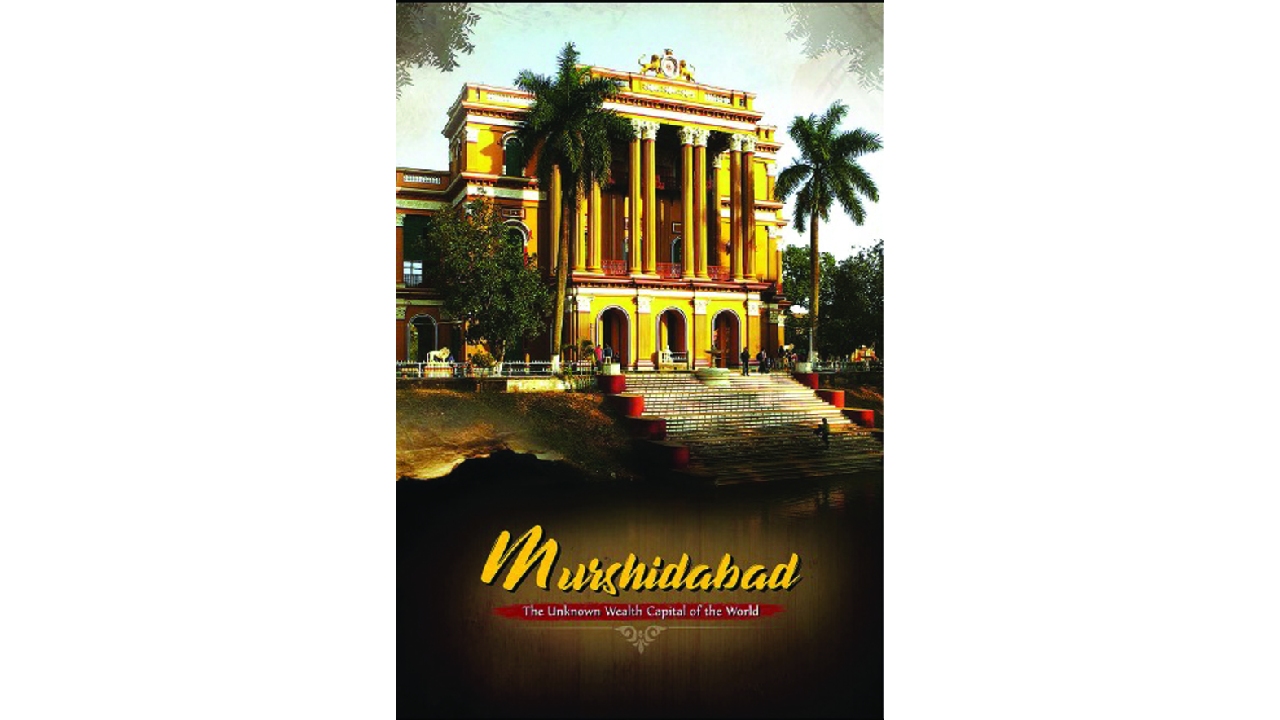
Author’s exploration of Murshidabad acts as a vital correction to the typical Bengal history lesson. Most accounts linger on Kolkata, yet this volume refocuses attention on a city that once stood as the world’s wealth capital. The narrative details how the Nawabs and Sheherwali Jains built a financial powerhouse responsible for a massive share of India’s prosperity.
Through stories of silk and architectural grandeur, the book resurrects a period of extreme opulence. It provides a rare look at a district that essentially fuelled the global economy. This remains an essential read for anyone seeking to understand India’s true heritage. It is a striking tribute to a forgotten era.