Reclaiming soft power for a new global era
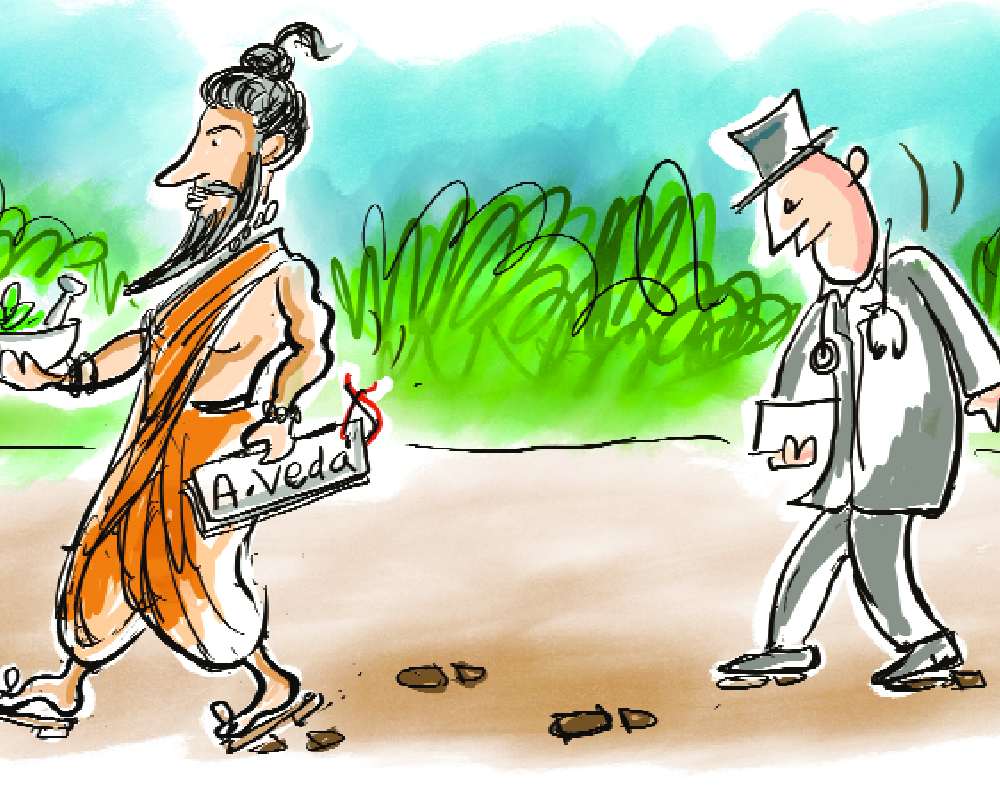
India’s patent civilisational depth and vivid culturality have been described as its latent (and underutilized) soft power. From Ayurveda to Artificial Intelligence (AI), from yoga to zero, the timeless wisdom of this ancient land convinces without conquest. Its resonance is predicated on dialogue and not on domination. Terms like “Incredible India,” “Brand India,” or even “Vasudhaiva Kutumbakam” (literally, the world is one family) have been used intermittently to assert this reality, but the results are not commensurate with the riches that India has to offer.Invoking sovereign pride as a means of a nation’s soft power was perhaps first presented in the form of “Cool Britannia” for the United Kingdom.
The term itself was a cheesy pun on the song “Rule, Britannia” — it attempted to front a hip, sparkling, and aspirational set of British outpourings designed to mesmerize the world. Starting in the mid-90s, it got a fillip with the advent of Tony Blair (“New Labour” fame), who was keen to shed the dour and shoddy shibboleths of the past to present a fresh and exciting proposition of everything British. Suddenly the times that were birthed “Britpop” as a genre with the likes of Oasis, Blur, Spice Girls, etc., movies like Full Monty, and movie characters like the mumbling-fumbling, charming, and yet so quintessentially posh Englishmen like Hugh Grant or Colin Firth.
The global tabloids were ablaze with headlines that screamed that London was “the coolest city on the planet.”Similarly, the recently elected Prime Minister of Japan, Sanae Takaichi, was earlier the Cabinet Minister of “Cool Japan.” Japan has a full-fledged Ministry that aims to globally sell Japan as an “it” place, with all its uniquely Japanese products, services, and imagery. It has a defined objective to showcase everything that “encompasses everything from video games, manga, anime, and other forms of content, fashion, commercial products, Japanese cuisine, and traditional culture to robots, eco-friendly technologies, and other high-tech industrial products.” Today, one has to be living under a rock to not have been confronted with a barrage of J-Pop, Hello Kitty, Sushi, or even Zen philosophy.
The smallest towns in the heartland of India abound with vernacularised versions of Doraemon, Shinchan, Ninja Hatori, Pokemon, etc. Like for Britain in the mid-90s and thereafter, soon The New York Times was writing about “Year in Ideas: Pokemon Hegemon.” But what very few people realized was that this was an outcome of a very deliberate national strategy to rescript perceptions about Japan in the aftermath of World War 2. The imperial history of Japan had been bloody, brutal, and known to be thoroughly oppressive and expansionist — post World War 2, Japan needed to recalibrate and invoke its unique and latent soft power to endear itself to the world at large, and so “Cool Japan” was conceptualized.
India, which too seeks to claim its rightful place in the comity of nations, needs a similarly thought-through, packaged, and holistic program to appeal to the rest of the world. It need not be ponderous, heavy, and too puritanical (as the appeal for the same gets restrictive), but like the culturally rich Japanese storyline, it needs to craft its antiquity in a more contemporary and palatable manner. Inadvertently, besides “Indian Food,” Bollywood is a great example of soft power assertion.
It managed what Joseph Nye said about the ability of soft power: “to get what you want through attraction rather than coercion or payments. It arises from the attractiveness of a country’s culture, political ideals, and policies.” But this too was uncoordinated, organic, and a disjointed outcome. Therefore, despite the fact that the number of Indian movies far outnumber the Japanese output, the Japanese have an edge in the number of Oscars won by their industry and people. Even “Indian Food” has struggled with its ability to morph into Michelin-friendly formats, unlike Japanese food.
The challenge to a “Cool India/n” project will always be that it will remain susceptible to fixations that are political or partisan. Thus, the form that such a project would invariably take would always be saddled with cherry-picked ideological frontages and preferences of the dispensation of the day, to valorise or diminish elements simultaneously. Often the chosen elements could depend on what the government seeks to showcase, as opposed to what could naturally appeal to the sensibilities of the larger world outside.
Another lingering concern has been the stark disability to contemporize our cultural assets and codes in a way that could appeal to a younger and more uninitiated generation.Increasingly, from Canada, USA, to the UK, there are spiraling concerns about Indian B-1 visa seekers, asylum seekers, uncouth Indian tourists, and the ghettoised (non-inclusive) existence of its diaspora. The sometimes unfair image of stereotypical bargain-seekers, gawky starers, or even pesky tele-callers requires correction. The days of snake-charmers and impoverished fakirs are long gone as India marches ahead confidently and purposefully. Admittedly, the odd Indian (like any citizen from any country) can bring shame with their conduct, but that cannot frame the totality of perceptions about India or Indians.
We too need to emerge from the dual and contradictory shadows of humility and arrogance by putting our best foot forward, gracefully. A governmental initiative that goes beyond the bureaucratic and dated Festivals of India, a la a “Cool India,” beckons.
The writer, a military veteran, is a former Lt Governor of Andaman & Nicobar Islands and Puducherry; views are personal