The battle for the States: All eyes on Bengal
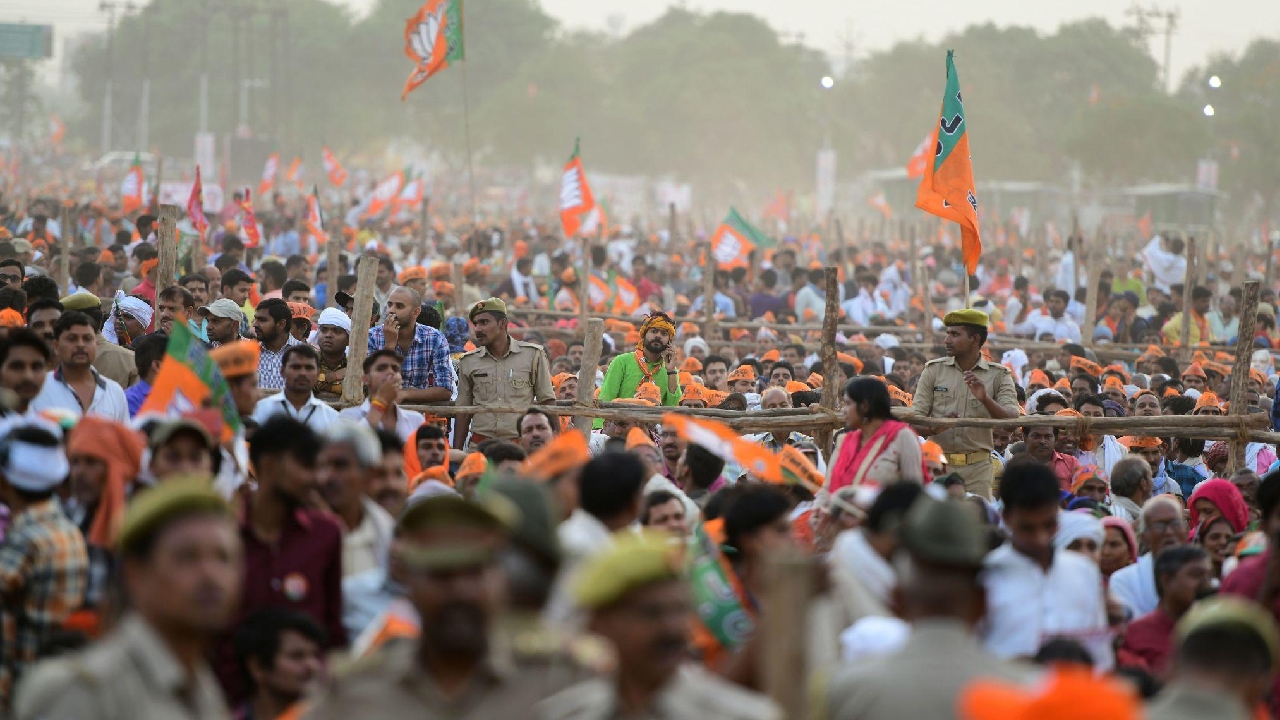
The election season has just begun. Polls will be held in the month of April in West Bengal, Assam, Tamil Nadu, Kerala and the Union Territory of Puducherry. These elections will be crucial as three out of the four states are ruled by non-BJP parties, while the BJP rules Assam and Puducherry in a coalition arrangement.
Unlike last time, when the elections were spread across several phases, barring West Bengal, which will go to the polls in two phases, all other states will vote on a single day. While most states will vote in a single phase, Bengal will vote in two phases on April 23 and April 29, with the results to be declared on May 4. These elections will test the Election Commission of India (ECI) as well as the mettle of the political parties. For the ECI, the challenge will be to conduct free and fair elections without disruptions or violence, while political parties will slog it out in a highly charged and polarised atmosphere.
Since two southern states - Tamil Nadu and Kerala - along with the Union Territory of Puducherry will be in the fray, and two eastern states, West Bengal and Assam, will also be casting their votes, the election results will provide a barometer of the public mood across India, especially in southern and eastern India.
The keenest contest will indeed be seen in Bengal, where Mamata Banerjee will be seeking a fourth term while defending her turf, as the BJP had made substantial gains in the last election and won over 77 seats. The Bengal battle will be fought over ideology, identity and anti-incumbency.
Chief Minister Mamata Banerjee, having ruled the state since 2011, remains formidable, rooted in an extensive network of welfare schemes, particularly those aimed at women and marginalised communities. At the same time, fifteen years in power inevitably bring anti-incumbency, and the opposition is expected to highlight issues of corruption, governance, and law and order. The principal challenger remains the Bharatiya Janata Party, led nationally by Narendra Modi, though the party does not have a local leader to match Mamata Banerjee’s stature.
The BJP will seek to capitalise on the momentum of the last election. It won 77 seats and garnered 37.9 per cent of the vote, a jump of 27 per cent from the previous election. However, it will have to address internal organisational challenges and counter the Trinamool Congress’s longstanding narrative portraying it as an “outsider” force in the state. The election comes in the wake of the recent Special Intensive Revision (SIR) of voter lists conducted by the Election Commission. The exercise has resulted in the deletion of nearly 63 lakh voter, a figure that exceeds the margin separating major parties in the previous election. The SIR could have a tangible impact on voting patterns and the final results. However, the most important aspect is that the elections must remain peaceful, free and fair. The onus lies on the Central Government, the State Government, and the ECI. Elections are meant to be a celebration of democracy, not a theatre of confrontation.