Speaker in the storm: The failed motion
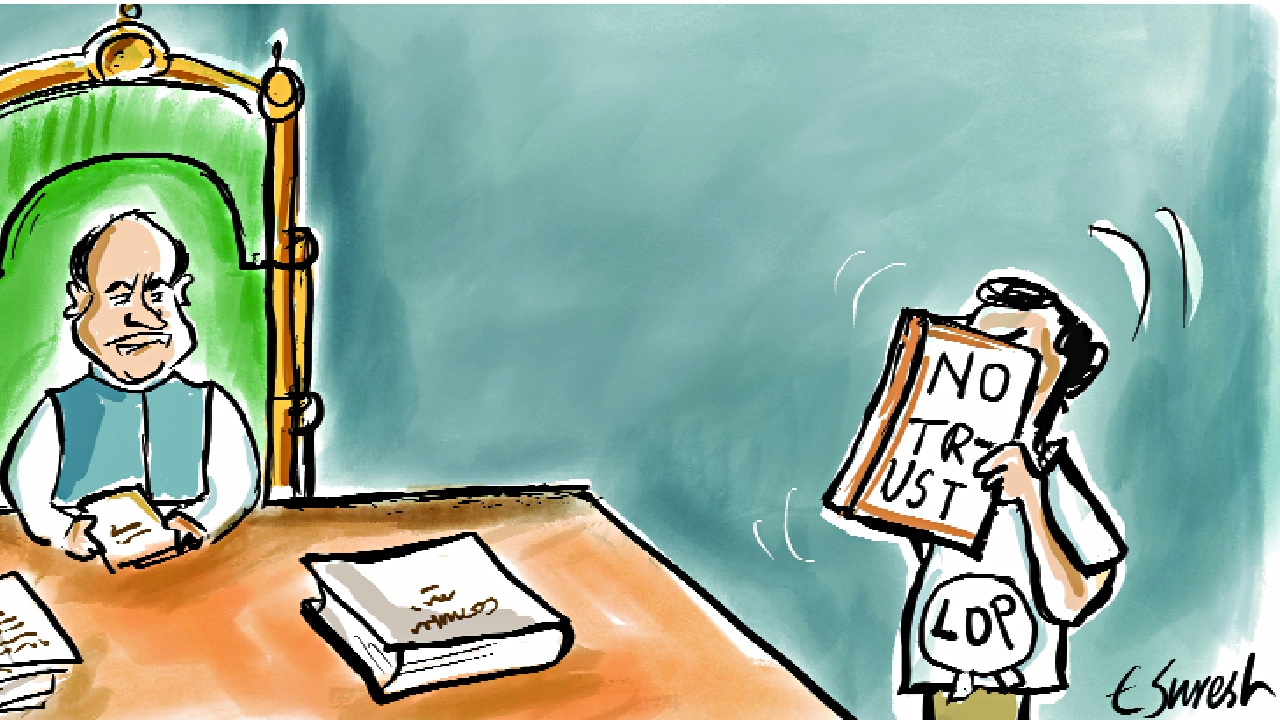
The role of the Lok Sabha Speaker in promoting parliamentary stability and independence is incredibly important and deserves recognition. On March 11, 2026, the Opposition’s impeachment motion against Speaker Om Birla was defeated by a voice vote, nearly four decades after the last attempt. With 119 MPs signing the notice, the Opposition highlighted the perceived bias in the Speaker’s conduct. Removing a Speaker requires at least 272 votes in the 543-member House, and historically, no Speaker has ever been removed. The Speaker is back in his chair.
The repeated challenges to the Speaker underscore political tensions in the legislature, raising questions about the balance of power and mutual respect among legislators. Thus, the Speaker’s role is essential to both legislative procedures and the fostering of trust in parliamentary democracy.
Following the unsuccessful impeachment motion, Speaker Birla reiterated his impartiality, asserting that the rules apply equally to all members, including the Prime Minister. He addressed the House to refute allegations of bias. He clarified that there is no mechanism to mute the Speaker’s microphone. He emphasised, “This House is not a fair or a festival. We must follow the rules, and no one has the right to speak outside them, regardless of their position.”
Union Home Minister Amit Shah criticised the Opposition for its unruly conduct in Parliament, highlighting Rahul Gandhi’s low attendance-51 per cent in the 17th Lok Sabha and 52 per cent in the 16th Lok Sabha, compared to averages of 66 per cent and 80 per cent, respectively. The Opposition protested by chanting “Maafi maango,” demanding an apology from the Home Minister.
The impeachment motion underscored the ruling party’s substantial majority and reinforced the importance of parliamentary procedures. It highlighted the respect that the House warrants for its legislative processes.
Jagadambika Pal, a member of the BJP panel who presided over the session, called upon the Opposition to resume their seats to facilitate voting. Nevertheless, amid ongoing protests, he chose to conduct a voice vote in the House, which led to the resolution’s rejection. The House was subsequently adjourned for the day.
Impeachment motions are infrequent occurrences in the history of India’s parliamentary system. The attempt to remove Speaker Birla marks the fourth such effort, underscoring the inherent challenges of this vital office. The Speaker’s position is safeguarded by the House itself rather than the President, and removal can occur only by a majority vote. This underlines the office’s independence and its critical role in maintaining parliamentary stability. The previous efforts included a 1954 motion against the first Speaker, GV Mavalankar, and the recent motion against Birla. These incidents highlight ongoing concerns regarding bias and parliamentary conduct.
Since independence, there have been three unsuccessful attempts to remove a Speaker of the Lok Sabha. The first was in 1954 against GV Mavalankar, the first Speaker. The motion was debated on December 18, with Prime Minister Jawaharlal Nehru and Leader of the Opposition AK Gopalan participating. MPs accused Mavalankar of disallowing relevant questions and mishandling adjournment notices.
In 1966, MPs accused Sardar Hukam Singh of obstructing inquiries that could embarrass the government and failing to submit privilege notices. The motion did not advance, as fewer than 50 MPs supported it.
CPI(M) MP Somnath Chatterjee proposed a resolution against Speaker Balram Jakhar. Key participants included Prime Minister Rajiv Gandhi and P Chidambaram. The House voted against the motion. In the Rajya Sabha, attempts to remove Vice President and Chairman Jagdeep Dhankhar in 2024 have failed. Similarly, the 2020 notices to remove Deputy Chairman Harivansh Narayan Singh did not spark a debate.
The ‘effective majority’ requirement-defined as a majority of all sitting House members-establishes the threshold for removing a Speaker, ensuring that a significant consensus is necessary.
During the impeachment debate, Opposition leaders raised concerns about a vacant Deputy Speaker position, faulty microphones, limited speaking rights for Opposition members, and mass suspensions. These issues focus on the challenges facing parliamentary institutions and the Speaker’s office.
Union Home Minister Amit Shah criticised the Leader of the Opposition, Rahul Gandhi, stating that he travels for party purposes and publicity rather than attending parliamentary sessions. “He skipped the President’s speech, the Budget, and discussions on Article 370. During key parliamentary sessions, he travels abroad and claims he is not allowed to speak,” Shah stated.
“According to the established history of this House, its proceedings are conducted based on mutual trust. The Speaker serves as a neutral custodian, representing both the ruling party and the Opposition. It was unfortunate for parliamentary politics that a resolution for the removal of the Speaker has been introduced,” he added.
The Speaker’s authority underscores the importance of impartiality and the challenges posed during contentious moments, such as impeachment debates, helping the audience grasp the office’s significance to parliamentary stability. Modi, at the end of the impeachment debate, commended Om Birla for conducting Lok Sabha proceedings with “dedication, patience and impartiality”. Now that the House has defeated the impeachment motion,
Even if the Lok Sabha is dissolved, Speaker Om Birla remains in office until the new House meets and elects a new Speaker.
The writer is a popular columnist; views are personal