Nepal’s Lipulekh protest tests ties with India
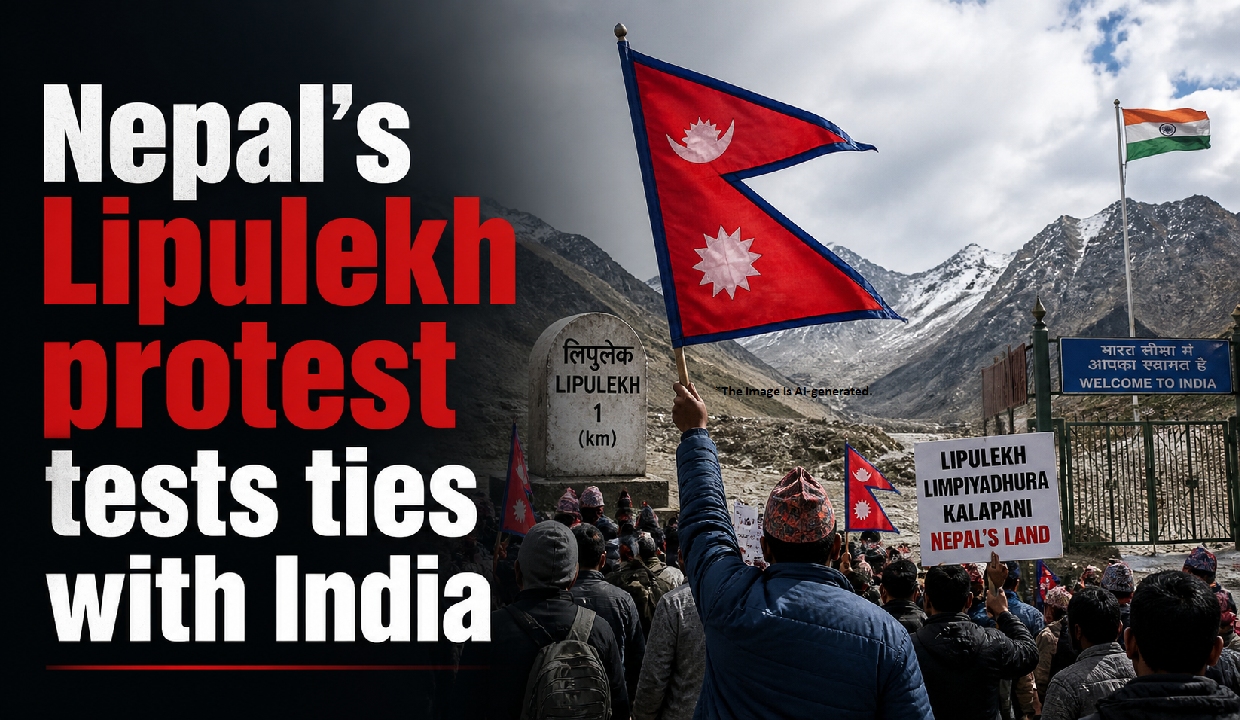
Nepal’s latest objection to reopening the Lipulekh route for the Kailash Mansarovar Yatra is a reminder of an old wound that refuses to heal
Nepal’s new government, under Prime Minister Balen Shah, is less than two months old, but it is already rewriting governance and the rules of engagement with its neighbours. Balen Shah came to power after Gen Z protests and has quickly cracked down on the corrupt and ailing system, making headlines for his radical reforms. He has also resolved to assert Nepal’s sovereignty and keep the two bigger nations, India and China, at bay. It may not be high on his agenda, but he cannot afford to appear yielding when it comes to India. The latest protest by Nepal regarding the Lipulekh route to Mansarovar must be seen in this context.
Nepal’s latest objection to India and China reopening the Lipulekh route for the Kailash Mansarovar Yatra is not new. Yet this time, the context is different. The boundary question has always been both a matter of diplomatic posturing and a domestic necessity in Nepalese politics— something leaders in Nepal have always used to stir public sentiment and deflect attention from pressing internal issues they could not resolve.
Under leaders like K P Sharma Oli, the Lipulekh-Kalapani issue was a tool to deflect attention. Shah inherits that hardened reality. But his leadership emerges from a very different moment. The movement that reshaped Nepal’s politics in 2025 was not about territory or identity; it was about governance — jobs, accountability, and representation.
That distinction matters. It means the Shah government’s legitimacy rests primarily on its ability to deliver internally, not on external posture. But at the same time, he cannot appear soft on border issues or on the Lipulekh Pass, as accepting Indian position would erode his credibility.
Lipulekh is considered a sacred gateway for the Kailash Mansarovar Yatra — a traditional route for Indian pilgrims travelling to Mount Kailash and Lake Mansarovar in Tibet. It has been under India’s control for a long time. Nepal’s Foreign Ministry’s objection-carefully worded, routed through diplomatic channels, and restrained in tone — is more formal than menacing. But the message is clear: sovereignty must be defended and transaction must be on equal footing. At one level, India-Nepal relationship remains intact — open borders, economic interdependence, and deep cultural ties are proof enough. But beneath that stability, Nepal today is less willing to appear deferential.
Within Nepal’s domestic politics, complacency towards India can be construed as weakness. India’s position on Lipulekh has been consistent, rooted in its reading of history and long-standing administrative control. In Kathmandu, however, the issue is no longer just about territory — it is about voice, respect, and equality. China’s role in this triangular dynamic remains careful and calculated. While Beijing is directly involved in reopening the route, it has avoided taking a clear stand on the sovereignty question. For India, the instinct to treat Lipulekh as a settled matter is understandable but must be recalibrated keeping sentiments of Nepal today. The challenge is no longer legal clarity; it is political sensitivity.