Lotus: The forgotten soul of India’s cultural imagination
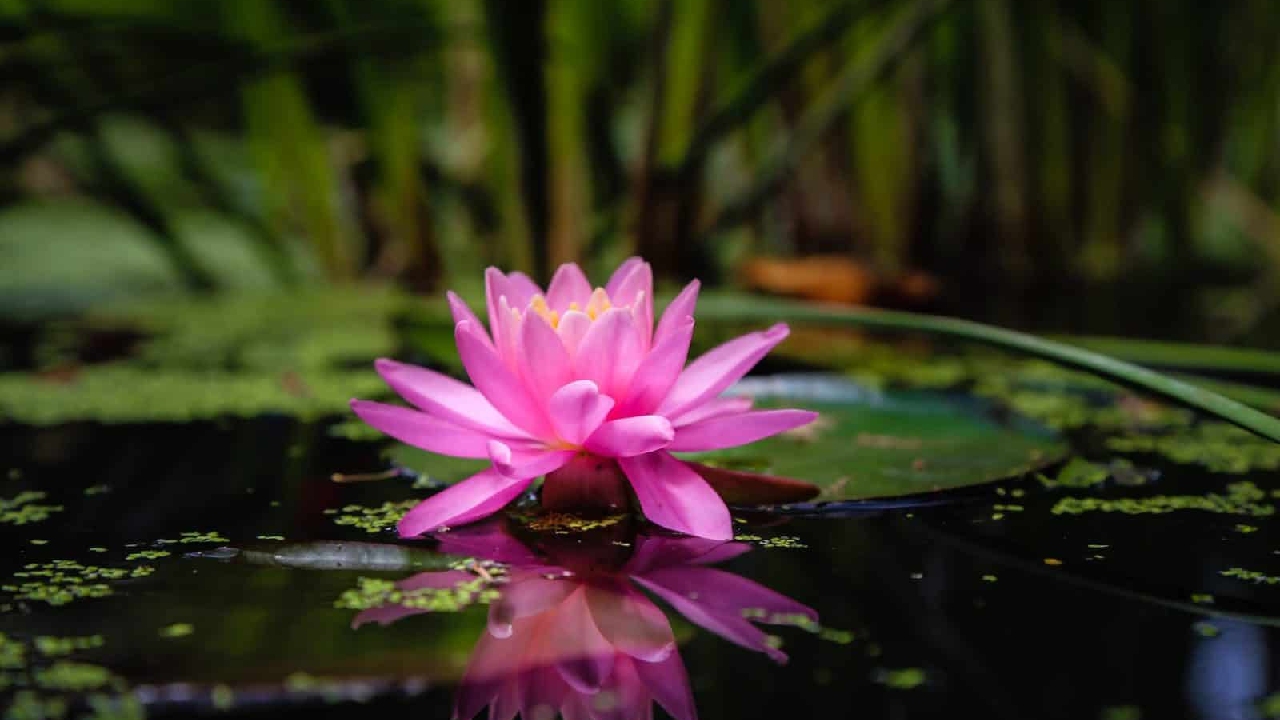
To most of us in the Indian subcontinent, especially the younger generation, the Lotus as a flower occupies no special significance. It is appreciated as just another beautiful specimen of flora. A uniform ignorance exists about the fact that the Lotus (Kamal) is intricately connected not only with the Bharatiya, but many other cultural ethos across time and space. This flower is deeply embedded in India’s historical psyche. Let us take the case of Bharatiya literature and art (paintings and sculpture), which denote our culture. Literature and art serve as a mirror of the glory of our nation. Through them, it is possible to understand our past. What is left unexplained in one realm is made clear through the other, for literature and art act as real mirrors, reflecting images that no longer exist. The ancient poet Dandin, in his famous work Kavya Rasa, talks of Bharat’s historicity quite succinctly:
“The image of fame of early kings reflected in the mirror of literature does not disappear, even now, even in their absence.”
For an appropriate understanding of one, the other acts as a supplement. A ready example that comes to mind is that of Kamal: the Padmanabha aspect of Vishnu, the Lotus aspect as a seat (Kamalaasan), Charankamal, Lotus motifs and many such examples. Ajanta and Bagh Caves are regular art galleries (chitrashalas). We learn of Bharat’s history from both Bharat’s ancient literature and art.
Let me again quote from Dandin’s Dasakumarcharita:“May the foot of Trivikrama render you good, the stalk of the Lotus residence of Brahma.”Remarkably, Bharatiya Sabhyata is very much a living tradition wherein symbolism plays a great role. Aspects of nature contribute greatly to its rich tradition. As an emblem, the Lotus plays a key role in Bharatiya iconography. The Lotus’ connection with Bharatiya culture is inextricable. Ancient texts contain repeated references to the Lotus, linking it to Hindu philosophy. The Rig Veda, Atharva Veda, Chandogya Upanishad and Puranas are replete with the metaphor of the Lotus. The Lotus has a long association with Brahma, Vishnu, Surya, Saraswati and Lakshmi. The importance and value of the Lotus can be discerned in temples across the globe. What is so important about the allegory of the Lotus that it enjoys such an exalted status in Bharatiya ethos? Why is this resplendent aquatic flower so deeply entrenched in Bharat’s cultural fabric?
The Lotus has been revered for its purity and spiritual significance in Bharat since ancient times. In the realm of art, the Lotus holds an esteemed place. The exquisite carvings of Lotus motifs have embellished the walls, pillars and ceilings of iconic temples for centuries. The recurring presence of Lotus designs in Bharat’s architectural marvels signifies great aesthetic finesse and spiritual sanctity. The delicate beauty of the flower has made it a popular motif in Bharatiya ancient paintings. It also has a special place in Bharatiya literature, where it figuratively represents elegance, purity and love.
Several Lotus motifs and themes abound in Bharatiya sculpture and paintings. The Lotus, in all its forms, has been used in medallion patterns in early Bharatiya stupas like Bharhut. The Amravati and Bharhut Lotus medallions are incomparable for their sheer grace and variety. Bharhut and Amravati display intricate depictions of Lotus blossoms in their sculptures and reliefs. These sites date back millennia.
In Ajanta, the motif of the Lotus has been utilised in all possible ways, sometimes running the whole length of panels in a meandering creeper fashion, as buds, as flowers in bloom, in the most soothing ways. Ajanta Caves, as we know, are a great human experience, the only remaining evidence of styles of paintings that developed in Bharat and travelled with Buddhism to the Himalayan region and thence across Central Asia, China, Japan and Korea. They carried with them the motifs of the Lotus to all these countries. The caves of the earlier phase date from the 2nd century BCE. One feels a sense of awe looking at the remnants of these paintings.
The Lotus occurs as a central ceiling panel in the mandapams of temples. The Lotus, like the mandala, has a centre point, the source of creation, that expands outwards. In Lotus medallions, this is depicted through concentric circles having a distinct centre, the wellspring of life. The concentric rings are suggestive of fluidity and life’s cyclical nature. The Lotus lies at the heart of the creation story in Bharatiya ethos. While Lord Vishnu lay asleep on his serpent bed, Adishesha, a Lotus emerged from his navel with Lord Brahma sitting on it. Even Lakshmi, the goddess of prosperity, is believed to have emerged from the Lotus.
There is practically no Bharatiya deity that is not shown holding or sitting on the Lotus seat. The Lotus represents eternity. The imagery of the Lotus in ancient Bharatiya sculpture is a testament to its enduring significance in guiding individuals towards higher consciousness.
The Chola bronzes, exemplifying exquisite craftsmanship, often feature deities standing or seated on Lotus pedestals. These bronze sculptures, intricately detailed with Lotus motifs that represent divine grace and purity, reflect the profound symbolism associated with the Lotus in Hindu mythology.
Bharatiya miniature paintings showcase the Lotus in various forms, capturing its grace and elegance. These delicate artworks, from the Mughal to Rajput schools, portray gods, goddesses and royal figures adorned with garlands of Lotus flowers, underscoring its association with beauty, grace and divinity. Sanskrit literature, especially the works of Kalidasa, often weaves the imagery of the Kamal into poetic verses, elucidating its significance as a metaphor for beauty and the blossoming of love and emotions. The Kamal, with its ability to emerge unblemished from muddy waters, serves as a powerful metaphor for spiritual enlightenment, resilience and triumph over adversities in Kalidasa’s verses.
The Kamal, according to its nature, rises with the sun and drops when the sun sets, alluding to regeneration and rebirth - the cycle of life and death. The water- and dirt-repellent structure of its waxy petals symbolises purity. The Kamal is also an emblem of Saraswati and Lakshmi.
Kamal signifies purity in spirit, for it grows in murky water and yet produces clean and beautiful petals. The rolling down of water from the Kamal petal denotes freedom. It is also a symbol of self-generation or “svayambhu” in Sanskrit. Kamal forms the throne of Lord Buddha.
The individual’s mind is compared to the Kamal, which has to go through its initial stages of development in murky water before it establishes itself as a beautiful flower. An individual’s evolution goes through the same stages on its path to knowledge. The opening of each petal is the progressive unfolding of human consciousness. The chakra system, or the energy centres within the human being, is compared and associated with the varied number of petals of the Kamal.
The following verse from the Bhagavad Gita encapsulates the non-attachment and aloofness inherent in the Sanatan religion: “One who performs his duty without attachment, surrendering the results unto the Supreme Lord, is unaffected by sinful action, as the Lotus leaf is untouched by water.” Kamal in Bharatiya culture transcends mere aesthetics. It embodies a far deeper meaning. In terms of spiritual symbolism and philosophical expression, it is omnipresent. Sadly, not many of us realise it. There are myriad other motifs in Bharat’s ancient paintings and sculptures whose understanding remains incomplete until the lens of concurrent literature is applied. There is a need for Bharat and the world to appreciate this praxis. It was no mere coincidence that Kamal was consecrated as part of the G20 logo when Bharat organised this global event in September 2023. It is no mere coincidence either that Kamal is Bharat’s national flower, manifesting a pro-planet vision.
The writer is a former Secretary, Ministry of Culture, Government of India and an Advisor at Bharat Ki Soch Foundation ; views are personal