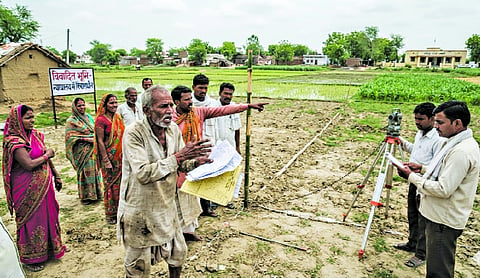

From commercial courts to RERA and insolvency proceedings, Parliament has repeatedly redesigned procedures when conventional litigation proved inadequate. With land disputes consuming years and locking up enormous economic value, the case for a dedicated land-justice framework is becoming harder to ignore
Whenever Parliament has concluded that ordinary civil procedure is inadequate for a particular class of disputes, it has redesigned the process. Commercial disputes have stricter timelines and case management. Insolvency operates against a statutory clock. Real-estate grievances have specialised authorities and tribunals. Specific-relief suits have legislated disposal timelines. Arbitration permits tighter control over pleadings, hearings and expert evidence. The common principle is simple: a general procedural framework need not be applied identically to every category of dispute. That is the strongest answer to the objection that a separate law for land justice would be too radical. The question is not whether India knows how to create a special procedural regime. It plainly does. The real question is whether land disputes, given their scale, economic importance and recurring factual patterns, now justify the same legislative attention.
The Commercial Courts Act is perhaps the closest precedent because it works substantially within the civil-court system while changing procedural discipline for a defined class of cases. For specified commercial disputes, the elasticity of ordinary civil procedure is replaced by firmer limits. A defendant who fails to file the written statement within the statutory outer period loses the right to do so. The court is expected to hold an early case-management hearing, identify issues, fix dates for evidence and arguments, and control the future calendar of the suit.
The importance of this model lies less in any one deadline than in the philosophy behind it. Parliament accepted that certain disputes require the judge, rather than the parties, to control the pace of litigation. It also accepted that procedural opportunities cannot remain indefinitely renewable merely because the dispute is before a civil court. That is directly relevant to land litigation.
A partition suit, boundary dispute or title contest is no less deserving of procedural discipline than a commercial contract. Yet ordinary land suits continue to move largely through the general CPC sequence, where extensions and interlocutory stages can accumulate. The Commercial Courts Act shows that the CPC is not an indivisible procedural package. Its rules can be modified for a defined category when the nature of that litigation demands it. That makes a separate land procedure an evolutionary step, not a leap into the unknown.
Time limits are already part of civil justice
Commercial courts establish that procedure can be tightened for a defined class of civil disputes. The Specific Relief Act establishes something further: even an ordinary civil remedy, frequently involving immovable property, can be placed within a statutory disposal timeline, subject to a limited extension for recorded reasons.
Parliament has therefore already accepted that a civil remedy concerning property can be put on a legislative clock. The Insolvency and Bankruptcy Code goes further. Its architecture treats time as an integral component of the remedy itself. Its experience also shows that timelines do not automatically eliminate delay; institutional capacity and appellate intervention still matter. But the design principle remains important: where delay destroys value, the law need not leave time open-ended. Land has an equally strong claim to that principle. A disputed parcel can remain economically frozen for years. The precise duration of a land suit need not be prescribed here. The narrower point is that Indian legislation already recognises that Parliament may impose procedural clocks where delay seriously diminishes the value of the remedy.
Specialisation is an established technique
Timelines address one dimension of delay; specialisation addresses another. RERA demonstrates this route. The Real Estate (Regulation and Development) Act did not merely shorten a few CPC timelines. It identified a defined field, created specialised adjudicatory institutions, specified remedies and linked dispute resolution to the regulatory information of that sector.
Land disputes share many characteristics that make specialisation useful. They recur in familiar forms: title, succession, partition, boundary, possession, validity of instruments, record correction and overlapping civil-revenue claims. The point is not that RERA should be copied, nor that every land case should be transferred to a tribunal. It is that Indian law already accepts purpose-built adjudication for recurring categories of disputes. The legislature therefore has more than one institutional option. A land-justice law could operate through designated civil courts, specialised benches or another carefully designed structure. The choice belongs to the design stage. What RERA establishes here is the legitimacy of specialisation itself.
Specialisation, however, is only one way to redesign procedure. Arbitration supplies a different lesson: adjudication need not depend on the full conventional sequence of oral hearings and repeated applications in order to remain fair.
Arbitral tribunals can regulate whether issues require oral hearings or can be decided substantially on documents. They can appoint experts, discourage unnecessary adjournments and impose meaningful costs. Civil courts deciding land disputes obviously cannot be converted into arbitral tribunals: questions of title may affect third parties and public records, and judicial safeguards must remain stronger. But the larger lesson survives. Natural justice does not require every dispute to use every procedural device to its maximum extent. Fairness requires notice, opportunity to contest, impartial adjudication and reasons. Within those boundaries, procedure can differ according to the controversy. That is precisely what a separate land law would seek to do.
Technology makes specialisation more workable
These statutory precedents establish the legal possibility of differentiated procedure. Technology now strengthens its practical feasibility in land matters. India has invested heavily in computerisation of Records of Rights, digitisation of cadastral maps, registration systems, georeferencing and parcel identification. Programmes such as DILRMP, ULPIN and SVAMITVA are creating an increasingly digital information environment around land.
Technology does not settle title. A digitised error remains an error, and satellite imagery can show occupation without proving its legal character. But digital land infrastructure changes what a specialised procedural law can realistically require from courts, parties and government departments. The point is not to prescribe the detailed evidentiary architecture of such a law, but to establish that the administrative infrastructure required to support it increasingly exists. Seen together, these developments amount to more than scattered reforms. They provide the legislative building blocks of a separate land procedure. Commercial courts show that a defined category of civil disputes can be subjected to modified CPC rules and active case management. The Specific Relief Act shows that civil property remedies can carry statutory timelines. The IBC shows that Parliament can treat time as part of legal design. RERA shows that recurring disputes can be placed within a specialised framework. Arbitration shows that evidence and hearings can be controlled more tightly without discarding fairness. No single model should simply be transplanted into land law. Nor should speed become an excuse for weakening notice, appeal, judicial review or the opportunity to challenge State records. The value of these statutes lies elsewhere: together they demolish the assumption that ordinary CPC procedure is the only legitimate way to deliver civil justice. The case for a separate land-justice law is therefore not a demand to experiment blindly. It is a proposal to apply lessons that Indian legislation has already tested elsewhere. The question is no longer whether India can create a specialised procedure for land disputes. Its own statute book answers that question. The real challenge is what such a law should contain: which disputes it should cover, which forum should decide them, how civil and revenue jurisdiction should be separated, how evidence should be organised, what timelines should govern each stage, how appeals should be structured and how a final decree should translate into the record, map and possession on the ground. India has already proved that when delay threatens the purpose of a law, procedure can be redesigned. Land justice should no longer be treated as the exception. The question now is not whether a separate law can be written, but how well we choose to write it.
The Real Estate (Regulation and Development) Act did not merely shorten a few CPC timelines. It identified a defined field, created specialised adjudicatory institutions, specified remedies and linked dispute resolution to the regulatory information of that sector
The writer is a former IAS officer and is presently Chairman, RERA Bihar. He served as Principal Secretary, Department of Revenue and Land Reforms, Bihar. This is the second part of a three-part series on land reforms. The third article will appear in this space on Monday; Views presented are personal.