The thin line between dissent and disorder
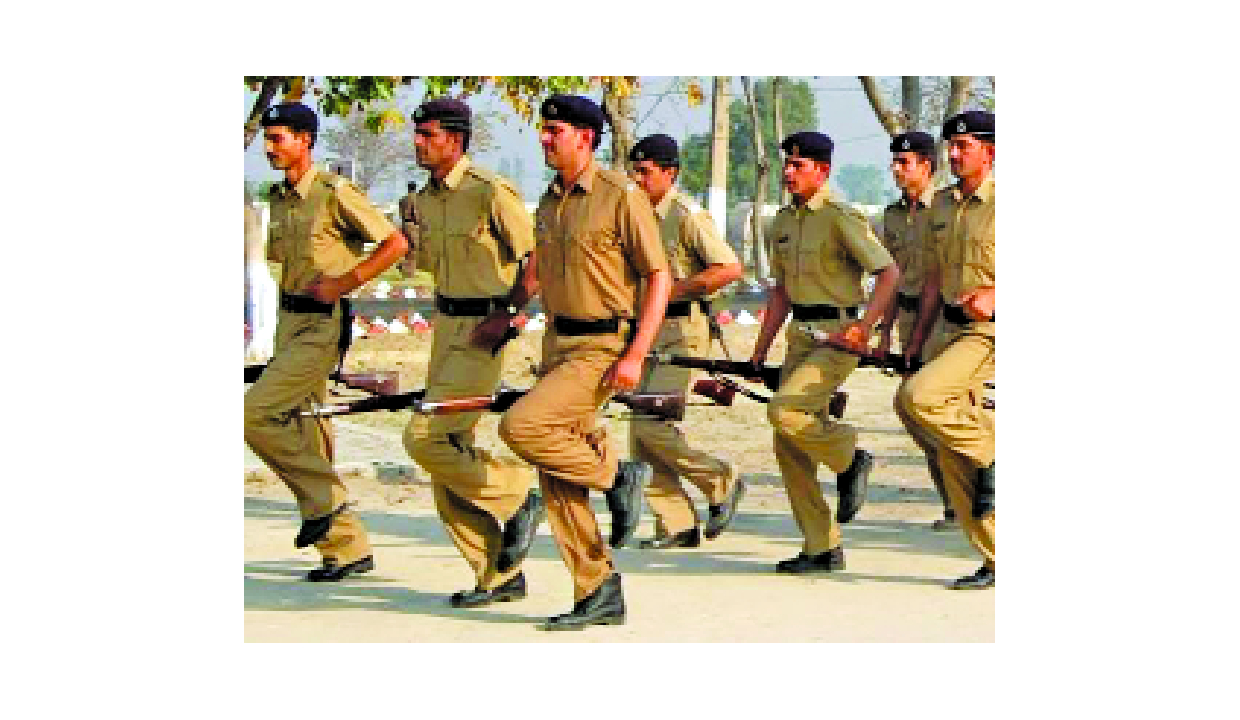
If court decisions make the police and administration hesitant to act against violence and disorder, it may encourage a tendency to violate the law. The recent decision of the Allahabad High Court quashing the arrest of activist Aakriti Chaudhary under the National Security Act (NSA) raises questions that go well beyond the individual case. It concerns the larger responsibility of the police and administration to maintain law and order, protect public safety and safeguard the constitutional rights of citizens.
The Government has reportedly decided to challenge the decision before the Supreme Court. The High Court, while doing so, questioned the evidence presented by the state authorities, described the police version as a “fabricated story” and directed that compensation of Rs 5 lakh be paid to the petitioner, including for the manner in which the action was taken by the authorities, particularly the district administration. The Court’s observations and the subsequent debate deserve careful consideration. There can be no dispute that the Constitution guarantees every citizen the right to freedom of speech and peaceful assembly. In a democracy, citizens have every right to express their grievances, question the government and demonstrate peacefully. This distinction becomes particularly important in situations where violence appears to have been organised or pre-planned. The Noida incident cannot, therefore, be viewed simply as an ordinary labour protest. During the violence, more than a hundred vehicles were reportedly damaged, several factories were vandalised, and vehicles, including police vehicles, were set on fire. When a large crowd becomes violent, the police cannot simply remain passive spectators.
At the same time, the police response must remain firmly within the framework of law. If an individual has been accused of instigating violence, the State must establish that allegation through credible evidence. Preventive detention under the National Security Act is an extraordinary measure and cannot become a substitute for ordinary criminal investigation or prosecution. If there was insufficient evidence against Aakriti Chaudhary, or if due process was not followed, judicial intervention was entirely justified. But that cannot mean that the administration’s entire assessment of a law-and-order situation is automatically rendered baseless.
A functioning democracy requires both strong policing and strong judicial oversight. The two are not contradictory; they are complementary. The police must act decisively when public safety is threatened, while courts must ensure that such action remains lawful, proportionate and supported by evidence. Any abuse of authority by an individual officer must be investigated and dealt with appropriately. If evidence has been fabricated or a person has been unlawfully detained, there must be accountability and justice. However, the larger issue is what message such judicial decisions may unintentionally send to the police and civil administration. Maintaining law and order often requires officers to take difficult decisions in situations where events are unfolding rapidly and where the consequences of inaction can be severe. If officers begin to believe that firm action taken in good faith, even in response to genuine violence, could later expose them to personal consequences without adequate consideration of the circumstances in which the decision was made, it may create hesitation at the operational level.
A police officer facing a violent crowd has to make decisions in real time. The officer must assess the threat to life and property, determine whether the situation is escalating, identify the level of force required and act within the law. These decisions cannot always be judged in isolation, detached from the circumstances prevailing at that particular moment. This does not mean that police action should be placed beyond scrutiny. On the contrary, every use of extraordinary powers must be subject to rigorous review. An accountable police force should not become a fearful or paralysed police force.
The balance between individual liberty and public security is one of the most difficult responsibilities of a democratic State. While protecting the rights of the individual, the State must also protect the rights of millions of other citizens whose lives, livelihoods and property may be affected by violence. The responsibility of the State to protect citizens cannot be reduced to the protection of those participating in a protest. It also extends to the ordinary citizen whose shop, vehicle or home may be damaged; the worker whose factory may be unable to function; the commuter whose road is blocked; and the police personnel who may themselves become targets of violence. This is why the distinction between dissent and disorder must remain clear. A protest against a government decision is legitimate. But setting vehicles on fire in the name of an ideology, attacking police personnel, vandalising factories or damaging public property cannot be justified as an exercise of democratic rights. India’s democracy is strong precisely because it accommodates disagreement. But democratic disagreement cannot survive if the rule of law is weakened. Roads, industrial establishments, government institutions and police facilities cannot be allowed to become centres of violence. If such conduct is normalised, the consequences will extend far beyond a single incident or a particular administration. There is also a need to recognise that the relationship between violence and the individuals accused of provoking it must be established through credible evidence.
The answer, therefore, lies neither in giving the police unchecked powers nor in making the administration excessively cautious. What is required is lawful firmness, institutional accountability and evidence-based policing. The State must act decisively against violence, but it must also ensure that every such action is legally sustainable. Police officers must be accountable, but they must also be given the institutional confidence to discharge their responsibilities without the fear that every difficult operational decision will subsequently be viewed in isolation. Courts, too, have a vital role in maintaining this balance. Judicial scrutiny protects individual liberty and prevents misuse of State power. But the larger institutional objective should also be to ensure that legitimate law-enforcement action is not rendered ineffective by an atmosphere in which officers become reluctant to act when public order is genuinely under threat. The police must remain restrained, but not paralysed. The administration must remain accountable, but not helpless. The judiciary must protect individual liberty, while recognising that public order is the foundation upon which those freedoms can meaningfully exist. The day the distinction between democratic protest and anarchy disappears, the consequences will not be borne by the police, administration or judiciary alone. The entire country will ultimately have to pay the price.
The writer is a former Director General of Police, Uttarakhand; Views presented are personal.