China after Mao at 50: From revolutionary fire to global power
Fifty years after Mao Zedong’s death, China has travelled from revolutionary upheaval to economic and technological power. Its transformation under Deng Xiaoping and beyond has reshaped Asia - and for India, the unresolved border dispute and China’s growing regional influence make understanding that journey strategically imperative
Fifty years after Mao Zedong’s death, China stands as one of the most consequential powers of the twenty-first century. The country that once mobilised millions through revolutionary slogans, mass campaigns and ideological struggle has become a manufacturing giant, a technological competitor and a major force in global geopolitics. The journey from Mao’s China to today’s China is one of the most remarkable transformations in modern history. It is also a story that carries profound consequences for India.
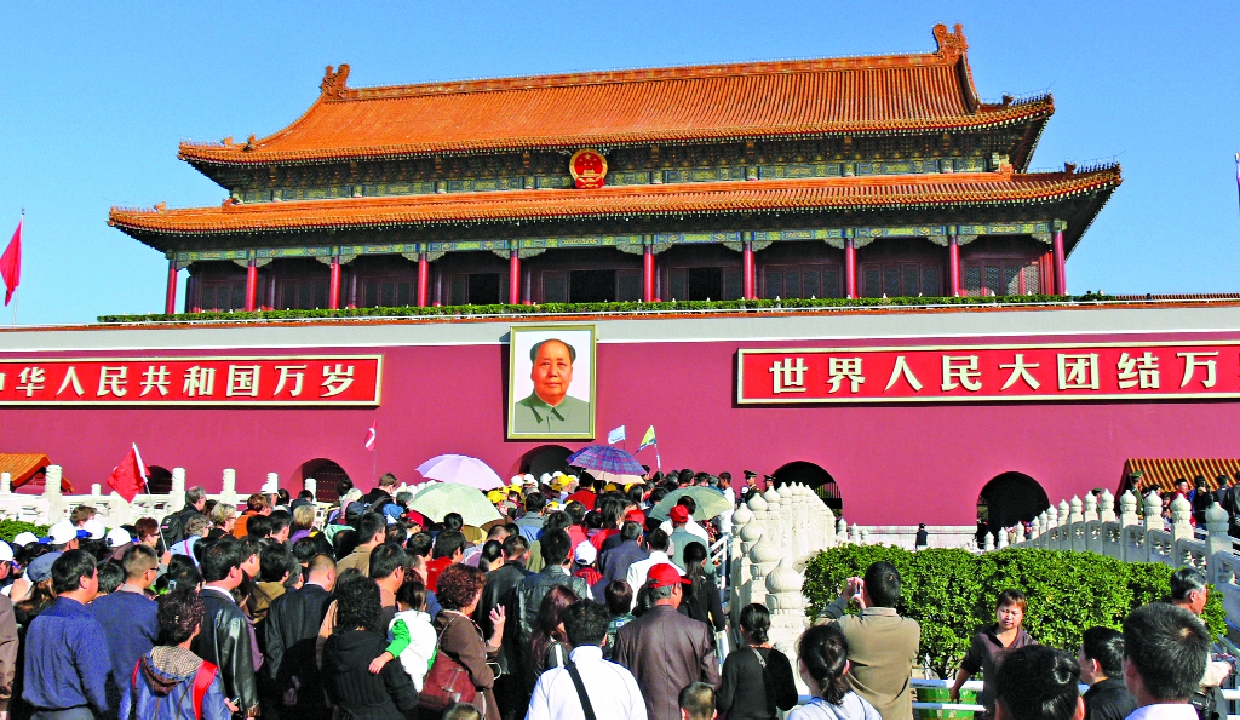
Mao died on September 9, 1976, leaving behind a country that had experienced both revolutionary triumph and devastating upheaval. His Long March, which began in 1934, had become a foundational legend of the Chinese Communist Party. The arduous retreat of the Red Army across thousands of kilometres helped establish Mao’s leadership and became a symbol of revolutionary perseverance. In 1949, Mao proclaimed the establishment of the People’s Republic of China from Tiananmen, presenting the communist revolution as the beginning of a new national era. For millions of Chinese, he was the leader who ended the humiliation of foreign domination and unified a fractured nation.
The subsequent decades revealed the enormous costs of revolutionary experimentation. Mao’s Great Leap Forward (GLF), launched in 1958, attempted to transform China rapidly from an agrarian society into an industrial power. Communes, collective farming and ambitious production targets were imposed across the country. The campaign produced economic dislocation and contributed to a catastrophic famine in which millions of people died. The state’s political structure and the suppression of criticism made it difficult to correct failures in time. The lesson was severe: revolutionary enthusiasm could not substitute for sound economic policy, agricultural productivity and institutional accountability.
The Cultural Revolution, launched in 1966, deepened the turmoil. Mao sought to eliminate alleged bourgeois and counter-revolutionary influences within the Party and society. Students organised as Red Guards, intellectuals were persecuted, institutions were disrupted and political struggles spread throughout the country. The campaign devastated education, culture and administrative stability. Mao’s final years were marked by declining health and an intense struggle for succession. After his death, the Gang of Four, led by Jiang Qing along with Zhang Chunqiao, Yao Wenyuan and Wang Hongwen, was arrested in October 1976. Their downfall symbolised the end of the most turbulent phase of Maoist politics.
The decisive change came with Deng Xiaoping and the reform process initiated after 1978. Deng did not reject the Communist Party’s political monopoly, but he substantially altered the economic direction of the country. Agricultural reforms, special economic zones, foreign investment, export-led manufacturing and market-oriented policies gradually transformed China. His famous approach - often summarised through the idea that it does not matter whether a cat is black or white as long as it catches mice - captured a pragmatic departure from rigidly ideological economics. China’s rise was built not merely on revolutionary memory, but on industrialisation, infrastructure, education, technological development and integration with global markets.
Mao’s foreign-policy ideas also remain relevant to understanding China’s strategic outlook. His Three Worlds Theory, articulated in the 1970s, divided the international system into the superpowers, the developed countries outside the superpower rivalry, and the developing countries of Asia, Africa and Latin America. China presented itself as part of the developing world and sought solidarity with countries resisting imperialism and hegemonic domination. The theory helped Beijing cultivate ties across the Global South. Contemporary China uses different language, including the Global Development Initiative and South-South cooperation, though the underlying ambition to expand influence among developing countries remains significant.
Another concept associated with Mao’s strategic thinking is the Five Finger Theory concerning Tibet. The metaphor described Tibet as the palm of China’s hand, with Ladakh, Nepal, Sikkim, Bhutan and the North-East Frontier Agency - now Arunachal Pradesh — portrayed as the five fingers. The precise wording and attribution of this formulation are debated among historians, and it should not be treated as a formal treaty or an unchanging official doctrine. The idea is nevertheless frequently invoked in discussions of China’s strategic interest in the Himalayan region. It reflects the importance Beijing has attached to Tibet, borderlands and the surrounding mountain states.
For India, the post-Mao transformation of China has been inseparable from the difficult history of bilateral relations. The early years of the People’s Republic generated hopes of Asian solidarity. The slogan “Hindi-Chini Bhai-Bhai” represented the aspiration for cooperation between two ancient civilisations emerging from colonialism. The 1954 Panchsheel Agreement emphasised peaceful coexistence and mutual respect. The optimism collapsed in the 1962 Sino-Indian War, which left a deep strategic and psychological imprint on India. The unresolved boundary question, particularly in the western sector and along the eastern frontier, continues to shape bilateral relations.
China’s post-1978 rise altered the balance of power in Asia. Its economic expansion, military modernisation, maritime presence and infrastructure partnerships have increased its influence across South Asia and the Indian Ocean. Projects associated with the Belt and Road Initiative, including the China-Pakistan Economic Corridor, have generated concerns in New Delhi over sovereignty, strategic encirclement and connectivity through contested territories. China’s growing relationship with Pakistan and its positions on Jammu and Kashmir add further complexity.
At the same time, India and China remain major trading partners and important participants in multilateral forums such as BRICS, the Shanghai Cooperation Organisation and the G20. Cooperation is possible in climate negotiations, global development, trade and the reform of international institutions. The challenge is to prevent economic interdependence from being overwhelmed by military confrontation and strategic mistrust. The border crisis of 2020 demonstrated how quickly tensions can damage the wider relationship.
Fifty years after Mao, China is no longer simply the revolutionary state he imagined. It is a powerful, technologically ambitious and globally connected nation governed by a Party that continues to invoke his legacy while pursuing policies shaped by pragmatism and national rejuvenation. For India, understanding post-Mao China requires looking beyond slogans and personalities to the deeper forces of history, geography, economics and power. The Long March explains the origins of the revolution; the Great Leap Forward and Cultural Revolution reveal its human costs; Deng’s reforms explain the economic transformation; and the continuing border question reminds India that China’s revolutionary past remains closely connected to its strategic present.
For India, understanding post-Mao China requires looking beyond slogans and personalities to the deeper forces of history, geography, economics and power. The Long March explains the origins of the revolution and the Great Leap Forward and Cultural Revolution reveal its human costs
The writer is Professor at Centre for South Asian Studies, School of International Studies & Social Sciences Pondicherry Central University; Views presented are personal.