India’s medical education at a crossroads
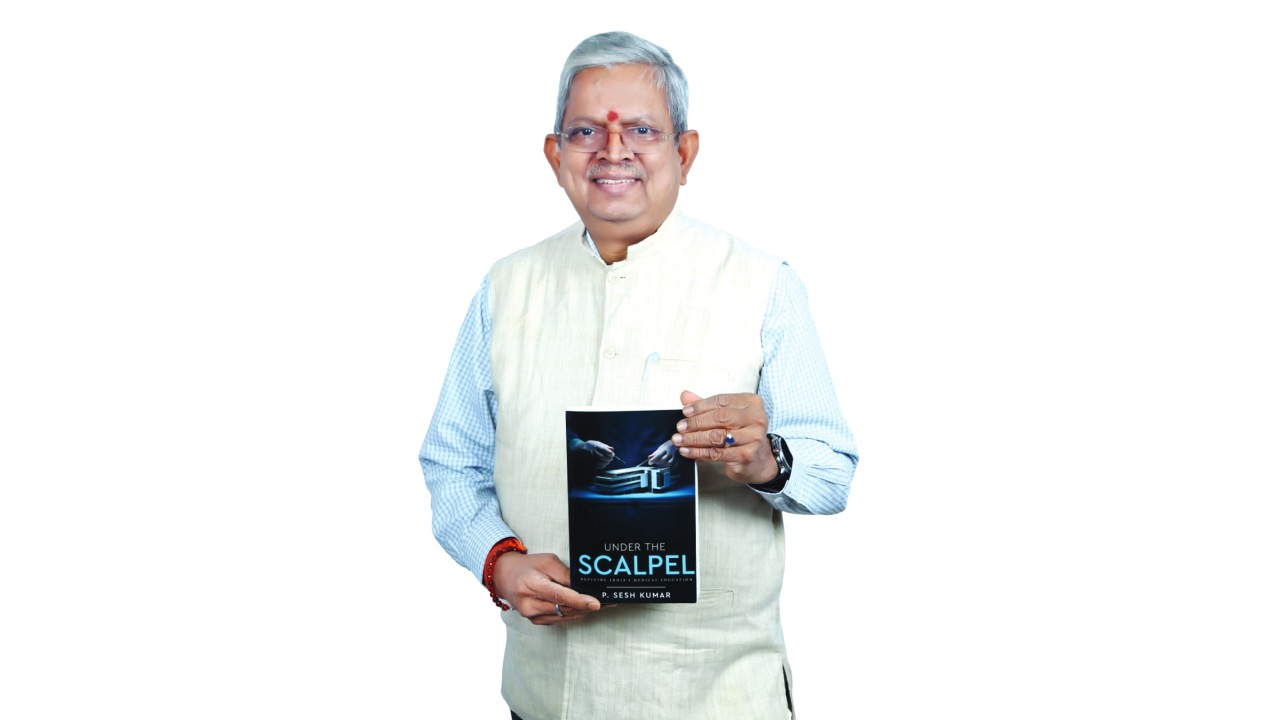
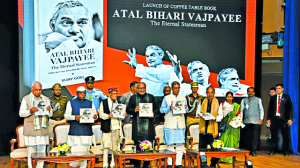
A powerful new book drawing on regulatory experience, court records and on-ground data has brought attention to the future of medical education in India, while examining the effectiveness of reforms. Authored with insider clarity, the book — Under the Scalpel: Reviving India’s Medical Education by P Sesh Kumar-examines the journey from the scandal-ridden Medical Council of India (MCI) to the National Medical Commission (NMC), and questions whether India’s race to expand medical seats is sacrificing quality, equity and human wellbeing.
At the heart of the book lies a searing critique of NEET, India’s single
high-stakes entrance examination. While acknowledging that NEET reduced corruption and introduced a national benchmark, the author argues that its over-reliance has turned medical admissions into a "gladiatorial contest". Students begin preparing as early as 13, often enduring 14-hour coaching days, crippling anxiety and emotional isolation. Kota, India’s coaching capital, emerges as a tragic symbol-where at least 26 student suicides were reported in 2023 alone, writes Kumar. The book warns that this is not an anomaly but "the tip of a mental health iceberg" that policymakers continue to ignore. The crisis deepens after MBBS, he grimly notes in the book, adding: "Each year, over one lakh graduates compete for barely 74,000 postgraduate seats, half of which are in private colleges charging up to ?1 crore for popular specialities." For middle- and lower-income students, the book notes, this turns aspiration into a ransom demand. A single error in NEET-PG, Kumar argues, can derail years of effort, forcing many into forced breaks, foreign migration or career abandonment.
While the government highlights seat expansion as a success-MBBS seats rising from 83,000 to over 1.18 lakh, and PG seats from 42,000 to 74,000 — the book asks a sobering question: are we mass-producing degrees or competent doctors? He further states that "inspections of newer colleges reveal low patient loads, skeletal faculty and inadequate laboratories". "Super-speciality seats remain abysmally low, with fewer than 2,500 DM/MCh seats nationwide, leaving nearly 80 per cent of specialist posts in district hospitals vacant," he adds in the book.
Faculty shortages form another fault line, the book reveals. Becoming a professor requires nearly a decade of post-MD experience, yet colleges have multiplied rapidly. To address this, the NMC liberalised faculty and infrastructure norms-allowing visiting faculty, reducing bed requirements and easing laboratory standards. While this helped expansion in resource-poor districts, the book warns it has also opened the door to corner-cutting and "desk-based inspections", raising fears of diluted clinical training.
The book also examines the NEXT (National Exit Test)-envisioned as a single exam for MBBS exit, licensure and PG admission. Despite being legislated in 2019, NEXT has been repeatedly deferred, leaving students trapped in regulatory limbo. Attempts to impose it retrospectively were challenged in court, further eroding trust.
A major section of the book is devoted to regulatory failure and corruption. Despite biometric attendance, CCTV mandates and digital audits, ghost faculty and fake patient data persist. "Between 2021 and 2023, over 40 medical colleges faced derecognition, with many cases reaching the Supreme Court. Alarmingly, recent CBI raids — not NMC inspections-exposed inspection scams across multiple states, raising uncomfortable questions about internal vigilance," Kumar reveals in the book.
The book also highlights inequity in geography and access. Nearly half of India’s medical colleges are concentrated in just five states, while populous and high-burden regions like
Bihar and Odisha lag far behind. Meanwhile, high fees and opaque counselling leave thousands of seats vacant each year — available on paper, unaffordable in practice. This is a telling revelation by Kumar on the nagging challenges faced by India’s medical education system.
Perhaps most poignantly, the book documents the desperation driving Indian students abroad. Hundreds were expelled mid-course from foreign universities in 2025, with no refund, no transfer and no protection-turning medical dreams into financial ruin. Kumar cites examples from Russian medical colleges where a nexus of agents and administrators makes students take admissions in excess of capacity, only for them to be expelled after two years on flimsy grounds. From Kenya to the Philippines, from Russia to China, and from Bangladesh to Iran, over a lakh medical aspirants leave India to fulfil their dreams. Sadly, only 30 per cent of them pass examinations in India to obtain a licence to practise.
This should be a wake-up call for administrators and India’s medical education czars that reforms are still half-baked and objectives far from achieved. In its concluding chapters, the book calls for sanity alongside scale: unified national counselling, a US-style residency match, integrated health-education governance, mental health support for aspirants, curriculum harmonisation across boards, and relentless regulatory oversight. The message is stark: meritocracy and transparency must be non-negotiable, or India risks repeating the very failures that led to the MCI’s collapse.
As India seeks to become a global healthcare powerhouse, the book serves as both a warning and a roadmap-reminding policymakers that in medical education, the true cost of failure is ultimately paid in human lives.
(The writer is a senior Delhi-based journalist); views are personal