India must put farmers first in the US deal
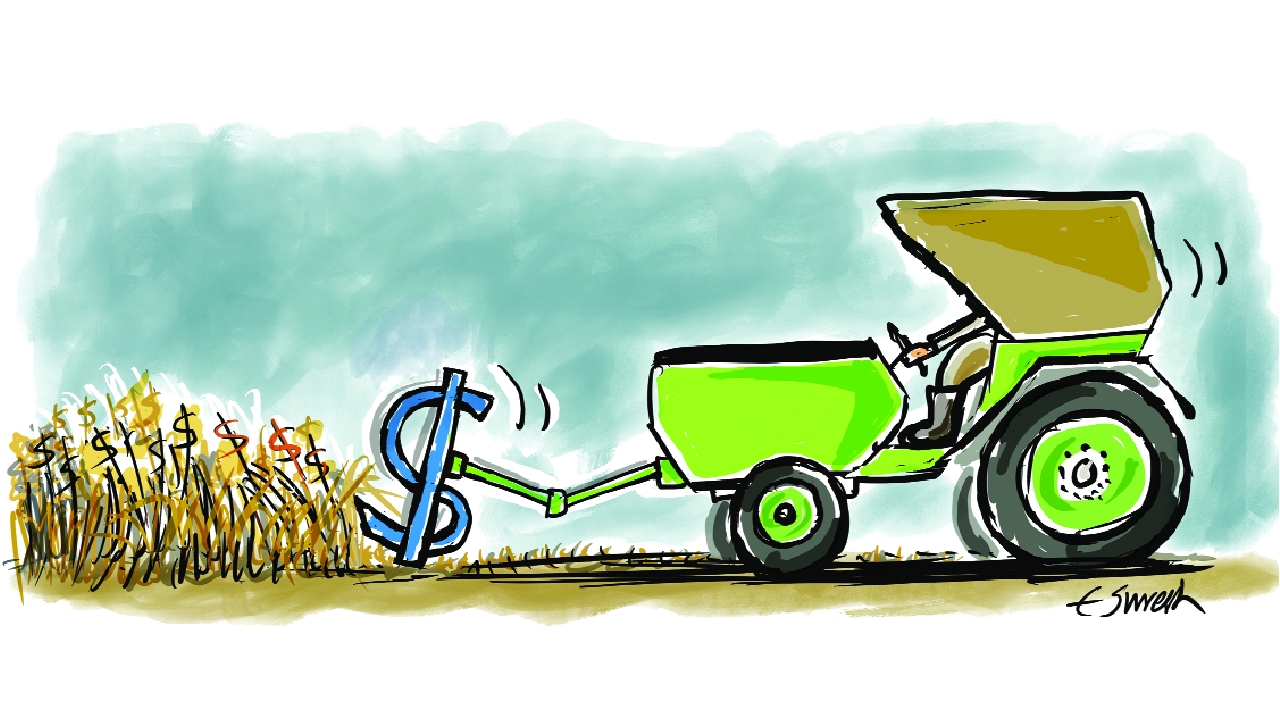
Modern India envisions its freedom as a victory not only of a nation but of foundational truths. Our founding fathers of the Constitution equated national interest with fairness. While conducting bilateral trade agreements, the fundamental principles should be national interest and the well-being of the people. The vision must be based on advantage for the masses and not merely on international goodwill.
The ongoing US-India Bilateral Trade Agreement is said to be mutually beneficial and aims to double bilateral trade to USD 500 billion by 2030, from the current USD 191 billion. Donald Trump announced an interim trade agreement with India on his social media platform, “Truth Social.” However, the actual text of this trade agreement remains veiled in secrecy. Washington has unilaterally made announcements regarding the agreement. On the other hand, the Government of India has not categorically rejected these claims. Officials, during interactions with the Parliamentary Committee, have stated that India is working on finalising the interim agreement with the USA and will issue a joint statement in due course.
Meanwhile, the Supreme Court of the United States pronounced a judgment stating that it is Congress that has the power, and not the President, to impose tariffs “unbounded in scope, amount, and duration” on any product from any country. In light of this judgment, both countries have decided to postpone the interim bilateral trade meeting until further notice. However, following the Supreme Court judgment, President Donald Trump confirmed that there would be no change to the US-India trade deal.
The main apprehensions and contentions about the interim deal concern the procedure and path being followed to review and relax restrictions on agricultural imports at the behest of Washington. Capitol Hill seeks access for agricultural products such as maize, wheat, soybeans, pulses, almonds, dairy products and other commodities. The interim agreement indicates that India may accept commitments in sectors such as defence, clean energy, crude oil, LNG, ethanol and civil aviation. On the other hand, India wants the USA to reduce tariffs further so that Indian goods can gain better access to the American market. Moreover, India is hesitant to negotiate on agricultural products and maintains silence on this contentious issue.
If India opens its market to US agricultural products, it will have cascading effects on Indian farmers in particular and the domestic market in general. India is also cautious regarding subsidies, as the WTO has been pressurising India to reduce subsidies and restrict the Minimum Support Price system. India is further cautious about the dairy sector because the American animal husbandry system allows non-vegetarian feed for cattle, whereas Indian cattle are fed vegetarian feed. This difference may have cascading effects on cultural and religious sentiments.
Through the US-India Bilateral Trade Agreement, the USA seeks to utilise the Indian market as a dumping ground for genetically modified (GM) grains, which may ultimately aggravate farmers’ distress. Indian farmers cannot compete with highly subsidised American farmers and powerful corporate lobbies. Hence, it is of utmost importance to protect the interests of Indian farmers. One of the important reasons for the USA to seal the deal is that India currently imports nearly 18 per cent of its agricultural products. Due to high subsidies provided to American farmers, their produce enjoys cost advantages. In contrast, Indian farmers receive comparatively minimal subsidies, resulting in higher production costs. Thus, Indian farmers may face severe distress if India agrees to the proposed terms. US and Indian farmers do not operate on the same platform; therefore, any policy must be framed after analysing this structural difference. The WTO must also adopt a more just approach, as the Agriculture Agreement of 1995 is widely perceived as inequitable due to differences in farm inputs and government subsidies between India and the USA.The main bone of contention in the tariff tussle between India and the USA appears to be shifting towards the energy and agriculture sectors. This may put pressure on jewellery, textiles, leather and engineering goods, which employ millions of citizens. Moreover, as per Executive Order 14257 of the USA, there is a complete ban on certain Indian food items entering the US market. To resolve this, a monitoring committee may be constituted by the USA. At this juncture, the USA may reduce tariffs further if India agrees to open its agricultural market, as the USA is eager to sell soybean, maize and corn for ethanol production. However, such imports may adversely affect Indian producers. India already has surplus stocks of animal feed. Ethanol producers argue that such imports would disrupt the domestic ethanol supply chain because India’s production capacity could exceed consumption levels.
Five major aspects of the bilateral trade agreement merit attention. First, while India may not formally open its agricultural sector, the interim agreement suggests that the USA may derive significant benefits, particularly through increased agricultural exports to India and improved prices for American farmers. Second, India does not permit genetically modified food products such as maize, soybean and certain dry fruits due to concerns about potential impacts on human health. Allowing imports of GM animal feed products must be assessed in terms of long-term toxicity, allergies, inter-generational effects and broader public health concerns. Third, the issue of dairy products derived from cattle fed non-vegetarian feed may disturb cultural and religious sensitivities in India. Fourth, the ramifications of this deal may distort India’s approach to pursuing national interest in an era of multilateralism and a multipolar world. Fifth, the disparity in farm subsidies between the USA and India remains significant, and the WTO Agreement of the Uruguay Round (1995) is often viewed as favouring developed countries like the USA.
Both nations must balance domestic economic concerns, commercial interests and cultural sensitivities. At present, bilateral negotiations appear tilted towards US farm products and biofuels, without sufficient clarity on improved market access for Indian exports. The Government of India must exercise extreme caution before granting any concessions on genetically modified products or opening the agricultural sector to external pressures.
The writer is a professor at the University of Delhi and a national spokesperson of the Rashtriya Janata Dal