India-EU Treaty: Forged by geopolitics
After nearly two decades of stop-start talks, India and the European Union recently announced the conclusion of negotiations on a free trade agreement. The trade deal is India’s ninth trade agreement in four years and its 19th overall, alongside six narrower preferential trade agreements.
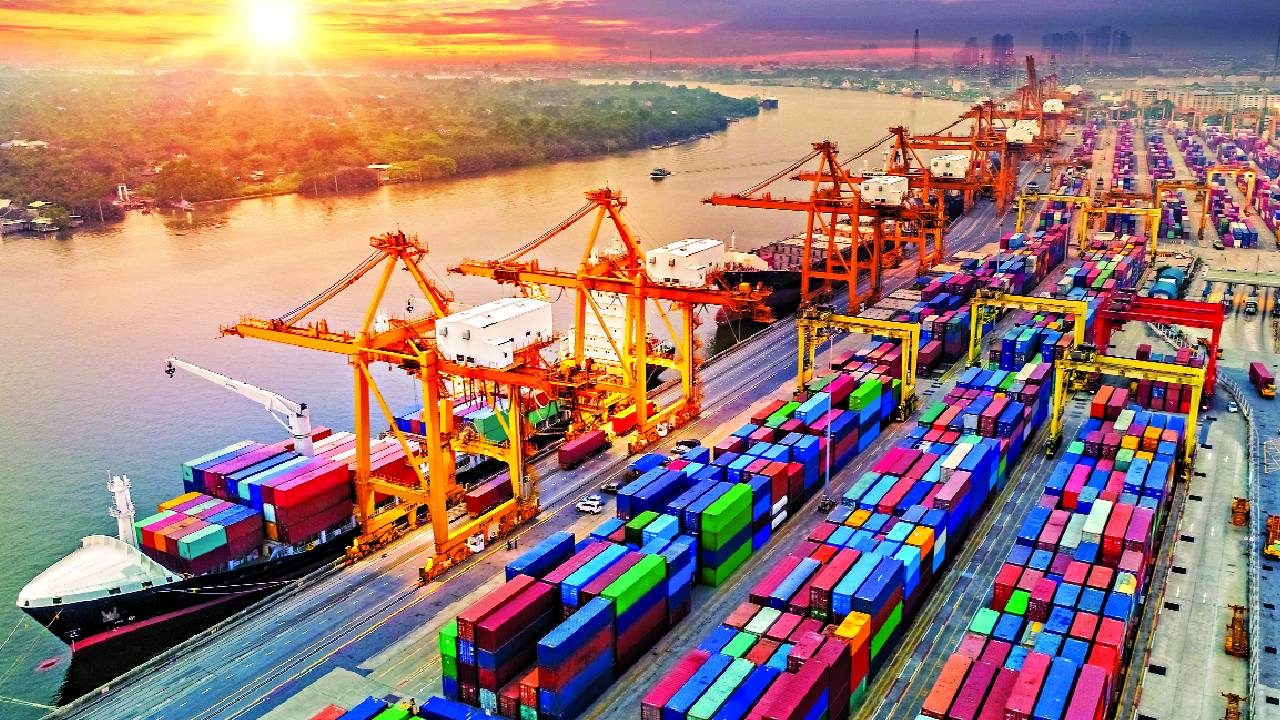
The deal is being concluded now not because differences between the two sides have vanished, but because geopolitics forced pragmatism. Recent tariff shocks under Donald Trump and rising dependence on China pushed both sides to narrow ambitions and shift to an executable deal. India and the EU together account for 23 per cent of global GDP and 25 per cent of the world’s population — nearly $25 trillion and two billion people — making this one of the world’s largest trade deals, serving around one billion middle- and high-income consumers. With bilateral goods and services trade already close to $220 billion, it starts from a strong base for expansion. The FTA helps both sides because India and Europe sell different kinds of products, so they do not compete directly with each other. India mainly exports labour-intensive goods such as garments, footwear and auto parts, along with downstream products like smartphones, generic pharmaceuticals, cut and polished diamonds, and processed fuels including diesel and aviation turbine fuel.
The European Union, by contrast, supplies capital- and technology-intensive products — machinery and aircraft — advanced goods such as electronic components and medical devices, and essential industrial inputs like rough diamonds and metal scrap. Because both operate at different stages of the value chain, tariff cuts will reduce costs and expand trade without hurting domestic industries.
Sectoral Outcomes
The FTA spans 24 chapters covering goods, services, intellectual property, digital trade, government procurement, environment, labour and data protection. Here is how both sides stand to gain in the key areas.
Tariff cuts: The EU will cut or eliminate tariffs on 98 per cent of Indian goods, though many duties are already low. Real gains lie in garments (around 12 per cent) and footwear (8-15 per cent), where tariff cuts would boost India’s competitiveness against Vietnam and Bangladesh. Tariff cuts will also benefit marine products, gems and jewellery, handicrafts, chemicals and machinery. India will reduce or remove tariffs on about 97 per cent of EU exports. Wine duties will fall from 150 per cent to 20-30 per cent, spirits to 40 per cent, beer to 50 per cent, and car tariffs from 100-125 per cent to 10 per cent for up to 250,000 vehicles. India will also move to zero tariffs on many agri-food products and most processed foods, chemicals, machinery, electronics and aircraft.
Services push: India has secured EU commitments in IT and IT-enabled services, professional services, education, finance, tourism, construction and other business sectors. The FTA also creates a framework to ease short-term and temporary business travel for professionals. However, the final outcome will be clear only once the text is released. Despite being India’s second-largest IT market, exports to the EU remain below potential. EU rules often require Indian firms to set up local offices even for remote work and impose high minimum salary thresholds for Indian professionals. India is seeking EU recognition as a ‘data-secure’ country to cut compliance costs and compete on equal terms with Japan and South Korea.
Overall, India’s gains in services will depend on the outcome of data security status, an adequate number of short-term visas, social-security totalisation, and mutual recognition of qualifications. Both sides agreed on facilitative frameworks on the above themes, but we have to wait for the legal text for details. India has offered the EU its most ambitious commitments on financial services in any trade agreement so far.
Other areas: India and the EU differ critically on government procurement, intellectual property, labour, environment and sustainability. We will know the details once the FTA texts are released.
Key risks: The FTA’s success will depend on how the three risks are handled.
Carbon tax: The EU’s Carbon Border Adjustment Mechanism (CBAM) began taxing imports based on their carbon emissions from January 1. Post-FTA implementation, EU goods could enter India duty-free, while Indian exports will continue to face carbon taxes in Europe. Worse, although CBAM currently covers only six products, including steel and aluminium, it is designed to expand to all industrial goods in the next few years, potentially wiping out much of the FTA’s tariff gains.
The agreement does little to fix this imbalance. The EU has agreed to extend to India any flexibility it offers other countries, like recognising carbon prices or verifiers, but this provides no relief to exporters already paying the tax. Also, a proposed cooperation platform in early 2026 and possible EU funding of €500 million for India’s green transition are broad measures that do not address exporters’ immediate, product-level carbon-tax costs, leaving CBAM largely unresolved. India may consider an equal value retaliation.
Regulatory hurdles: Indian medical devices and chemicals face high registration costs. Basmati rice, spices and tea are often rejected due to unreasonably low pesticide trace limits, while marine products face extra testing. Schemes like CBAM require certification by EU-authorised auditors and extensive data reporting, raising costs, delaying shipments and hurting MSMEs most.
Delayed EU ratification remains a risk. The EU-Mercosur deal, signed on January 17, 2026, faces opposition from several EU countries over farm imports and environmental concerns, blocking even provisional application. While the India-EU FTA largely avoids agriculture, new objections could still emerge. Even in the best case, approval by all 27 EU member states could take more than a year.
After years of drift, the India-EU FTA signals a turn toward realism in a fractured global trade system. Its promise is clear, but so are the risks-above all, the unresolved carbon tax, which is set to weigh on Indian exports in the years ahead, like a toll booth placed halfway across a free bridge.
Writer Ajay Srivastava is a former Indian Trade Service officer.