How the US ‘pause’ became Iran’s unraveling
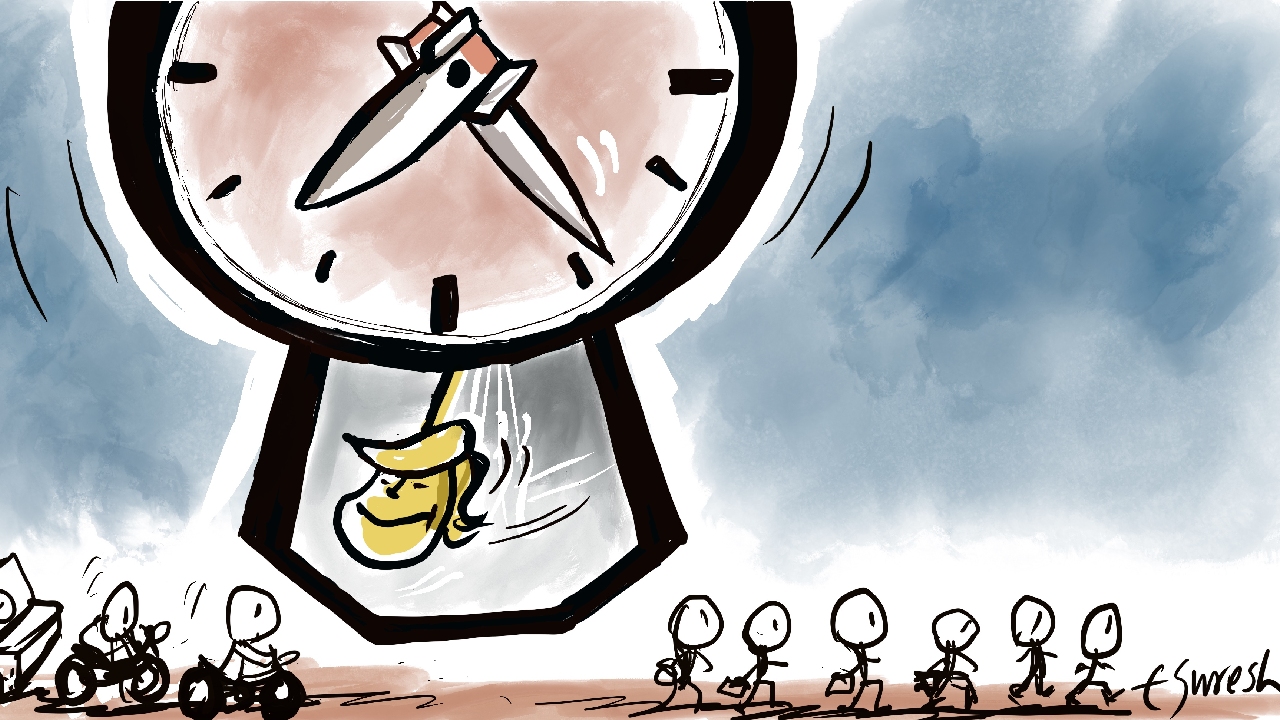
When the White House unveiled its so-called “Five-Day Pause” on March 23, 2026, the language was deliberately measured — invoking diplomacy, restraint, and the possibility of de-escalation. It suggested a fleeting opening for negotiation, a momentary suspension in a conflict spiralling towards greater destruction. Yet beneath this carefully crafted rhetoric lies a far more deliberate and consequential reality. What has unfolded in the Persian Gulf is not a ceasefire in any meaningful sense. It is a calculated pause within a broader campaign — a precise and methodical dismantling of the Islamic Revolutionary Guard Corps, executed with strategic clarity and ruthless timing. By the middle of that week, the IRGC — long the backbone of Iran’s military projection and internal control — had effectively ceased to function as a unified force. For decades, it served as both shield and sword of the Islamic Republic, extending Tehran’s influence across the region while maintaining its grip at home. Now, what remains is fractured and volatile: a disoriented network of fighters without leadership cohesion, their command structure shattered, their ideological authority eroded by the very population they once dominated. In the immediate term, this disarray may prove dangerous, as remnants lash out unpredictably. Over time, however, it risks sliding into irrelevance. This moment does not mark the end of a long shadow war — it signifies that its decisive phase has already concluded.
The past few weeks have produced a strategic outcome rarely seen in modern conflict. Through a combination of sustained Israeli operations and overwhelming American military force, the foundational pillars of Iranian power have been systematically targeted: leadership, energy infrastructure, and internal security mechanisms. Each has been degraded to a point where recovery, at least in the short term, appears improbable.
At the highest levels, the vacuum is absolute. Key figures who once defined the regime’s authority are no longer in play, leaving behind a disjointed command environment. Intelligence networks have been disrupted, communication lines severed, and mid-level operatives left to improvise in a landscape devoid of direction. These are no longer coordinated military units executing strategy; they are isolated actors navigating uncertainty, awaiting outcomes they cannot influence.
Within the broader military structure, deeper fractures have emerged. The longstanding divide between the regular armed forces and the IRGC has widened into open dysfunction. Reports from the ground suggest resource hoarding, breakdowns in supply distribution, and growing mistrust between units. The consequences have been stark: desertions, collapsing morale, and an accelerating erosion of any semblance of unified defence.
It is within this context that the so-called pause must be understood. Rather than an act of restraint, it functions as a strategic instrument — a narrow window designed to shape behaviour before the next phase begins. By temporarily withholding strikes on critical infrastructure, particularly the power grid, the United States has introduced a calculated pressure point. The message is implicit but unmistakable: those still positioned within the remnants of state authority are being offered a limited opportunity to disengage before far more devastating measures are deployed.
The early effects of this approach are already visible. Maritime transit through the Strait of Hormuz has resumed under a new and uneasy arrangement, one defined less by stability than by shifting power dynamics. What was once a contested chokepoint has, for the moment, been reconfigured under a framework in which security guarantees are tightly linked to American oversight.
Beyond the immediate theatre of conflict, the consequences are radiating outward, reshaping global alignments in subtle but significant ways. Control over critical transit routes has reinforced the centrality of American financial and military systems.
Simultaneously, the long-contested issue of Iran’s nuclear ambitions has been fundamentally altered. Key facilities have been rendered inoperable, achieving through force what decades of diplomacy failed to secure. This development has opened the door to new regional alignments, with longstanding rivalries giving way to pragmatic cooperation shaped by shared security concerns. Energy markets, too, are entering a period of recalibration. With multiple supply sources in play and the prospect of Iranian output eventually re-entering under different conditions, pricing dynamics are shifting. The implications extend well beyond economics, influencing geopolitical leverage and the stability of states heavily dependent on energy revenues.
Yet even as analysts map these strategic outcomes, the underlying reality remains unsettled. The scenario constructed by military planners points towards a decisive escalation should current conditions persist — one that could cripple essential infrastructure on a scale not seen in decades. Such an outcome would not merely weaken a regime; it would transform the daily lives of millions, pushing an already strained society into profound hardship.
And this is where the limits of strategic analysis become starkly evident. Behind every abstraction — every reference to “operations,” “targets,” or “infrastructure” — lies a human story that cannot be reduced to metrics or outcomes. The past weeks have inflicted immense suffering on ordinary people: families displaced, lives interrupted, futures erased. These are not incidental details in a broader narrative; they are its most enduring and consequential elements.
As the clock continues to tick on this precarious pause, the world watches not only the unfolding of power but the shaping of memory. For the millions living through this moment, the experience will leave an imprint that endures far beyond any immediate political outcome. History has shown, time and again, that the aftermath of such upheaval is determined not solely by those who wield power, but by those who survive its exercise. Whatever order eventually emerges will be built upon this foundation of loss and transformation. It may reflect new alignments, new balances, and new calculations of interest. But it will also carry the weight of what has been destroyed — a reality that no framework of strategy can fully contain, and no justification can entirely resolve.
Udai Kumar reports on geopolitics and strategic affairs. He is based in Chicago; views are personal