From darkness to light: The many facets of Diwali
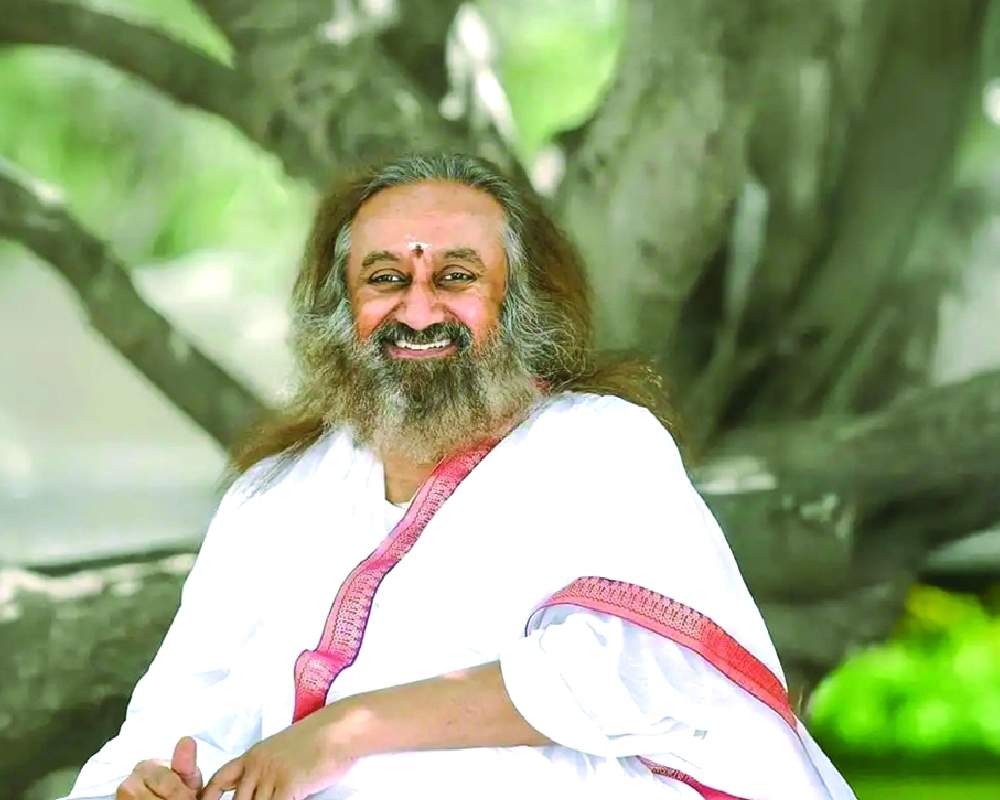
Diwali means being in the present by dropping the regrets of the past and the worries of the future. It is time to forget the bickering and negativity you have encountered in the past one year. When true wisdom dawns, celebration arises naturally. Celebration is the nature of the spirit. The ancient sages made every celebration sacred so that we don’t lose focus in the hustle and bustle of activity. Performing puja and rituals is simply showing gratitude to the Divine, and this brings depth to celebration. There are many stories and spiritual underpinnings to the festival of Diwali that vary from state to state, and each has something for us to learn from.
The Vastness You See in the Dark
The second day of Diwali is celebrated as Kali Chaudas or Naraka Chaturdashi in many parts of the country. Kali symbolises knowledge. She awakens you in knowledge; awakens you to the vastness of creation. It is only in the night that you can see thousands of stars. If there were no nights, we would never have known the magnitude of our universe and the many planets and galaxies.
What you see in the daytime are the relatively smaller things; what you see in the night is brahmand — the whole universe, the Milky Way, the infinite glory of existence. Kali is the mother of wisdom, who opens you up to this sense of wonder.
When you close your eyes to small things, you open yourself up to see something much bigger. The pupil in your eyes is also dark — that is also called Kali. If that dark pupil is not there in your eyes, you will not be able to see anything.
Kali is beyond description, intellect, and speech; that is why she is depicted with her tongue out. She is not someone sitting somewhere; hers is an energy that can be felt and experienced. She stands on Shiva - the silent, infinite principle. When you experience that deep silence, that non-dual principle of Shiva which is your very Self, then the energy that you experience is the energy of Kali, opening you to higher knowledge.
The Story of Satyabhama
Another story associated with Diwali is about the wicked king Narakasura who made life miserable for everyone. He was so powerful that no one could defeat or destroy him. But one of Krishna’s consorts, Satyabhama, fought him, and she destroyed him.
It is said Narakasura had a boon that he could be killed only by a woman. Narakasura thought, “What can this woman do to me? When great kings and warriors with so much power could not harm me, what can a woman possibly do?” That was his arrogance. Krishna stood beside Satyabhama in the chariot, and from next to him, she shot an arrow that eventually killed Narakasura.
There is great symbolism even in the name: Satya means truth and bhama means the beloved; and narak is hell. Asuras were those who did not think about the spirit. They were only bound by the body or material pleasures. Untruth or lack of love cannot conquer hell. It cannot be removed by aggression. Hell can only be erased by truth, love, and surrender. Non-aggression, love, and surrender are the inherent qualities of a woman.
Hence, only Satyabhama — the true beloved, embodying truth and love — could destroy Narakasura and bring the light back.
At the time of his death, Narakasura was asked, “What is your last wish?” He said, “Now that I am dying, I want everyone to celebrate my departure by lighting lamps and distributing sweets. I caused so much suffering; now that I am gone, there should be no more suffering for anyone. Everyone should rejoice in my departure.”
That was his last wish — that people should celebrate, not mourn. It is said, in the end, he saw the light.
The Lamp of Wisdom
If you are drowned in materialism, you cannot bring joy and knowledge into your life. By being in the world yet not drowned in it, you can be the light of joy and knowledge.
For an oil lamp to burn, the wick has to be partially immersed in the oil. If it is completely drowned in oil, it cannot be lit. Life is like the wick of the lamp; you have to be in the world and yet remain untouched by it. Lamps are lit on this day not just to decorate homes but also to communicate this profound truth of life.
Light a Thousand Lamps
Every human being has some good qualities. And every lamp that you light is symbolic of this. Some people have forbearance, some love, strength, generosity, or the ability to unite people. The latent goodness in you is like a lamp. Don’t be satisfied with lighting just one lamp; light a thousand and rekindle the goodness in everyone around. By lighting the lamp of wisdom in yourself and acquiring knowledge, you awaken all facets of your being. When they are awakened, that is true Diwali.
Feeling the Abundance
A day prior to Diwali, Dhanteras is celebrated to remind you about the abundance in your life and that whatever you need will come to you. Remember all the blessings you have received in life and feel grateful — that’s the purpose of Dhanteras.
The tradition is to put all the wealth you have earned in front of you and feel abundant. When you feel a lack, the lack grows; when you put your attention on abundance, abundance grows.
The Transience of Wealth
In Srimad Bhagavatam, there is a mention of an incident when Goddess Lakshmi left the body of King Bali and wanted to go with Lord Indra. On being asked, she mentioned that she resides only where there is satya (truth), daan (charity), vrat (abstinence), tapa (penance), parakram (courage), and dharma (righteousness).
She comes only where there is cleanliness within and outside.
The thought of getting wealth brings thrill (pulkit) in people. The light that comes with her is not harsh but like moonlight — pleasant, gentle, and beautiful. When knowledge remains limited to just concepts and is not integrated with life, there is no Lakshmi there. She likes simplicity and clarity. There is a beautiful story from Adi Shankaracharya’s life. Once, when he went to seek alms, a poor lady offered him only one gooseberry. Moved by her devotion, he composed and sang the Kanakadhara Stotra — a hymn to Goddess Lakshmi. And the story goes, golden gooseberries rained from the skies.
Lakshmi loves one-pointed devotion. The verse says Anga hareh pulakabhusanam asrayanti, meaning, she adorns herself with the thrill (pulkit) of devotion.
Though there are many legends about the festival, Diwali is essentially celebrated to spread wisdom in every heart and to bring a smile on every face. Life has many facets and stages to it. It is important that you throw light on all of them. For if one aspect of your life is in darkness, there can be no complete expression of life. That’s why rows of lights are lit on Deepavali — to remind you that every aspect of life needs your attention and the light of knowledge. Wisdom is needed everywhere. Even if one member of the family is shrouded in darkness or negativity, you cannot be happy.
So, you need to kindle the light of wisdom in every member of your family. Could you extend it to every member of society, every person on the planet? So, this Diwali, let us pray and feel grateful for all that we have received. Let us wish for prosperity in every corner of the world. Let all people experience love, joy, and abundance in their lives.