From Bargari to Baisakhi: Why sacrilege still shapes Punjab’s political destiny
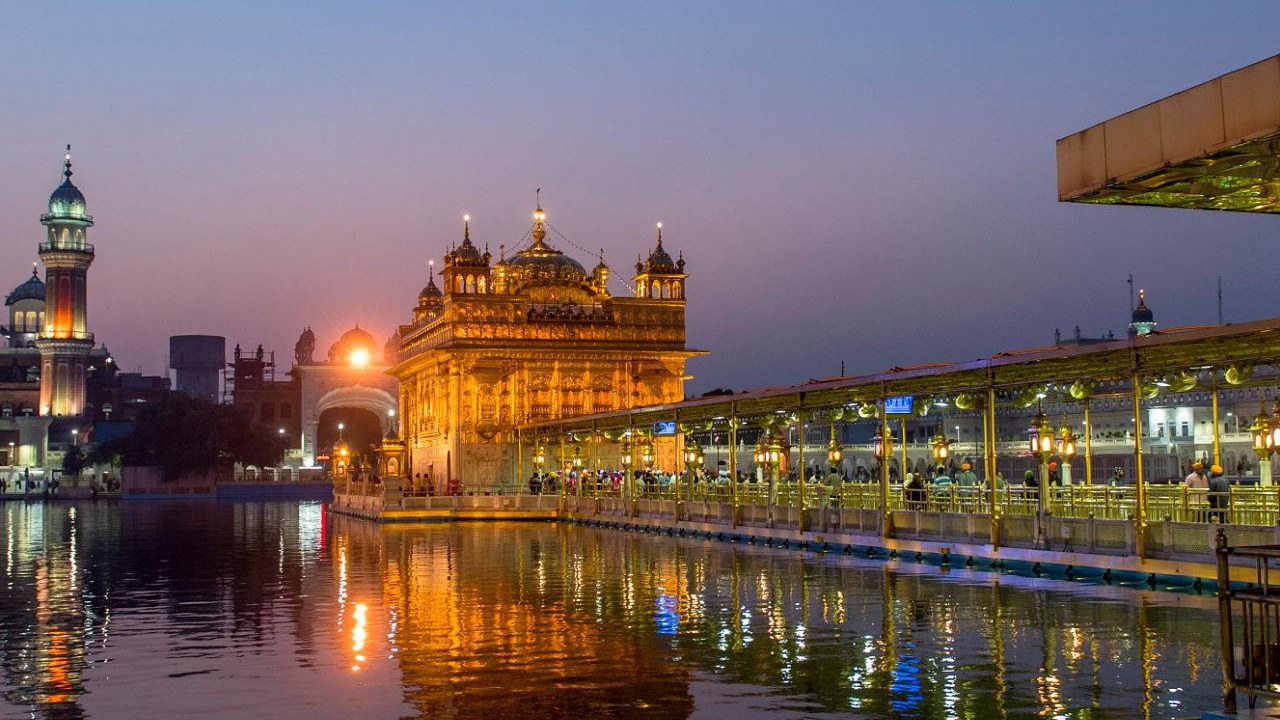
Nearly a decade after the torn pages of the Guru Granth Sahib were found at Bargari in 2015, the anger that followed still lingers-quiet at times, explosive at others. Governments have changed, laws have been promised, and commissions have submitted reports, but the political aftershocks of that episode continue to travel through every election cycle. That is why the Aam Aadmi Party (AAP)-led Punjab Government’s decision to hold a special Assembly session on April 13, Baisakhi, to amend sacrilege laws is not just legislative business. It is a political message wrapped in religious symbolism.
Baisakhi, after all, is not merely a festival in Punjab. It marks the birth of the Khalsa in 1699, a foundational moment in Sikh history. Choosing that day to strengthen sacrilege laws reflects an enduring truth: in Punjab, faith and politics rarely move in separate lanes.
At the heart of the current legislative push lies the ‘Jagat Jyot Sri Guru Granth Sahib Satkar Act, 2008’, originally enacted by the SAD-BJP government to ensure dignity and proper handling of the Guru Granth Sahib, but long criticised for weak enforcement mechanisms. The law granted exclusive rights to publish the Guru Granth Sahib to the Shiromani Gurdwara Parbandhak Committee (SGPC) and focused largely on regulating printing, storage, and transportation.
The proposed amendments go beyond harsher punishments. The AAP Government is now looking at the digitisation of registered saroops, the introduction of QR codes and bar-coding systems, and mandatory record-keeping of printing, transportation, and storage, aimed at creating traceability and accountability at every stage-an attempt to prevent not just sacrilege, but also the administrative lapses that often precede it.
The disappearance of a “saroop” of the Guru Granth Sahib from Burj Jawahar Singh Wala in June 2015 was disturbing enough. But when torn pages were found scattered outside a gurdwara in Bargari village that October, the outrage was immediate and visceral. Protests spread rapidly across the state. For many Sikhs, it was not simply a crime-it was an attack on the living Guru.
Then came the police firing at Behbal Kalan and Kotkapura. Two lives were lost. That moment transformed public anger into political resentment-against authority, and against the state itself. For the Shiromani Akali Dal (SAD), which had governed Punjab for a decade by then, the fallout was devastating. The perception that the government mishandled the crisis-both the sacrilege incidents and the protests that followed-began to erode its credibility. The 2017 Assembly election was the first major political test after Bargari, and it showed how deeply the issue had penetrated public consciousness.
The Congress campaign under Capt Amarinder Singh repeatedly invoked sacrilege and police firing incidents, promising justice and accountability. The Akali Dal, once considered nearly invincible in rural Punjab, faced hostility in regions that had earlier been its strongholds. That election marked the beginning of the Akali Dal’s steep decline. Bargari did not destroy the party overnight, but it punctured its aura of control. The party’s Panthic credibility began to weaken visibly after 2017. Even in the years that followed, Bargari remained shorthand for betrayal in political speeches. Successive governments attempted to respond with laws and inquiries. Yet, the pace of justice remained painfully slow.
Punjab has, in fact, seen multiple legislative attempts over the years. In 2016, the SAD-BJP government introduced amendments proposing life imprisonment for desecration of the Guru Granth Sahib and lesser punishments for other religious texts.
In 2018, the Congress Government revised the proposal to include uniform punishment for sacrilege of all religious scriptures, but the Bill has remained pending for years without Presidential assent.
The inquiry process itself unfolded in layers. The SAD-BJP government first constituted the one-man Justice Zora Singh Commission in October 2015 to probe the Bargari sacrilege incidents and subsequent police firing, but its 2016 report was widely criticised as inconclusive and failed to restore public confidence. The succeeding Congress Government then set up the Justice Ranjit Singh Commission, whose findings pointed to serious administrative lapses and recommended action against several officials. Reports were tabled, allegations were made, yet visible closure remained slow.
That gap between promise and outcome gradually created a deeper crisis — one of trust.
When the AAP entered Punjab’s political landscape, it capitalised on precisely that sentiment. In the run-up to the 2022 Assembly election, AAP promised swift justice and stricter laws. The promise resonated widely, especially among voters frustrated with years of unresolved cases. Its sweeping victory reflected not just anti-incumbency against Congress, but accumulated anger from the Bargari years.
What makes sacrilege different from other political issues is its emotional permanence. Sacrilege touches identity. It triggers memory rather than debate. That is why even isolated incidents — such as reports of missing religious texts — revive the older wounds of 2015.
Every few months, the issue resurfaces. And each time it does, the political temperature rises. That lingering sense of unfinished justice is visible in the extraordinary protests the issue continues to inspire. For months, activist Gurjeet Singh Khalsa has remained perched atop a mobile tower in Samana, demanding stricter punishment for sacrilege-a stark reminder of how unresolved grievances continue to shape public sentiment.
Over time, the political conversation itself appears to have shifted. In the years immediately following Bargari, the central demand from Sikh organisations was justice-identification of the accused and accountability for the police firing. Gradually, however, as investigations dragged on and trials slowed, public discourse began to move from demanding justice in specific cases to demanding tougher laws altogether. What began as a call for accountability has, in many ways, evolved into a broader demand for stronger legal protection of the Guru Granth Sahib.
The current government’s move to amend sacrilege laws on Baisakhi must be seen in this context. It is not merely about punishment; it is about reassurance.
The proposed amendments aim to introduce stricter penalties-ranging from long-term imprisonment to life sentences-along with provisions to address newer forms of offence, including digital dissemination of sacrilegious content. The move could revive debate over exclusive protection for the Guru Granth Sahib versus uniform legal safeguards for scriptures of all religions. The real challenge is enforcement. Investigations must be credible, prosecutions consistent, and outcomes visible. Without that, even the toughest law risks becoming symbolic rather than effective. If one were to map Punjab’s electoral trajectory since 2015, sacrilege would appear repeatedly at key turning points. It weakened the Akali Dal after 2017. It remained unresolved under Congress. It helped shape the narrative that propelled AAP to power in 2022. Now, as Punjab slowly moves towards the 2027 Assembly election, the issue is returning to the centre once again. This layered tension ensures that sacrilege will not remain confined to legislative chambers. It will travel into campaign speeches, religious gatherings, and public memory. The coming Baisakhi session will be watched closely-not just for what law is passed, but for what direction it signals. Will it finally restore confidence in the system? Or will it become another chapter in a long history of announcements without closure?
The writer is Chief Reporter, The Pioneer, Chandigarh ; views are personal