India’s space race heats up: New venture from Hyderabad signals next big leap.
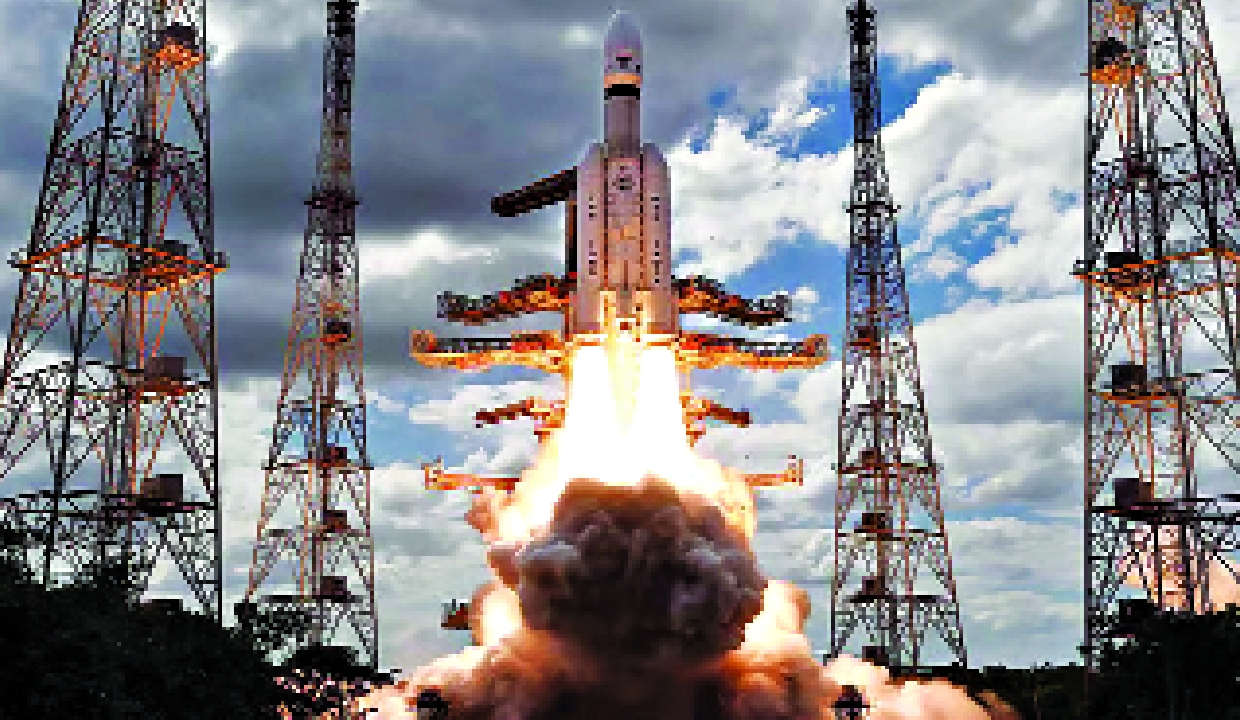
India’s space economy is moving into a decisive phase—defined by scale, speed, and growing global ambition. Over the years, the Indian Space Research Organisation (ISRO) has launched more than 430 foreign satellites, steadily building a reputation for cost-efficient and reliable missions. What began as a largely scientific pursuit is now evolving into a commercially competitive space programme, at a time when the global space economy is projected to cross the $1 trillion mark by 2040.
This shift is unfolding against a rapidly changing global backdrop. The rise of reusable launch technologies, led by SpaceX, has dramatically lowered costs and turnaround times, forcing spacefaring nations to rethink their strategies. India, however, appears to be keeping pace. High-profile missions such as Chandrayaan, along with record-setting multi-satellite launches and a steadily growing private ecosystem, point to a clear strategic pivot—one that aims to capture a larger share of the global launch and satellite services market.
Demand is surging across sectors, from broadband connectivity and earth observation to defence-linked space infrastructure. In this environment, India’s combination of affordability, reliability, and a more open policy framework is increasingly positioning it as a serious contender on the global stage.
At this crucial juncture, defence-linked sources suggest that India could soon witness another milestone. By May 2026, the country may see the rollout of its first full-stack private aerospace venture by the name of Astramile Aerospace. The proposed venture brings together a diverse founding team—an Indian Army veteran, former scientists from the Defence Research and Development Organisation (DRDO) & ISRO and Hyderabad-based entrepreneur Neetu Malhotra. If realised as planned, the company could mark a significant step forward in India’s private participation in the space sector.
Astramile Aerospace is expected to position itself alongside existing players like Skyroot Aerospace and Agnikul Cosmos, while seeking to distinguish itself through a fully integrated, end-to-end aerospace model. Unlike many startups that focus on a single segment, the company is reportedly aiming to combine launch capabilities with satellite manufacturing under one umbrella.
According to sources familiar with the plans, the venture is working on both nano and micro satellite platforms. Nano satellites in the 10–50 kg range and micro satellites between 100–500 kg are expected to serve a wide spectrum of applications, including earth observation, telecommunications, agriculture, and defence.
To support this, the company is setting up a state-of-the-art cleanroom facility for precision manufacturing, alongside advanced vibration and thermal vacuum testing systems required for space-grade qualification. The broader manufacturing ecosystem is being designed to handle the entire lifecycle—from assembly and calibration to final flight readiness—effectively creating a vertically integrated operation across both payloads and launch systems.
On the propulsion front, Astramile is planning near-term testing of a reusable semi-cryogenic engine-based launch vehicle to insert small satellites weighing between 800 to 1000 kilograms into the Lower Earth Orbit (LEO). This platform is expected to eventually support deep-space missions. Notably, around 80% of the venture’s components are expected to be indigenously sourced, aligning closely with India’s push for self-reliance under Hon PM’s initiative of Atma Nirbhar Bharat and Make in India.
Headquartered in Hyderabad, the company is also planning a 100-acre integrated aerospace campus in Andhra Pradesh. The facility is expected to house design, R&D, and manufacturing operations, with a strong emphasis on sustainability—ranging from renewable solar energy use to zero liquid discharge systems and closed-loop water management.
Currently self-funded, Astramile Aerospace is in the process of raising seed or Series A round. Its roadmap outlines a phased investment strategy leading up to its first launch, tentatively in 2029. In the longer term, the company is targeting over 10 orbital launches annually, scaling satellite production to as many as 25–30 units per year, and expanding into global markets.
Going by the current plans, Astramile Aerospace is likely to become a key player in India’s evolving space ecosystem—at a time when the country is not just participating in the global space race, but steadily working to shape it.
The author is a Delhi-based independent contributor to print and online publications; Views presented are personal.