Iran-US standoff: When the global order begins to fray
The most destabilising fault line may not lie in the waters of the Gulf, but within the United States itself, where a fractured policy establishment-marked by resignations, intelligence leaks, and competing strategic doctrines-has eroded Washington’s credibility as a coherent negotiating force
As of late April 2026, the geopolitical landscape is defined by a fragile, high-stakes standoff between Washington and Tehran. What began as a series of targeted strikes in February has devolved into a “grey zone” conflict that threatens to reshape the global financial order and dismantle established maritime security protocols. The situation is a volatile mix of tactical military manoeuvres, internal US political instability, and a fundamental shift in how the world’s rising powers interact with the Western-led financial system.
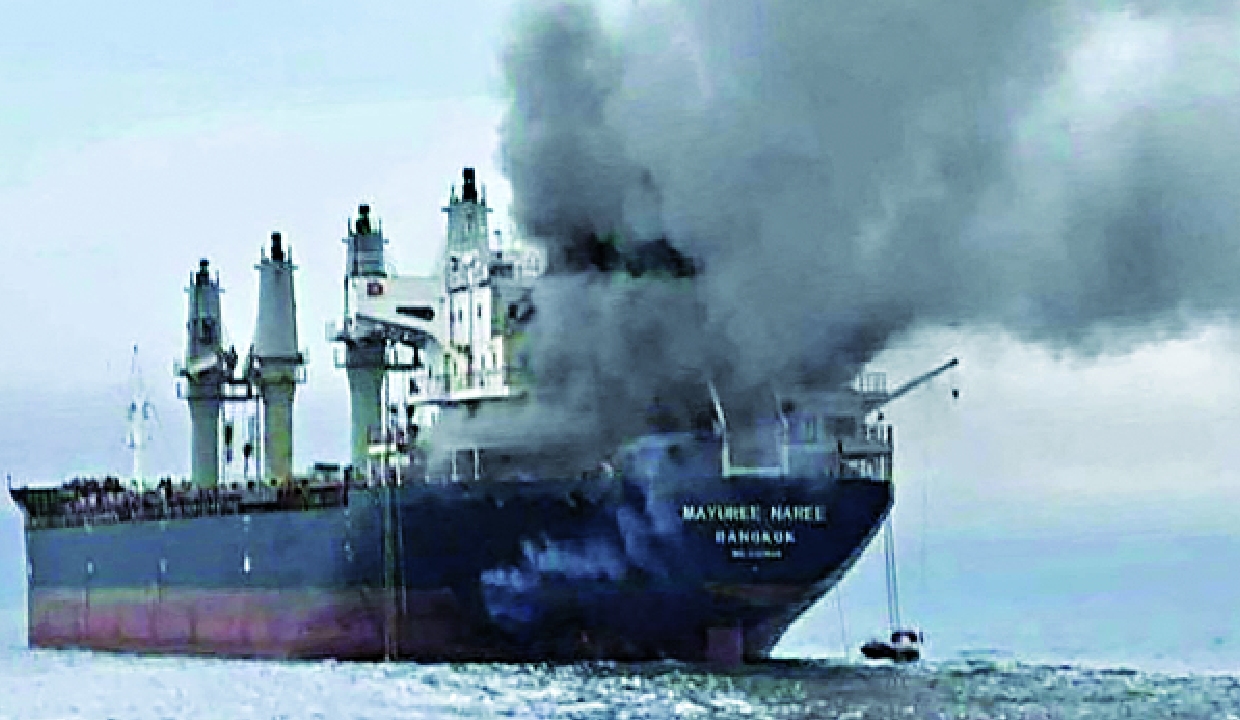
The conflict reached a fever pitch in mid-April. Following the expiration of the first two-week ceasefire, the situation on the ground remains volatile. On April 13, the US initiated a naval blockade of Iranian ports after negotiations stalled. Iran responded by declaring the Strait of Hormuz a “closed military zone,” effectively choking off 20 per cent of the world’s oil supply. On April 21, the US Navy seized the Iranian-flagged cargo ship Touska in the Sea of Oman, citing sanctions violations. Tehran branded this as “piracy” and retaliated immediately. On April 22, an Iranian Revolutionary Guard (IRGC) gunboat opened fire on a commercial vessel near the entrance to the Strait. According to the UK Maritime Trade Operations (UKMTO), the vessel’s bridge was hit without warning, directly contradicting Tehran’s claim that it was merely enforcing maritime law.
Despite these escalations, President Trump has indefinitely extended the ceasefire “at the request of Pakistan”. However, this “peace” is purely nominal. Both sides are using the lull to reposition assets: the US is bolstering its regional missile defence and naval presence, while Iran is signalling endurance. In a display of calculated defiance, Tehran paraded its Khorramshahr ballistic missiles through civilian streets-a range of 2,000 km-demonstrating that it is not negotiating from a position of weakness. For 50 consecutive nights, large-scale rallies have filled Iranian squares, projecting a sense of national unity and resistance despite the heavy economic toll of the conflict.
Meanwhile, there have been mishaps galore in the internal US administrative and military hierarchies, with several honchos preferring to wash their dirty linen in public.
Several senior US officials and officers resigned or were removed during the 2026 US-Iran conflict, most notably Joe Kent, Director of the National Counterterrorism Center, who resigned in March 2026, citing opposition to the war. Additionally, Navy Secretary John Phelan stepped down in April 2026 amid a Pentagon shake-up, while Army Chief of Staff Gen. Randy George was asked to step down.
The most damaging “hiccup” in recent negotiations stems from reports of a massive intelligence breach involving senior US officials. Rumours have circulated regarding a high-ranking member of the Middle East policy team who allegedly disclosed sensitive “war secrets”-including contingency plans for strikes on Iranian hardened sites and the specific “red lines” for a ground intervention-while in an inebriated state at a private diplomatic gathering.
This lapse has been personified in the recent investigation of Andrew Hug, a branch chief for nuclear and chemical security in the US Army. Caught in an undercover sting, Hug reportedly discussed nuclear launch procedures, chemical nerve agents, and even alleged plans to target Iranian leadership, all while under the influence. While the White House has scrambled to contain the fallout, this lapse has highlighted a deeper, more systemic issue: policy schizophrenia. There is a widening chasm between the “Maximum Pressure 2.0” hawks, who believe Iran’s leadership is on the verge of collapse, and the “de-escalation” pragmatists. The latter group, composed of career diplomats and military leadership, argues that the current path is unsustainable. They contend that the “all-or-nothing” demands presented in the April Islamabad talks were designed to fail, serving as a pretext for a naval blockade rather than a genuine diplomatic exit ramp.
These internal disagreements have led to a “leaky” administration where conflicting signals are being sent to Tehran, confusing Omani and Pakistani mediators and convincing the Iranian regime that the US is not a unified negotiating partner. The International Atomic Energy Agency (IAEA) reported as recently as last week that while Iran’s programme is “ambitious,” there is no definitive proof it has crossed the threshold into weaponisation. Domestic critics in the US are using this fact to challenge the legitimacy of continued strikes, arguing that the administration is overreaching.
Tehran has rejected the US ceasefire framework outright, demanding reparations for the February strikes, security guarantees, and strategic control over the Strait of Hormuz. Iranian officials are deeply sceptical of the ceasefire extension, calling it a strategic delay-a tactic by the US to buy time while maintaining a strangling naval blockade.
The economic consequences of this 2026 conflict are no longer theoretical; they are manifesting as a fundamental shift in the global financial architecture.
With the Strait of Hormuz effectively a battlefield, Brent crude has spiked to $115 per barrel, with projections reaching $130 if the blockade persists through the summer. This has triggered “green inflation,” where the cost of the energy transition has skyrocketed. Petroleum-derived components needed for manufacturing everything from solar panel plastics to turbine lubricants have doubled in price, threatening global climate goals. Perhaps the most significant long-term shift is the accelerated “de-dollarisation” of the Global South. In response to the US using the SWIFT system as a weapon, the BRICS+ bloc has fast-tracked the “BRICS Pay” system. China and India are increasingly settling oil trades in yuan and rupees, bypassing the greenback entirely.
This is creating a bifurcated global economy: a Western-led “Dollar Zone” and an Eastern-led “Commodity Zone,” where trade is backed by physical assets rather than US Treasury debt. The IMF recently cut its 2026 global growth forecast, warning that the UK and Eurozone face the sharpest downgrades due to their energy dependence. The persistent threat of war has led to a “liquidity trap” where private investment in the Middle East has frozen, and capital is fleeing to “safe havens” like gold and decentralised digital assets, which have hit record highs. As of April 22, 2026, the world is at a crossroads. The US finds itself in a paradoxical position: it possesses overwhelming military superiority, yet its internal cohesion is fraying due to leaks and policy disputes. Iran, though battered and economically haemorrhaging, remains defiant, betting that the global financial pain caused by the blockade will eventually force the West to blink.
The “inebriated” revelations of war secrets symbolise a larger truth: in modern warfare, the lack of a unified diplomatic front is as dangerous as a lack of ammunition. If the Islamabad talks do not resume with a coherent American proposal, the “temporary” ceasefire of April 2026 may be remembered as the final quiet moment before a global economic and military storm. On top of this, there are several threats emanating from around Hormuz, ranging from unmanageable underwater mines to the possibility of disruption to underground international data cable networks. The next 72 hours will determine whether the blockade eases or if the 2026 Iran war enters its most destructive phase.
As of April 22, 2026, the world is at a crossroads. The US finds itself in a paradoxical position: it possesses overwhelming military superiority, yet its internal cohesion is fraying due to leaks and policy disputes
The writer is the former Director General of Police, Assam, and the General Secretary of the think tank ‘SHARE’; Views presented are personal.