Challenges before the new chief minister Of Bihar
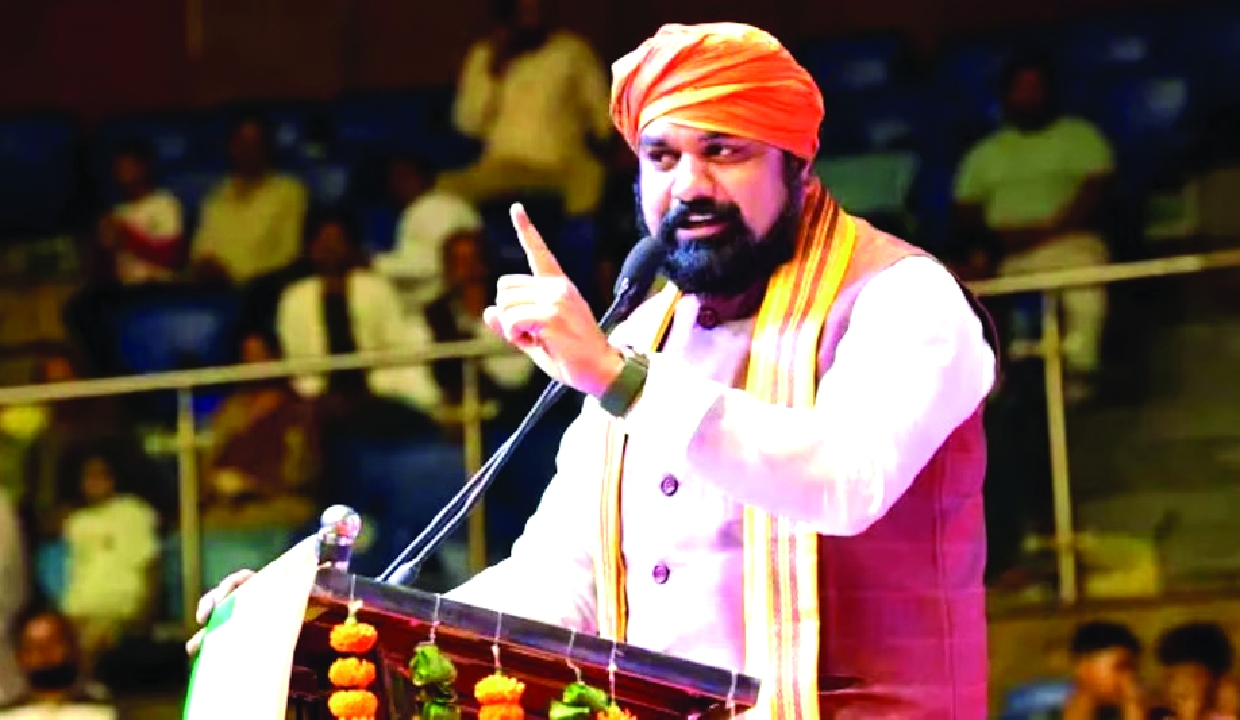
Atal Bihari Vajpayee's critical decision to back Nitish Kumar as the Chief Minister of Bihar in 1999-2000 was a strategic vision to dislodge the political dominance of Rashtriya Janata Dal in Bihar. The intent to combine the organisational strength of the BJP with the Administrative skills of Nitish Kumar, who happens to be from the Kurmi caste, which was part of the Triveni Sangh Movement (Yadav, Koiri, Kurmi). This Movement was started in 1933 for social empowerment and to remove the social evils and dominating structural norms of the society that was prevalence at that time. Atal Bihari Vajpayee's faith in Nitish Kumar has brought fruitful results for the Bharatiya Janata Party in Bihar. After a long political struggle, the BJP has succeeded in installing Samrat Chaudhary as the 24th Chief Minister of Bihar. After 1990, the constituents of the Triveni Sangh Movement have dominated the state's politics of North India, and Bihar is not an exception.
The new Chief Minister has immense challenges in front of him as he has to carry forward the social investment along with economic development. The processes of democratisation of democracy will test his ability to incorporate the aspirations of weaker sections of society as a part of decision-making processes. The contemporary situation in Bihar demands major reconstruction in the form of policies and institutional perceptions so that the trust deficit between the government and people can be overcome. To begin with, the first demand, Samrat Chaudhary must carry forward economic participation along with social transformation and political participation. These demands are the result of the piecemeal "social engineering'.
The second demand is to tackle the consequences created by the federal policies of pre- and post-Independent India. The policies include Permanent settlement, high land revenue, forced commercialisation (cash crops), fright equalization policy, New Economic Policies, which helped the developed states to grow faster, and Bihar faced the collapse of local industries. Due to these policy Bihar also faced inadequate infrastructure, which resulted in stagnant and weak institutional development.
These factors helped develop states, and Bihar lagged in benefiting from the New Economy Policy. These federal policies left peasants landless, trapped in debt, forced into low-paid agriculture and Migration. These policies has great side effects on Education, Health, Agriculture, Employment, and governance.
The planning commission aimed to plan India evenly, but this aim did not bring desirable results. India witnessed uneven development in different parts of India. The state, which was at the bottom of the development ladder at the time of independence still stagnating at the bottom of the Development Indexes. The task posed by these policies can only be tackled by a harmonious relationship with the central government. It's a great opportunity for Samrat Chaudhary to bargain for big projects and special economic packages to uplift the demography of one of the youngest states of India. We all know that Bihar stands at the bottom of the ladder in the Human Development Index and various other parameters of Niti Aayog and State Development Index.
The third demand is from the minority class to inculcate a sense of security so that they feel secure and their right to life and liberty is protected. Minorities in the last 35 years in Bihar have felt secure, this trust should not take a back seat. Thus, Samrat Chaudhary must develop a cautious approach towards minorities so that trust-building measures can help society in building harmonious relations amongst different groups. Moreover, the fourth demand is to restore the long-standing stagnating institutional crisis in the social sector that crippled the Health care, Education and Empowerment. The fifth, most crucial demand is to improve the financial capabilities of the state by reducing the high debt burden, as the state's public debt has risen sharply in recent years. As Bihar continues to depend heavily on central funds and the transfer of money.
New avenues must be created to generate adequate own tax revenue and should tackle the deficit through fiscal management. The sixth, demand has been brought by the leader of opposition Shri Tejaswi Yadav in the form need for institutional reform in the field of 'Education, Health, Empowerment, Agriculture and Governance. On all these parameters, Bihar has continuously lagged. The need of the hour is to reconstruct these sectors. The seventh demand is for farmers as they have the least income compared to farmers from different states.
The Agriculture Sector needs drastic steps so that the Primary Sector can become the fulcrum for development. The other demands include tackling floods in the Kosi belt, maintenance of law and order, police reforms, eradication of Corruption at various levels of state departments, programs like Satt Nishchay, building urban infrastructure, enhancing purchasing power of the masses, creating tourism infrastructure, social reform and women empowerment are the needs of the hour. Bihar should develop a political culture so that citizens can develop both Political inputs (Voting, lobbying) and Political outputs (Policy, Government Services). The present government must understand that Bihar should carry forward the objective of 'socially comprehensive development' along with the development of market mechanisms. This can only be done by strengthening the weak institutions. If steps are not taken in this direction speedily enough, then a state that John Houlton described as being 'the heart of India' will die unsung.
It is up to the new CM Samrat Chaudhary and his abilities to uphold the Gandhian vision that is the true objective o0f Democracy is that the weakest should have the same opportunity as the strongest.
Prof Subodh Kumar Mehta is National Spokesperson, Rastriya Janta Dal; Views presented are personal.