Flavours of Spring: Basant Panchami and India’s Shared Food Traditions
As India prepares to observe Basant Panchami on 23 January 2026, the festival once again marks the gentle yet transformative arrival of spring across the Indian subcontinent. Arriving in the bright fortnight of the lunar month of Magha, Basant Panchami signals the changing of seasons, when winter begins to loosen its grip and the early signs of spring become perceptible. Days lengthen almost unnoticed and the soil softens as it prepares itself for renewal after months of enduring the chill of winter. Unlike festivals that celebrate the bounties granted by nature, Basant Panchami honours its readiness to provide even more. It is a festival of beginnings and preparation rather than culminations and harvests. Accordingly the festival harmonizes human effort with productivity, learning, and creativity.
Basant Panchami acquires a nationwide appeal because of the foundational principles it represents even though its form is distinguished by regional identities, customs and culture. Whether celebrated through the worship of Goddess Saraswati, the initiation of education, the wearing of yellow attire, or the preparation of seasonal foods, the underlying idea remains the same. It affirms a civilizational belief that intellectual and creative growth must be cultivated with the same care and devotion as is given to farming. Observed in households, schools, temples, and cultural spaces as well as the farmer’s fields, it is a day devoted to knowledge, renewal and hope for the future.
The origins of Basant Panchami can be traced to India’s earliest agrarian and cosmological order. Ancient communities observed the seasonal threshold between winter and spring with great alacrity, recognising it as a critical preparatory phase. This was the time when fields were ready for sowing, when the earth began to respond to the increasing warmth and light of the changing weather. Early Indic thought viewed such transitions as moments when cosmic order and human action aligned most closely. Basant Panchami, thus, gradually emerged as a symbolic marker of this alignment, representing the first stirrings of basant, or spring. Over time, this seasonal observance acquired layers of philosophical and cultural meaning, becoming embedded in ritual practice and social life.
Religious observance on Basant Panchami blends seamlessly with culture. Saraswati is worshipped not only as an abstract celestial deity, but as an intimate guide of aesthetic purity and knowledge. Homes are decorated, books, manuscripts, musical instruments, and tools of learning are cleaned, arranged, and prayers offered, reinforcing the idea that knowledge is sacred and demands respect. In many households, children are introduced to writing on this day, marking their formal entry into the world of literacy. The act is symbolic yet powerful, stressing the belief that learning is not merely functional but a moral and cultural responsibility. Beyond ritual, the festival affirms that purity of thought and moral discipline are equally valuable as they are forms of wealth as precious as material prosperity.
The philosophical significance of Basant Panchami extends further. Spring represents awakening, creativity, and growth, principles that form the core of the festival. It reminds society that growth does not occur abruptly but through gradual preparation. In this sense, the festival offers guidance not only for agriculture or learning, but for life itself. It teaches patience, balance, and respect for timing, values that remain relevant over centuries.
These ideas find expression through customs, dress, colours, and rituals that show remarkable consistency across India. The colour yellow dominates the festivities symbolizing illumination, warmth, and spirituality. It is the colour of turmeric, ghee, pollen, ripening grain, and sunlight, all associated with nourishment, purity, and vitality. Wearing garments, offering flowers, and preparing foods all in different shades of yellow, therefore becomes the norm as if reflecting the optimism of the ripening mustard fields. Homes and institutions are decorated with marigold and other golden colored flowers that are fresh rather than ornate. Music is devotional or classical, played in ancient ragas reflecting the country’s rich traditions in the arts. These practices reinforce the festival’s quiet dignity and solemnity.
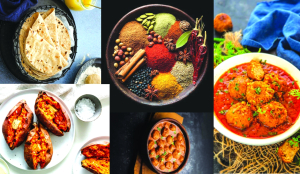
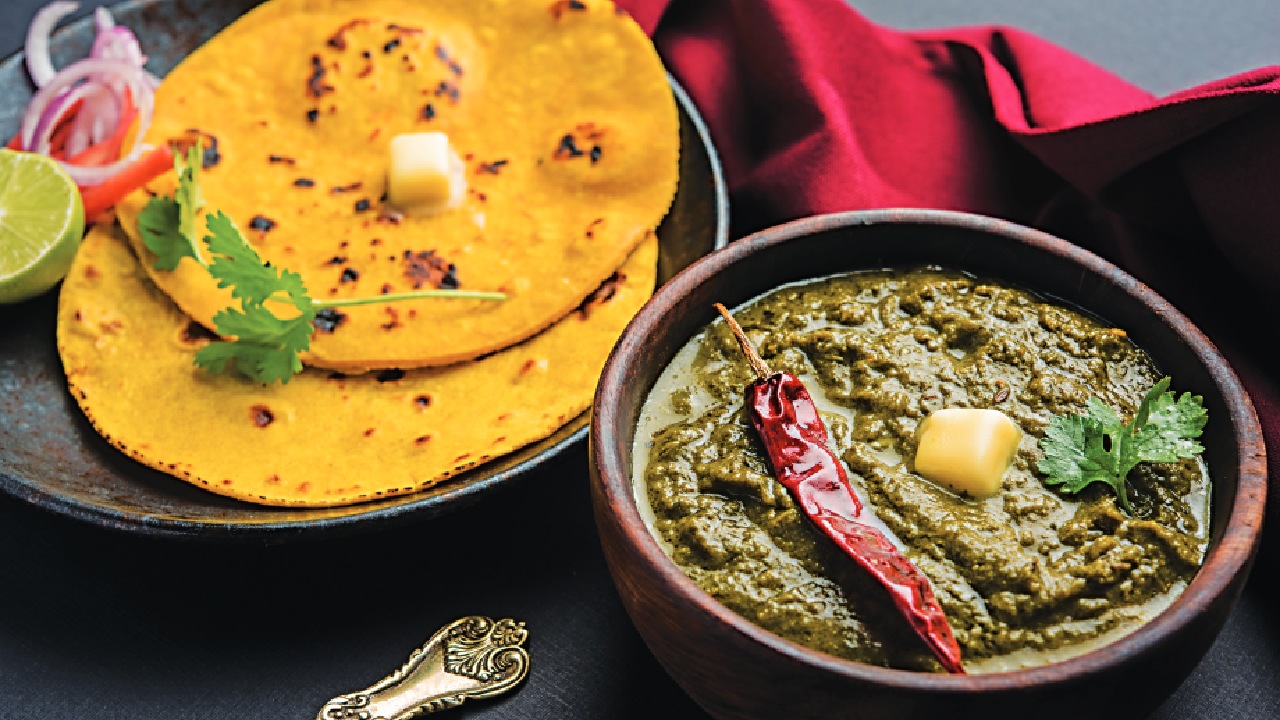
Cuisine, like other religious festivals, forms a central feature of Basant Panchami’s celebrations. The food prepared on this day is light, seasonal, and curated to support the body’s metabolic transition from winter to spring. In northern India, where Basant Panchami is widely observed as Saraswati Puja, many dishes are sweet and served warm. Kesari (saffron) halwa is prepared by slowly roasting semolina in ghee until fragrant, then cooking it with water or milk, sugar, and saffron, stirring continuously to achieve a smooth texture. It is first offered in prayer before being shared. Meethe chawal (sweet rice) is another common preparation, where rice is gently cooked with turmeric or saffron, sugar, ghee, and whole spices such as cardamom, resulting in a mildly sweet, aromatic dish that symbolises optimism and renewal. Boondi laddoos are made by frying gram-flour droplets in ghee, soaking them in sugar syrup, and shaping them into soft, golden spheres. Malpua, another festive favourite, is prepared by shallow-frying a batter of flour, milk, and fennel seeds and then dipping it in light sugar syrup for its sweetness. In many regions, makki ki roti with sarson ka saag is an all time favorite, using maize flour flatbreads paired with slow-cooked mustard greens. Accompanied by pickles and salads of fresh vegetables, especially with white radish, the dish has acquired an iconic reputation.
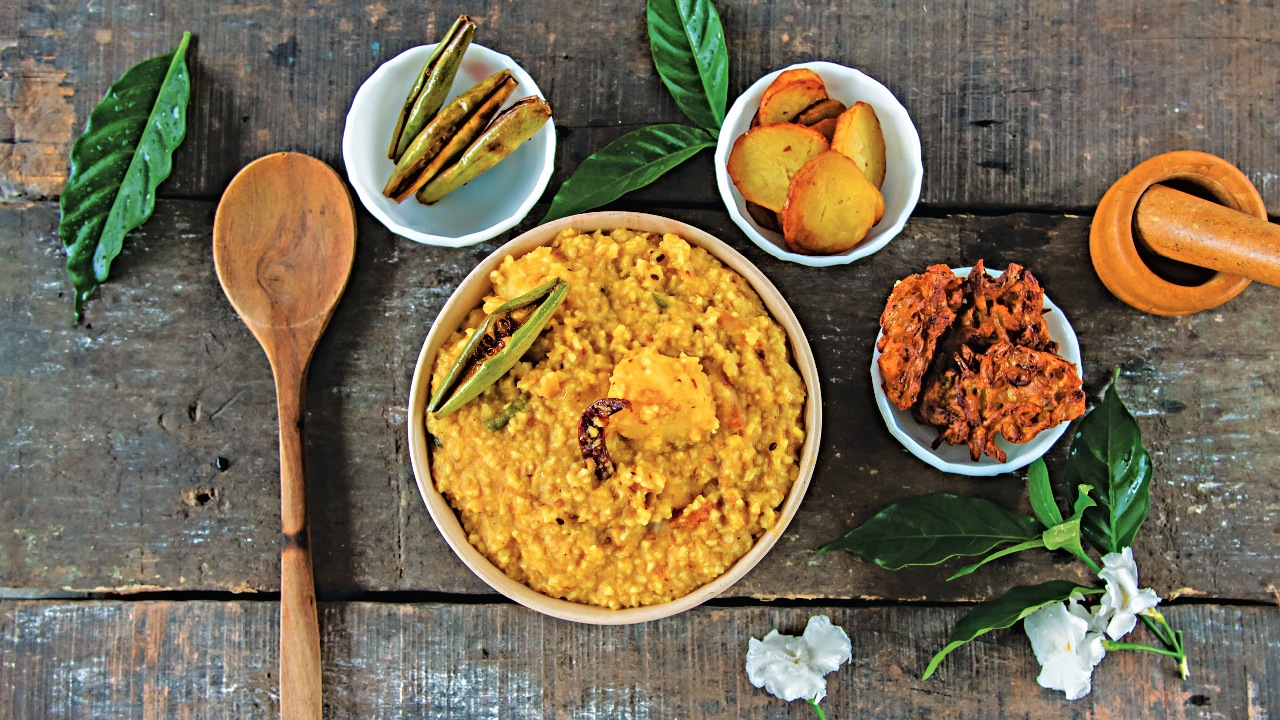
In eastern India, particularly in Bengal and parts of Odisha, Basant Panchami is marked by a simple and aesthetic approach to food, reflecting the region’s deep association with learning and scholarship. Khichuri forms the heart of the meal, prepared by cooking rice and lentils together with vegetables such as cauliflower, peas, and potatoes, flavoured with turmeric and minimal spices. The dish is soft, balanced, and nourishing, ideal for the season. It is often accompanied by Labra, a mixed vegetable preparation cooked slowly, and small portions of simple sweets made from milk or rice. Payesh (rice kheer) is another essential offering, made by slow-cooking rice in milk and sweetening it with sugar or jaggery, delicately flavoured with cardamom and bay leaf. Light sweets like sandesh, prepared from fresh chenna (fresh soft cheese) lightly sweetened and shaped in circular forms, complete the devotional meal.The emphasis remains on balance rather than indulgence and is shared with family and friends only after offering invocations.
In western India, Basant Panchami is observed more quietly, mostly within households and educational institutions rather than through large public gatherings, reflecting the festival’s emphasis on restraint and inward renewal. Shrikhand is commonly prepared by straining yogurt until thick, then gently sweetening and flavouring it with saffron and cardamom, lending it the color of the season. Basundi, made by slowly reducing milk until thick and aromatic with nuts, is another favoured preparation, offering nourishment without heaviness. In some homes, Puran Poli, a flatbread stuffed with sweetened lentils and gently roasted in ghee, marks the auspiciousness of the day. Ghevar also finds a place on festive tables in parts of Rajasthan, prepared in smaller, lighter forms than those made during weddings or monsoon festivals. These saffron-tinted discs, fried slowly to achieve their characteristic crisp and soft texture, are lightly soaked in sugar syrup giving it their golden colour. Mohanthal, a traditional gram-flour sweet, is slow-roasted in ghee before being cooked with milk, sugar, saffron, and cardamom, a preparation that demands time and patience. Milk-based desserts prepared in modest quantities complete the meal, ensuring that flavour, seasonality, and balance remain central to the cuisine of the occasion
In southern India, Basant Panchami is primarily a festival to acknowledge the benevolence of the reigning deity, through thanksgiving, especially in educational and artistic fields. Food prepared on this day accordingly is made to suit the inward, contemplative nature of the observance. Payasam is made by simmering rice or vermicelli in milk, sweetened with sugar or jaggery, and flavoured with cardamom. Rice dishes with turmeric are offered during prayers, and meals remain simple and vegetarian. Sweet Pongal is prepared by cooking rice and split lentils with jaggery, ghee, cashews, and cardamom, symbolising abundance and gratitude. Kesari Bhath, made by roasting semolina in ghee and cooking it with sugar, saffron, and nuts, is another favoured dish. The focus here is not on celebration through abundance, but on quiet observance and intention.
Beyond India, Basant Panchami is observed in several Asian societies influenced by Hindu culture over centuries, reflecting the festival’s wider civilizational reach. In Nepal, the day is marked by the worship of Saraswati in temples and schools, where students seek blessings for academic success, emphasizing its association with learning. In parts of Bangladesh, particularly among Hindu communities, Basant Panchami marks the beginning of spring through devotional gatherings, music, and seasonal food, and has become part of their annual cultural and religious celebrations. In Indonesia, especially in Bali, the spirit of the festival resonates through rituals that honour learning, balance, and renewal, intertwining it with their local folklore and heritage. Similar instances are found in parts of Sri Lanka and Thailand, where classical arts, temple traditions, and seasonal rites make them distinctive even as each subscribe to the same philosophies. Together, these observances highlight Basant Panchami’s universal appeal as a marker of renewal and intellectual refinement, demonstrating how shared values transcend borders while adapting naturally to local cultural landscapes.
In an era marked by constant change, each function associated with the values of Basant Panchami, carries forward a moral inheritance. I believe that this civilizational framework, shaped over centuries by our ancestors, must be consciously passed on so that future generations grow anchored in our value systems that enrich both mind and society. Over time, the forms of observance may evolve, yet the essence will always remain constant. As a celebration of learning, renewal and harmony, Basant Panchami is not just a festival but a living heritage. I am of the view that preserving it will ensure that when knowledge is revered, it will become the foundation of a balanced and enlightened society.
(The writer is Secretary, Cuisine India Society); views are personal