Ensuing crisis in Iran: A threat to peace and regional stability
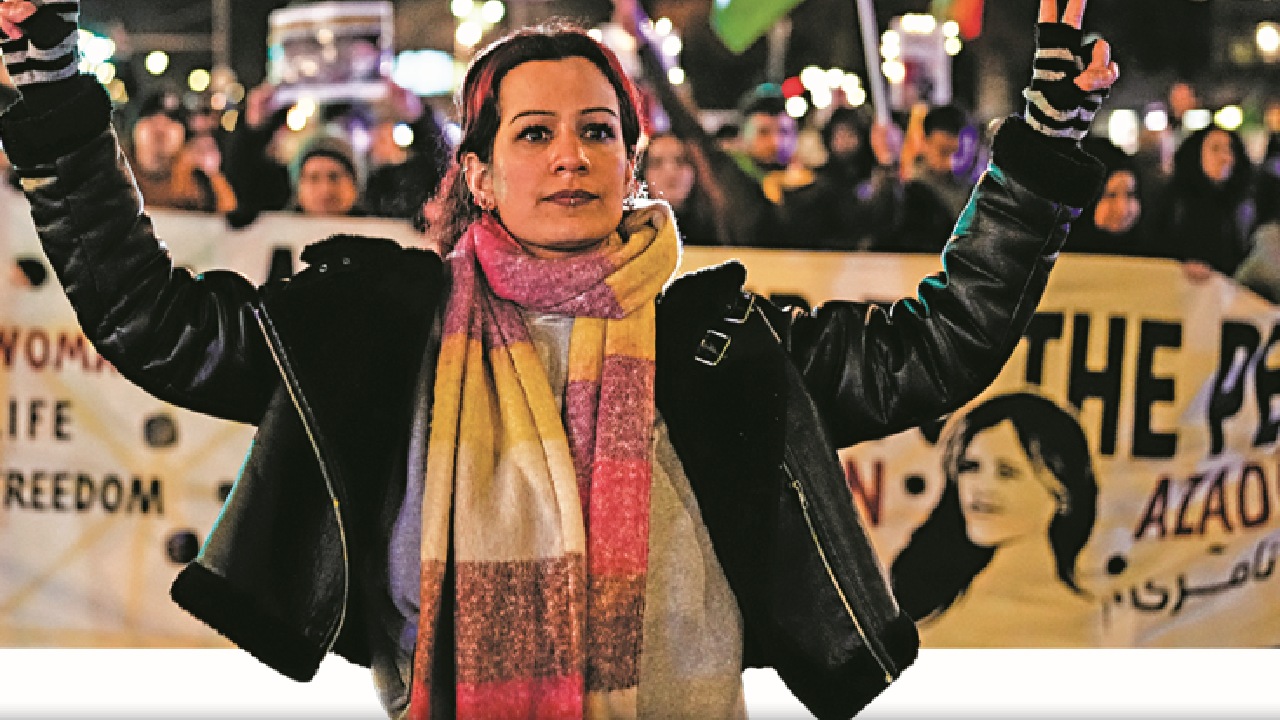
Iran has witnessed large-scale protests to change the regime for the past two decades. The 2009 Green Movement followed a heated presidential election and was characterised by massive protests throughout the country with a focus on achieving political reform through greater transparency. In 2019, large-scale protests began erupting throughout the country following the sharp rise in fuel prices. Quickly, these protests turned into a much wider and deeper expression of socio-political and economic discontent that was shared by many people. The Women, Life, Freedom movement began in 2022 after the killing of Mahsa Amini in the custody of government officials and called for an end to compulsory hijab laws, as well as restrictions on women's rights and state authority.
Each protest movement spread rapidly across several social groups and met with large-scale government responses, marking key moments in the evolution of contemporary Iranian society.
Recent Protest and Counter-Protest
Iran has been experiencing protests and unrest since the last week of December 2025. Merchant storekeepers within the Grand Bazaar in Tehran put their businesses on hold due to the worsening condition of the Iranian economy, expressing frustration regarding high inflation, falling currency value, and the rising cost of living. The protests soon expanded beyond just an economic issue to become a national event with demonstrations in several cities across the country, such as Tehran, Mashhad, and Karaj. Over time, protesters began calling for more than just financial relief; they were also demanding political accountability as well as systemic change in the government. There were reports from various activist organisations that during the uprisings, large numbers of protesters had been killed as the government responded with considerable force, including the use of live ammunition.
On the other hand, hundreds of thousands of Iranians came together in many cities to show their support for Iran's government. The demonstrations were intended to promote national unity, national stability, and resistance against foreign interference. The people placed their national flag over themselves and held up portraits of the leaders of the Islamic Republic. The demonstrators chanted for Iran's national sovereignty and independence. Demonstrators cited the government as providing security to its citizens against the economic conditions facing the country due to regional tensions and foreign intervention, but argued that improving conditions should come through legal and constitutional methods rather than through protest. These dual forms of mobilisation illustrate the increasingly divided social and political atmosphere in Iran due to growing economic difficulties and international pressure. This can, however, never be denied that the major causes of the unrest in Iran are internal mismanagement and external interference, especially from the United States and Israel, which are both considered long-time adversaries of Iran. In response to the protests and actions used against protesters by the Iranian government, the US took an active and public stance.
The US President Donald Trump and other American government officials publicly supported the Iranian protesters, which Tehran considers proof of outside influence. Although US officials deny that the US Government is responsible for causing the unrest, these statements fit into a larger US agenda: to apply economic and diplomatic pressure on Iran, to limit its influence in West Asia, and to protect energy routes like the Strait of Hormuz, as well as to restrict Iran's development of nuclear weapons and missile technology.
It seems that the US intends to weaken the Iranian regime, though it presents itself as the defender of human rights in the region. It is evident that US sanctions against Iran and its financial networks have also created additional inflation, increased unemployment, and devalued the currency, which are all immediate and direct causes of public discontent and therefore have contributed to a higher level of public unrest in Iran. The Israeli government's approach to Iran is more specific and less broadly based than that of the US, but it is equally impactful on the Iranian regime's economic well-being. Both the US invasion of Iraq in 2003 and NATO's intervention in Libya in 2011 were justified by each country's desire to protect human rights, eliminate authoritarian leadership, and promote democracy.
The results of the US intervention included the removal of Saddam Hussein; however, following this removal of a dictator, Iraq has been plagued with ongoing instability, sectarian violence, weakened government institutions, and contested control over oil resources. Further, although Iraq now has a democratically elected government, it remains fragile. Similarly, although the removal of Muammar Gaddafi was the result of NATO's military intervention, Libya has suffered from the lack of a stable democratic government. In Libya, NATO's actions have led to the emergence of multiple governments competing for power, as well as the rise of numerous militias and foreign governments seeking to influence the direction of Libya's future. As a result of both invasions and the underlying strategic interests related to the intervention in Iraq and Libya, today's Iranian government views this history of intervention as further evidence that whenever a foreign power calls for intervention or regime change, it has led to crisis in society. In this manner, Iranians see the current crisis as deepened due to their lack of trust in foreign powers.
Energy Markets and Response of the Gulf States
By implementing severe sanctions against Iran, deploying significant military assets to the region, and launching airstrikes against Iranian-affiliated targets throughout West Asia, the US has substantially complicated the operation of global energy markets. A large portion of the world's oil and gas reserves is held by Iran; sanctions have reduced the amount of Iranian oil on the market and therefore have created considerable price volatility, particularly in times of increased military tension in the Strait of Hormuz. Approximately one-fifth of the total global oil trade passes through the Strait of Hormuz. Prior to sanctions, major importers of Iranian crude oil included China, India, Japan, South Korea, and Turkey. While China continues to purchase oil from Iran, other countries have had to search for more expensive ways to obtain crude oil. The unfolding crisis has also drawn the attention of Arabian Peninsula states (GCC) on account of their security interests, economic stability, and diplomacy. It is noted that Gulf Arab states have not openly supported the Iranian protests; rather, they share a degree of interest in minimising the potential for a regional conflict that might destabilise energy markets and threaten the security of the region.
Moreover, it is seen that Saudi Arabia, Qatar, Oman, and Egypt have engaged in extensive diplomatic efforts to urge both the United States and Iran not to resort to military action. During this period, Gulf Cooperation Council states warned the United States that a military strike against Iran would most likely result in retaliatory attacks on US interests from other regional countries, would create a direct threat to oil infrastructure in the GCC, and therefore the world, and would create a major disruption to global energy supply chains. Subsequently, the United States chose to delay carrying out any military action against Iran due to indications that the level of violence in Iran was decreasing.
Way Forward
Looking into the future, there are many uncertainties and challenges regarding the Iranian ruling system, which has continued to face public protests on account of declining economic conditions and increasing pressure from external powers. The Iranian Government must address pressing socioeconomic challenges such as inflation, unemployment, falling currency, gender inequality, and restrictions on freedom to meet the aspirations of the Iranian people.
Furthermore, the Iranian regime must come out with a pragmatic approach to deal with continued sanctions that have isolated Iran and have continued eroding the quality of life and living standards due to rising inflation, high unemployment rates, and a weak currency. These protests must be taken seriously so that people restore their lost faith in the governance system. Several programmes and policies must be initiated for meeting people's economic needs and aspirations. It is also the responsibility of the world's major powers, which share a collective obligation to work toward avoiding escalation to military confrontation, to support the tenets of international law, and to seek diplomatic resolution to these issues involving Iran, which directly threaten peace, energy security, and economic stability in the region.
A Nation Under Strain
Domestic problems
A Domestic Upheaval and Government Crackdown: Iran’s people are on the streets.
The country is facing protests triggered by economic hardship, water shortages, corruption and mismanagement. Reportedly 5,000 have been killed in the crackdown - the deadliest unrest since the 1979 revolution - and widespread internet shutdowns are adding to the hardships of the people.
Severe Economic Woes: Years of harsh international sanctions have crippled the economy making even basic amenities beyond the reach of the common man. Inflation has soared, the currency has collapsed, and key industries are struggling. External pressures have exacerbated structural failures within Iran’s economy and governance.
Social Breakdown: Iran is also reeling under worst droughts in decades, driving water shortages which is causing internal migration and contributing to anger over perceived government incompetence in resource management.
External crisis
Iran is deeply embroiled in regional conflict, especially with Israel and by extension, the United States:
- A major escalation occurred in 2025, when Israel launched strikes against Iranian nuclear and military facilities; the US struck Iranian nuclear sites causing heavy damage but the nuclear sites survived.
- Iran has prepared itself for the US attack. Its Revolutionary Guards are on increased missile readiness, and its leadership has issued stern warnings against foreign interference in domestic affairs. These confrontations have drawn in regional actors like Yemen’s Houthis and global powers through alliances and strategic interests making the whole region volatile.
What went wrong...
The crisis stems from a complex blend of internal and external pressures:
Economic and Political Mismanagement: Chronic government mismanagement - from corruption and financial instability to failing public services - has deepened public frustration. Even before the current round of protests, economic grievances had been simmering for years.
Impact of Sanctions and Isolation: International sanctions, especially those resumed after the US withdrawal from the 2015 nuclear deal, have isolated Iran diplomatically and economically. Restricted oil exports and limited access to global financial systems have constrained growth and worsened living standards.
Iran at cross purpose with the US
Iran has refused to bow to the US pressure and has maintained its stance against the Israel, helping the Palestinian militant group Hamas and other proxy groups across the Middle East. Its pursuit of uranium enrichment - which many Western powers view as a step toward nuclear weapons capability - has further heightened tensions.
Its government has constantly withstood the western pressure to give up its nuclear programme which it says is for peaceful purposes. Iran is indeed paying the price for standing against the US and the West.
Anisur Rahman is Professor, Centre for West Asian Studies, Jamia Millia Islamia University and Atikur Rahman is faculty, Centre for West Asian Studies, Jamia Millia Islamia University; views are personal