Ceasefire: A tactical pause in an ongoing war?
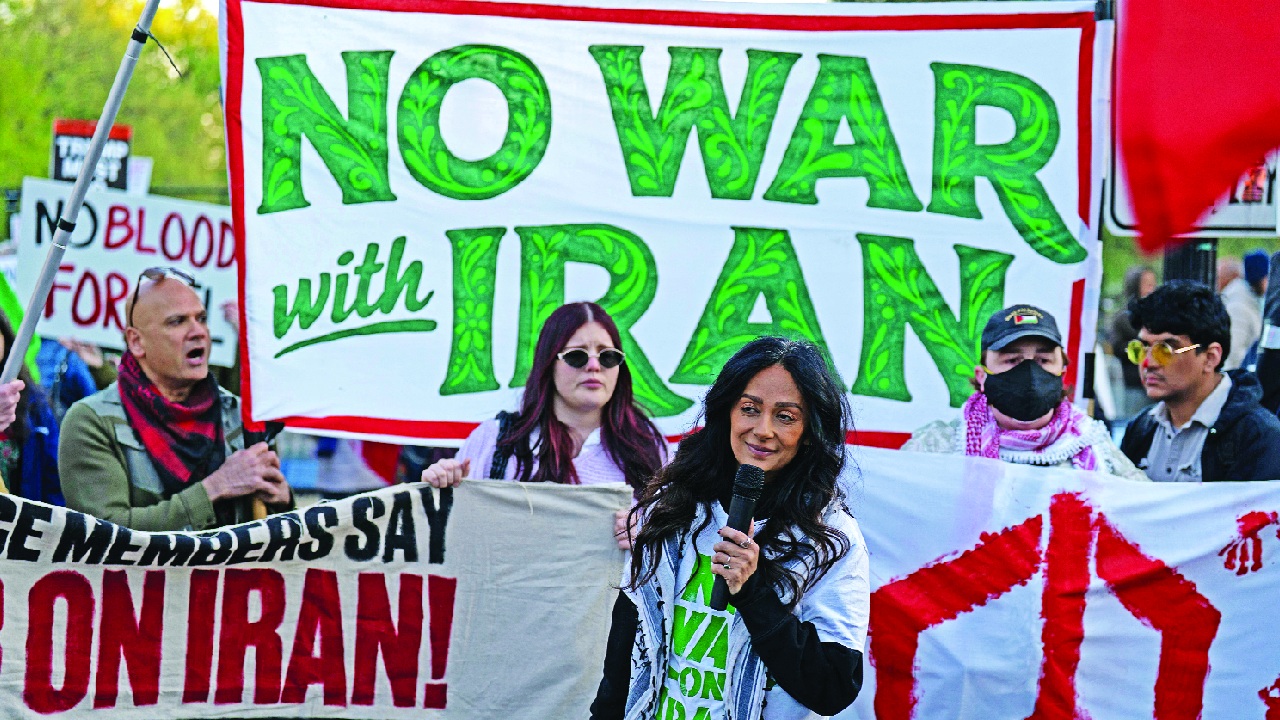
The announcement of a two-week ceasefire between Iran and the United States has pulled the world away from what appeared to be the brink of an apocalypse. Both sides claim to be the winners in this 40-day-long war that kept the world on edge. The sad fact is that neither has won; at best, it is a Pyrrhic victory for both.
Undoubtedly, the USA and Trump have lost face. The US has presented the ceasefire as evidence of strategic success, asserting that Iran has been compelled to ensure the safe opening of the Strait of Hormuz.
The Strait, despite occasional rhetorical escalations, had never been definitively closed to global navigation, neither before February 2026 nor after previous crises, including the October 2023 Hamas attack on Israel and the June 2025 joint US-Israeli airstrikes on Iranian nuclear facilities. This war closed it, and calling its limited 15-day opening a victory is, at best, absurd.
In truth, Washington’s objectives extended far beyond maritime assurances. The military campaign, executed through operations such as “Epic Fury” (2026) and “Midnight Hammer” (2025), was designed to dismantle Iran’s nuclear programme and catalyse regime change. Yet, despite this overwhelming display of force, the principal objectives remain unrealised.
Iran’s nuclear infrastructure, though significantly disrupted, has not been eliminated. Its scientific knowledge and latent capabilities persist. More importantly, the anticipated internal collapse of the Iranian regime has not materialised. And Trump calls it a victory!
Undoubtedly, the war has severely damaged Iran’s critical infrastructure; rebuilding destroyed facilities, energy grids, and transport networks will require years of sustained effort. Despite these significant losses, Iran’s determination to pursue its theological goals remains unshaken - something a transactional man like Trump cannot appreciate.
It is obvious that the USA completely miscalculated Iran’s capacity and resolve to fight back — a fact perhaps most starkly illustrated in the dramatic oscillation of American rhetoric and action. Mere hours before announcing the ceasefire, President Trump issued an apocalyptic warning that captured the gravity — and volatility — of the moment: “A whole civilisation will die tonight.” Such language, invoking the spectre of irreversible destruction, underscored the extent to which the conflict had approached a catastrophic threshold.
Iran, for its part, has moved swiftly to frame the ceasefire as a strategic victory. Official statements have characterised the outcome as a “crushing defeat” for the United States, asserting that Washington has, in principle, conceded to key elements of Iran’s position. These reportedly include the easing of sanctions, recognition of Iran’s nuclear enrichment rights, and acceptance of its role in regulating passage through the Strait of Hormuz.
Whether these claims fully reflect the agreed terms remains uncertain. However, in asymmetric conflicts, perception often outweighs material outcomes. By withstanding a sustained military onslaught and compelling a pause, Iran reinforces its narrative of resistance - an image that carries significant weight both domestically and regionally.
Under the 47-year rule of the Ayatollah, millions of Iranians have become hardened jihadists, willing to die rather than surrender to what they see as a satanic civilisation. For them, the comforts of life here hold little value compared to the promised rewards in the next world. This ideological dimension, often overlooked in purely strategic calculations, has proven central to Iran’s capacity for endurance.
Many have questioned why, in mediating tensions between Iran and the United States, engagement seemed to favour Pakistan over democratic India. It is the wrong question. The right question is whether India should have done everything Pakistan did to please Trump, to become his sidekick.
Pakistan engaged in targeted political and economic efforts, recommending Donald Trump for the Nobel Peace Prize (June 2025) and forming a crypto-related partnership with an affiliate of the Trump family-linked World Liberty Financial (January 2026), under the broader strategic influence of General Asim Munir. India, however, could not and rightly did not. India is too large and enduring to resort to such cheap tricks merely to seek favour with someone as an uncouth loudmouth as Trump.
Modern warfare has undoubtedly evolved. Where once battles were fought with swords and cavalry, today they are waged through precision-guided missiles, cyber operations, economic sanctions, and proxy networks. Increasingly, conflicts unfold in domains that are diffuse and often deniable.
Yet, despite these transformations in method, the underlying impulses remain strikingly consistent. Wars are preceded by ideas — beliefs about superiority, destiny, and exclusive truth. Before armies clash, worldviews collide. The history of the past millennium reveals a recurring pattern in which the interplay of faith and power shapes the trajectory of conflict. The Abrahamic traditions — Judaism, Christianity, and Islam — have, at various points in history, witnessed phases where theological exclusivity translated into political assertion. The long and turbulent history of Jerusalem illustrates this dynamic with particular clarity. From the Jewish-Roman wars of antiquity to the Crusades, from the expansion of Islamic empires to the modern Arab-Israeli conflicts, the region has been a crucible of civilisational contestation.
At the core of many such conflicts lies a potent idea: that truth is singular and exclusive. When this belief acquires political expression, it often legitimises coercion. The Crusades, the expansionist campaigns of early Islamic polities, and the excesses of the Inquisition were not aberrations; they were manifestations of a worldview that fused divine sanction with temporal power.
Even in the contemporary era, stripped of overt theological language, similar patterns persist in more subtle forms. The concept of neo-colonialism is instructive in this regard. Unlike classical colonialism, which relied on direct occupation, its modern variant operates through influence, intervention, and fragmentation. It employs non-state actors, ideological platforms, and economic instruments to achieve strategic objectives.
The vocabulary may have evolved - from “civilising missions” to “democracy promotion” — but the underlying impulse of control remains remarkably consistent. In such a context, conflicts are rarely confined to their immediate triggers.
The Iran-US war exemplifies this complexity. It is not merely about nuclear capabilities, maritime routes, or regional alliances. It is also about competing visions of order — each shaped by distinct historical experiences and ideological commitments.
Yet, significantly, Tehran has shown no indication of altering its strategic intent. The ceasefire has paused the conflict, but it has not softened Iran’s ideological posture or long-term objectives. Iran’s support for terror groups such as Hamas, Hezbollah, and the Houthis reflects a strategic doctrine that extends beyond conventional state rivalry.
Similarly, Israel’s security posture is informed by its historical vulnerabilities, while the US seeks to maintain its role as a guarantor of regional balance.
The persistence of such conflicts raises troubling questions about the efficacy of global institutions. The twentieth century witnessed the creation of mechanisms such as the League of Nations and the United Nations, designed to prevent large-scale wars. Yet, despite these efforts, the cycle of conflict continues unabated.
The two-week ceasefire must, therefore, be understood as a tactical pause rather than a substantive resolution. It may temporarily prevent escalation, but it does not address the underlying tensions. Indeed, history suggests that such pauses often precede renewed confrontation, particularly when the root causes remain unresolved.
The writer is an eminent columnist, former Chairman of the Indian Institute of Mass Communication (IIMC), and the author of ‘Tryst with Ayodhya: Decolonisation of India’ and ‘Narrative ka Mayajaal’ ; views are personal