Bridging policy, community & sustainability
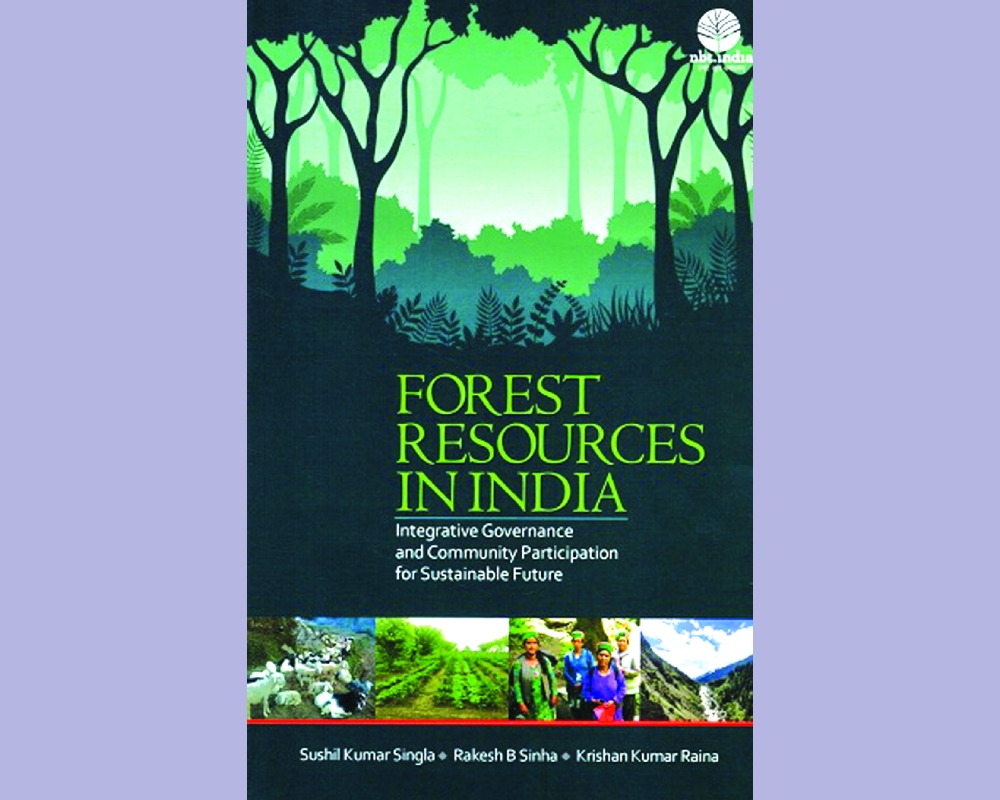
The need for harmony in through synergistic efforts of the State and Central forest management practices involving local forest stakeholders is profoundly discussed in this book as an honour to readers, scholars, foresters, and policy planners.
Describing Integrative Governance and Community Participation for a Sustainable Future, the book emphasises the visionary paths of action where dedicated forest officers from the State and Central levels must come together through the involvement of local forest dwellers in an orchestrated endeavour to safeguard our natural heritage.
Harmony in conservation is a testament to the spirit of unity, shared purpose, and symbiotic coexistence that defines the everlasting relationship between the people and the forests. The book invites readers on a journey of collaboration, empathy, and stewardship, advocating for peaceful coexistence through mindful forest management. It signifies a starting point rather than a final destination, signalling a future of unity, innovation, and collective effort.
The aim is a world where nature thrives, communities prosper, and harmonious cooperation between State and Central entities defines our collective heritage. It encourages readers to embrace collaboration, synchronise with nature’s rhythms, and champion harmony for our shared home, Earth.
The book, which seems to be the first in its category as authored by incumbent civil servants, further delves into the fact that forests and humanity are intricately linked, shaping life on Earth through their coexistence. Forests hold the secrets of history, cultures, and land scapes, sharing wisdom with indigenous forest dwellers.
Preserving and sustainably managing these precious forest treasures is a collective responsibility, especially in today’s world marked by global warming, climate change, and environmental degradation. The book also talks about understanding and deciphering the current laws and governance models for forest management at both State and Central levels, which are essential for addressing critical issues and preparing for future challenges. In an era marked by the challenges of climate change, deforestation, and declining biodiversity, the importance of this publication cannot be overstated. It aims to recognise the necessity of a united vision and shared objectives. Across India’s different States and Union Territories, diverse laws, rules, and regulations govern their forests, while aligning with national laws to address the livelihood needs of local communities. Successful forest constion and management models have emerged in various ecosystems, guided by State policies.
Central-level forest officers, in their role of fostering harmony, must possess a deep understanding of these State-specific laws and provisions to facilitate optimal practices. There are certain national-level programmes like Joint Forest Management, Green India Mission, Agroforestry, etc, along with crucial concepts of CSR and Green investments through the ESG framework, which need synergistic efforts at both the State and Central levels.
Therefore, the new book asserts there must be a complete knowledge base about State policies, rules/regulations, and the endeavours initiated at the State levels so that officers at the Central level benefit through convergence of national policies as per the legal framework and the prioritised needs of the forest stakeholders at the State level, where real action takes place.
About the Authors
Sushil Kumar Singla, India Forest Service officer of the Himachal Pradesh cadre, holds a PhD (Agriculture), M Phil (Strategic Studies), NDC Graduate, MSc (Forestry), PG Diploma, and B Tech, with over three decades of field experience in community mobilisation, particularly of women, with a focus on management of natural resources, rural development, environment, and climate change. While working in three Union Ministries — Agriculture, Water Resources, and Rural Development — at policy level, he had the opportunity to work for the holistic development of the agriculture sector encompassing agriculture, co-operation, horticulture, beekeeping, fisheries, water resources, and forestry. Besides holding copyright for the Design of Micro Irrigation Systems (DOMIS) software, Singla has authored books namely Forest and Allied Laws and Yamuna Religio-Botanical Garden.
Rakesh Bhushan Sinha, IFS, served as Senior Policy Adviser of FAO. He was Senior Consultant for diversified thematic areas at the national and international levels, such as agroforestry, natural resource management, national biodiversity action plan, and national biodiversity targets. He was a pioneer in drafting the National Agroforestry Policy, 2014, which was first in the world. He is engaged with UN organisations for policy formulation on natural resource management, climate change, and global warming.
Krishan Kumar Raina is a retired Professor (Agribusiness Management) from Dr YS Parmar University of Horticulture and Forestry, Nauni-Solan, Himachal Pradesh.
He has a specialisation in the management of crop, animal, and forest-based production systems of hilly areas. He has contributed to the study of nomadic and semi-nomadic pastoral-based agriculture systems in hilly regions.