An unflinching autopsy of heritage
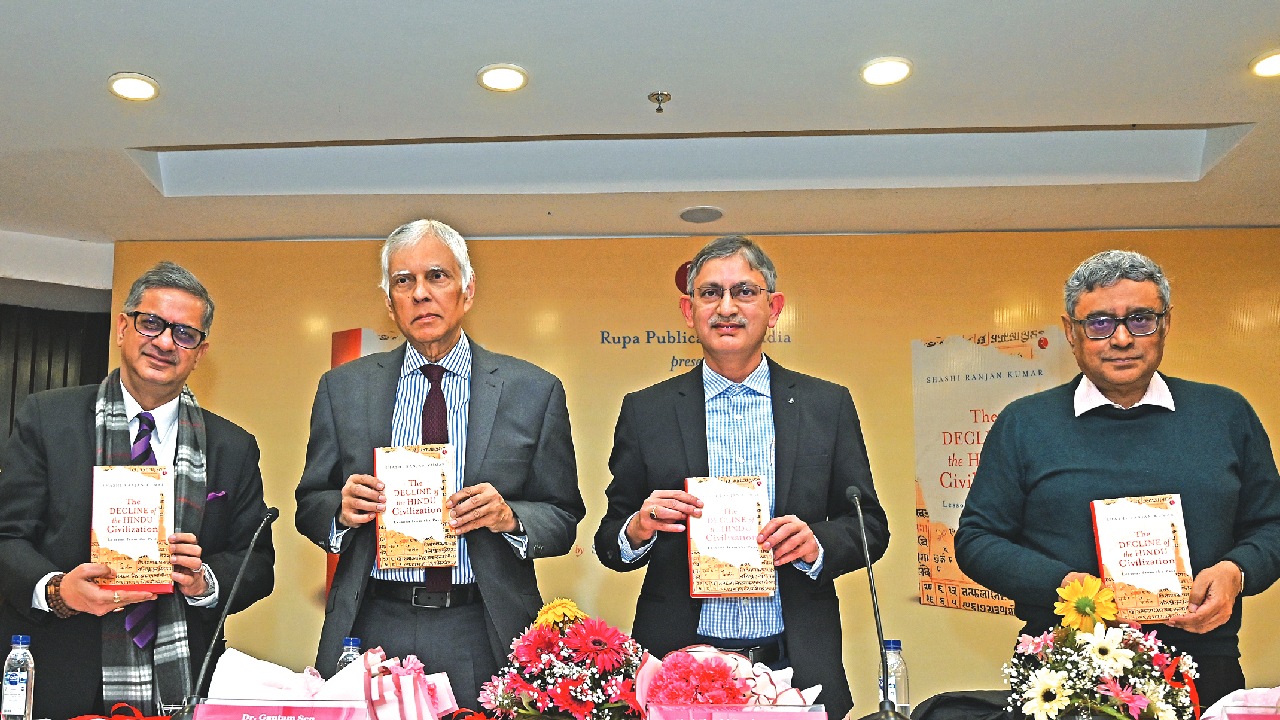
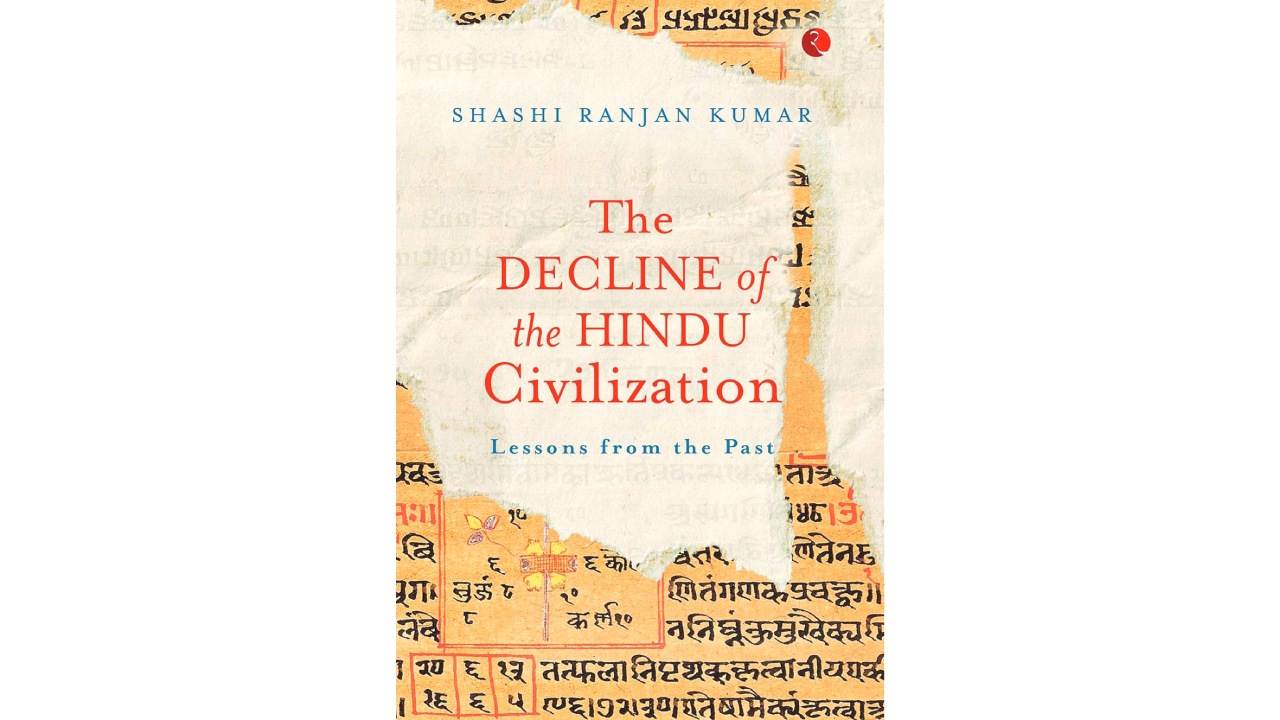
The Decline of the Hindu Civilization: Lessons from the Past, which was recently released by author Shashi Ranjan Kumar, is in-depth analysis of the historical course of what is arguably the greatest ancient civilization that humanity has known. This 416-page hardcover book, is a sort of autopsy of a civilisation which was once revered for its philosophical richness and brilliance. Kumar is an IITan and has ample administrative experience as an IAS officer.
A greater part of the book tackles an intricate yet pertinent question: how could a civilisation so rich in intellectual heritage experience a ‘cultural eclipse’? Kumar avoids explanations or myth-busting. Instead, he analyses a multifaceted mosaic of interconnected factors — ranging from rigidity in social structures and political divisions in India to the traumatic effects of external invasions. Through a comparison between India’s experience and subsequent developments in Rome, Greece, and China, the author examines the decline of great civilisations within a global perspective.
One of the most compelling aspects of the book is the academic rigour the author employs to defend India’s heritage. Kumar uses textual analysis to challenge the prevailing academic narrative surrounding the ‘death’ of Sanskrit. He argues that the decline of the language and the loss of great centres of learning such as Nalanda, were political events that also silenced a voice which ‘once sang the world into being’.
This book dismisses single-cause explanations for convenience, such as invasions alone from external forces. Instead, Kumar examines whether the ‘hidden causes of collapse’ had their roots in the rigidity of internal society, fractured political structures, or a failure of collective imagination. He places the Hindu journey in perspective with the global contours of rise and fall shown by Greece, Rome, and China. He reconstructs in vivid detail the many learning centers such as Nalanda, Ujjain, and Banaras, regarding their eventual decay as a ‘cultural eclipse’ corresponding to the scientific dawn in the West.
Beyond the ‘Wounded Civilization’ What stands out in Kumar’s writing is the absence of bitterness. According to Dr Shashi Tharoor, he writes like a seeker, not a polemicist, eschewing the jingoism and ‘easy polemic’ that so often obscures the discourse on modern history.
One of the anchor points of his scholarship is an impeccable textual demolition of theories about the ‘death’ of Sanskrit, which he locates as one symptom of a greater institutional erosion rather than a failure of the language per se. All this falls within the policies to revise the narrative from an indigenous perspective.
For readers seeking a deeper engagement with Shashi Ranjan Kumar’s The Decline of the Hindu Civilization: Lessons from the Past, the book is an excellent read which offers a way through the labryinth of Hindu civilisation through time. Rather than providing a linear summary, the book provides a more rigorous and analytical framework.
(The writer is an Executive Editor with The Pioneer); views are personal