Above and Beyond: Exploring the Amazing World of Aviation
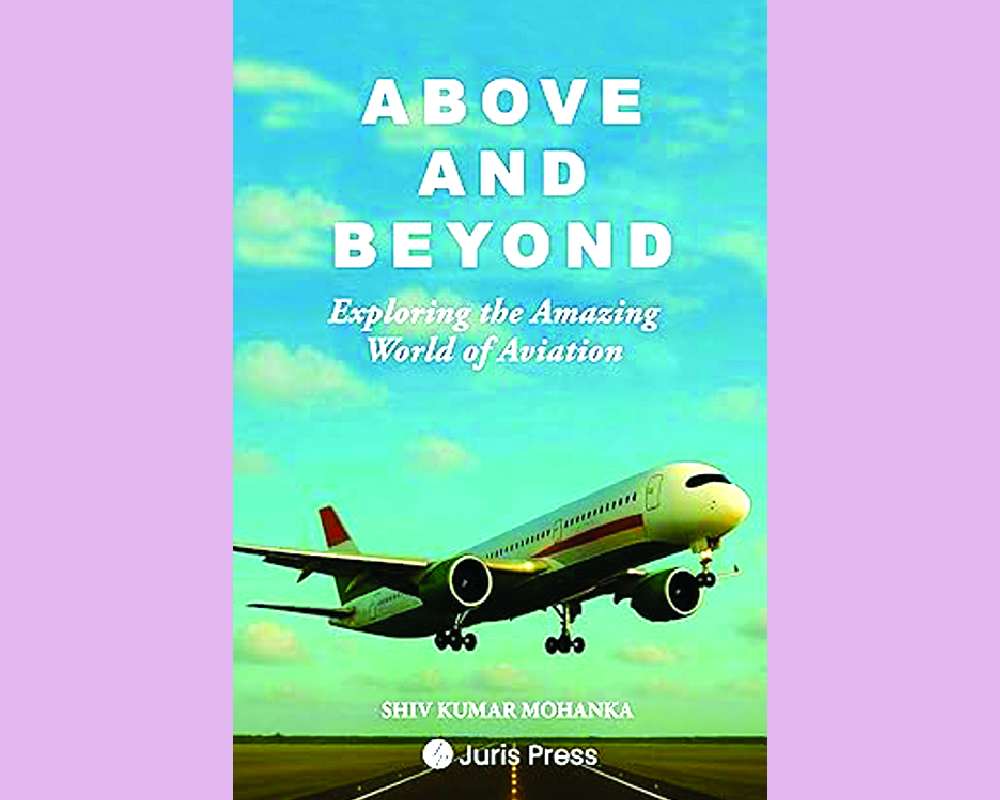
Anything that flies — be it in the realm of nature or mythology or technology or pure fantasy- lends itself to a plethora of curiosity and great story-telling. Mohanka in his aptly titled book ' Above and Beyond: Exploring the Amazing World of Aviation' explores the fascinating as also intriguing world of the way aviation has evolved and keeps evolving. What the author succeeds in accomplishing is he demystifies the complex world of aviation and even a layperson could have his queries answered, confusion dispelled and curiosity both satisfied and whetted. He combines engineering of aviation with human side of aviation management, science with issues of ethics and aesthetics, man and machine in challenging interaction, awe — inspiring beauty of flying experience with perils and dangers always lurking around and how aviation is continuously a work in progress. In the process, he asks questions on behalf of the readers and proceeds to answer them in a manner that is replete with knowledge and enlivened with levity. Such a book of technical nature runs the risk of losing its way in the quagmire of jargons and abracadabra of technicalities. Mohanka wisely avoids such traps to come out with an account that is coherent, lucid and often, funny. Aptly designed and appropriately worded graphics, text boxes and image clouds make the book a breezy read.
Scope and Method
Divided into eight broad chapters, the book seeks to cover such diverse aspects of aviation as physical infrastructure, operational nitty-gritty, technology, operational safety and security challenges, interaction of the passengers with the airlines and their personnel while also including future of aviation and practical tips that could make flying free from hassles. Hailing from the CISF and with his long exposure to civil aviation safety, his is a ringside view of the way civil aviation has evolved. All the same, he is not one to overwhelm the readers with unnecessary details and often, inscrutable technical jargons. He whets the curiosity of the readers, sustains their interest with stories and anecdotes from across the world, furnishes technical information in easily intelligible way, fuses science of aviation with human subjectivities and and never loses human side of the story.
Intriguing Questions
How is an airport named? The Indian experience will vouch for political leaders in most of the cases. The author nuances it by saying that more than 75 per cent of airports worldwide are named after a place. Similarly, how are IATA (International Air Transport Association) codes are determined? For instance, DEL for Delhi. The author lays it on the table: they must be three words and must be unique. In this context, one is reminded of a small controversy over the IATA code for Gaya airport in Bihar. As it was shortened to GAY, there was understandable furore. And what about lights at airports which seem excessive at times? Do they serve only operational needs? The author argues that while the magnificent lighting system helps pilots land and take off safely at night or in poor visibility conditions, it is also meant to create a memorable experience for the passengers. But there is nothing random about the lighting arrangements as they adhere to the guidelines issued by the International Civil Aviation Organisation( ICAO). Further, passengers often feel rhythmic 'thump, thump, thump' during takeoff roll. This jerky experience is caused when the nose wheels of the aircraft run over the runway centre lights.
No potholes. And why is Tuesday the cheapest day of the week to fly? Sample this question: Why do airlines focus so much on promoting their loyalty program? The answer is they earn more through these programs than through ticket sales from their partnerships with many travel, non- travel, and financial organisation to make money by selling virtual points. And why weight of passengers, aircraft staff and cargo matters and why a balanced distribution of weight is important for air safety and fuel planning. No wonder, airhostesses these days look so anaemic.
Market and Marketing
A funny graphic- in response to fickle ticket prices- rationalises, "Dude, all is fair in love and flight pricing strategy of airlines." While dynamic pricing of tickets is a demand-supply game, fare prices of competitors on the same route, seasonal surge and ebb play the part. Smart algorithm optimizes the entire process. As to the question why Tuesday tickets are the cheapest, he suggests it is because business travellers often fly out on Mondays and return on Thursdays or Fridays.
Mohanka delves into how intense competition among the airlines and efforts towards airline marketing, market segmentation, customer service and emphasis on a distinctive
identity are inter- related. Logo of an airlines seeks to convey visual message as also projection of values, mission and vision.
It could often be too ideal to be true- Flying Greener Every Day or Where Every Journey Begins with a smile. As David Oglivy said so memorably, " Customer is not a moron; she is your wife." One size doesn't fit all. Market segmentation done by the airlines takes a lot of issues into consideration- geographic location, age, income and gender profile and customer buying patterns, lifestyles and attitudes. In the marketing blitz, communication especially social media play a huge role. It is not uncommon for airlines to partner with social media influencers to promote their brand and reach new audiences.
Airlines, Passengers and their Rights
For all its glamour and aura, we often come across skirmishes involving airlines and passengers. Delays (sometimes inexplicably so), brash ground staff, luggage not reaching destination, connecting flights missed and so forth- all these and many more unpleasant probabilities have been discussed and provisions which exist in the case of such eventualities. So next time one is left stranded, one could always quote EC 261 to insist upon meals and refreshments during the delay, access to communication and hotel room and transportation in case of overnight accommodations. In case of involuntary downgrade( booked for business but accomodated in Economy), an aggrieved passenger can get reimbursed between 30 to 75 Per cent of the ticket price one originally paid. Similarly, if the flight is delayed for over 6 hours but less than 24 hours, then the airlines have to either refund the total ticket cost or offer an alternate flight. The book provides fairly useful information on weighing of passengers and baggage by Airlines. While the former is less common and often causes furore if obese passengers are weighed in public, the latter is the commonest sight. The author points out that weight and balance matter in view of aircraft load distribution, fuel planning and safety considerations. Specialist 'Load Masters' calculate the aircraft's weight and balance before departure. The Llandow air disaster on 12 March, 1950 was on account of failure in managing weight and balance.
And Finally a few tips for a hassle-free Journey
Someone who has had a ringside view of aviation for long, he proffers some much needed suggestions for a hassle-free journey: snap a photo of your checked luggage; feel free to request a complimentary upgrade; left- hand security checkpoint is generally free as against crowded right-hand side; choose a seat adjacent to the emergency exit, and consider the second row over the first and so on. The book ought to be read for a good number of reasons. One, it demystifies a sector which is increasingly becoming central to the lives of more and more people. Two, it is intelligible to lay people. Three, for being comprehensive. Four, for the interesting way in which it has been written. Five, for combining engineering of aviation with the management of aviation. Six and most importantly, the author- in his head- imagines himself to be a passenger, frames questions which any curious passenger could feel like asking and then proceeds to answer them in a manner that is inventive and playful.
(The author is an IAS officer of Bihar cadre currently posted as Joint Secretary, in Rural Works Department); views are personal