Yoga, soft power and the rise of India’s global influence
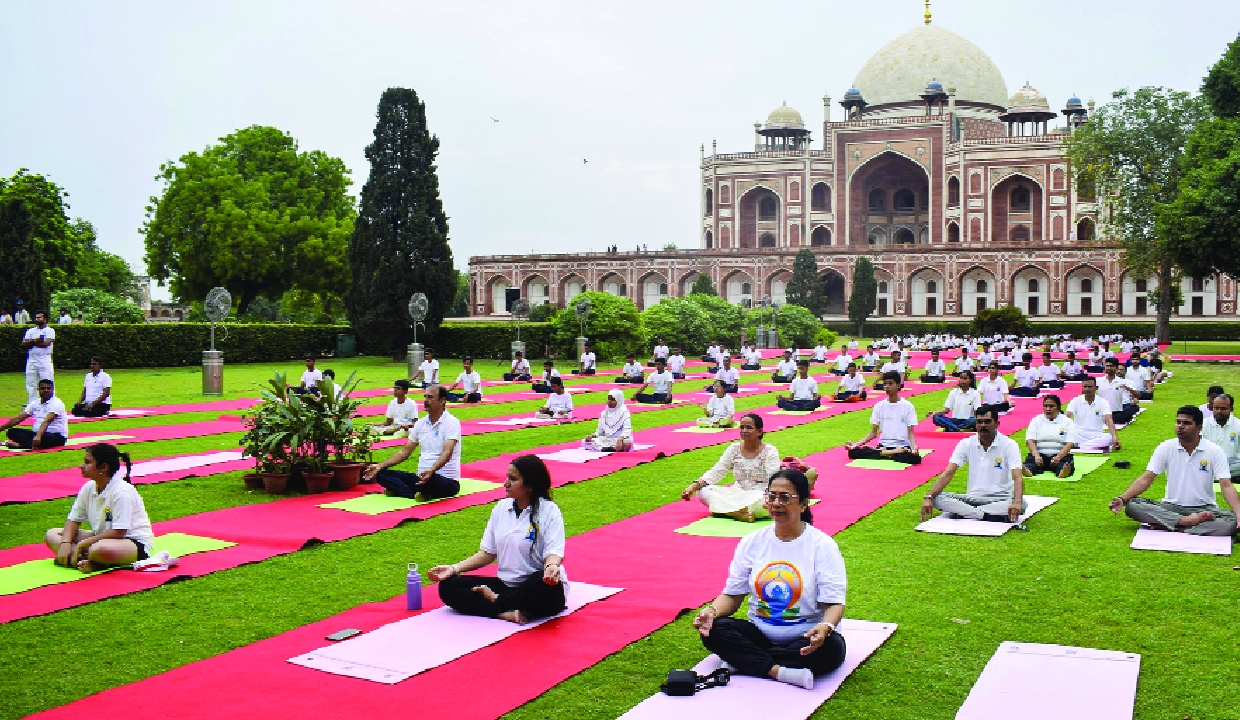
From an ancient practice nurtured by Indian sages to a worldwide movement embraced across continents, yoga has emerged as one of India’s most effective instruments of soft power. As the world grapples with stress and diseases, this year’s theme, ‘Yoga for Healthy Ageing,’ underscores yoga’s universal relevance.
On June 21, the City of Joy became the City of Yoga. Kolkata, a city celebrated for its culture, literature and spirituality, hosted India’s main celebration of the International Day of Yoga 2026. As thousands gathered on the banks of the Hooghly to celebrate this ancient Indian tradition, the event was much more than a display of physical exercise. It was a celebration of India’s growing influence in the world through ideas rather than weapons, culture rather than coercion, and spirituality rather than superiority. The theme of this year’s International Day of Yoga, “Yoga for Healthy Ageing,” is especially relevant at a time when the world is facing rising lifestyle diseases, mental stress and an ageing population. Yoga offers a simple answer to many modern problems. It requires no expensive equipment, no costly medicines and no complicated technology. It only requires discipline, patience and a willingness to live in harmony with oneself and with nature.
Few could have imagined that an ancient Indian practice, developed thousands of years ago by sages and saints, would one day become one of India’s strongest diplomatic tools. That transformation began in September 2014 when Prime Minister Narendra Modi addressed the United Nations General Assembly and proposed that June 21 should be observed as the International Day of Yoga. His proposal received the support of 177 countries, one of the highest levels of support ever received for a UN resolution. Since then, yoga has travelled from the ashrams of India to parks, schools, universities and public squares across the globe. Today, millions perform yoga every June 21 in cities ranging from New York to Nairobi, London to Tokyo and Sydney to São Paulo. Even New York’s famous Times Square, once known only for giant advertisements and commercial activity, now welcomes thousands of yoga enthusiasts every year. It is a remarkable example of how Indian civilisation has quietly entered global public life.
This is where the idea of soft power becomes important. The late American political scientist Joseph S. Nye, who introduced the concept of “soft power,” argued that the most successful countries are not always those with the biggest armies or the strongest economies. Real influence comes from the ability to attract rather than force others. As Nye famously said, “It is not just whose army wins, but whose story wins.” India’s story today is increasingly told through yoga, Ayurveda, classical music, spirituality, cuisine, democracy and its global diaspora. Yoga has become one of the brightest symbols of that story. Every person who learns yoga anywhere in the world unknowingly becomes connected to India’s civilisational heritage.
Prime Minister Modi understood this potential early. His vision of India as a Vishwaguru is not based on military dominance or economic pressure. It is rooted in the belief that India can guide the world by sharing its timeless wisdom. Yoga has become the most visible expression of that vision. Unlike many forms of diplomacy that remain confined to conference halls and government meetings, yoga reaches ordinary people. It enters homes, schools, workplaces and communities. It creates goodwill that cannot be purchased with money. This may well become one of the defining diplomatic achievements of the Modi era. Governments often spend billions on public relations campaigns to improve their national image. India has achieved something unique by promoting a cultural tradition that people willingly embrace because it improves their health and quality of life.
Yoga is also closely linked with what may be called Modi’s Dharma Diplomacy. This is not about promoting one religion over another. It is about presenting India’s ancient spiritual traditions as universal values that belong to all humanity. Yoga is practised today by people belonging to every religion and every nationality. It has crossed political boundaries because its message is universal. It speaks of harmony between body and mind, between humanity and nature, and between individual well-being and collective welfare. India’s spiritual teachers have always viewed yoga in this universal spirit. Sri Ramakrishna Paramahamsa taught that all religions ultimately lead to the same truth. Swami Vivekananda introduced yoga to the modern world as a scientific method of self-development rather than a religious ritual. Sri Aurobindo expanded it into Integral Yoga, combining spiritual growth with social transformation. Their ideas continue to shape India’s cultural image abroad.
Another remarkable example of India’s soft power under Prime Minister Modi is Mann Ki Baat. Since its launch in 2014, the monthly radio programme has become one of the world’s most successful experiments in public communication. Instead of political speeches or election campaigns, the programme highlights ordinary citizens, innovators, teachers, farmers, students, environmental activists and social workers. Their stories inspire millions and create a sense of national participation. Like yoga, Mann Ki Baat works through persuasion rather than pressure. It reminds people that communication is not merely about delivering messages but about building trust. In many ways, it has become another instrument of India’s soft power by projecting a positive image of the country and celebrating grassroots achievements. Together, Yoga and Mann Ki Baat demonstrate how communication and culture can become powerful diplomatic assets.
Yoga itself has a rich philosophical foundation. The Sanskrit word “Yoga” comes from the root “Yuj,” meaning “to unite.” It seeks harmony between body, mind, intellect and soul. Maharshi Patanjali, whose Yoga Sutras remain the foundational text of yoga philosophy, defined yoga as the control of the restless movements of the mind. His teachings remain relevant in today’s fast-moving world where anxiety, loneliness and depression have become global concerns.
Modern science increasingly supports what ancient Indian sages understood centuries ago. Regular yoga practice improves flexibility, strengthens the heart, reduces stress, enhances concentration, boosts immunity and contributes to healthy ageing. It helps children perform better in studies, professionals manage workplace pressure and senior citizens remain active and independent. The World Health Organisation’s concept of holistic health closely reflects these principles. India’s success in promoting yoga also carries an important lesson for international relations. Influence in the twenty-first century will not be measured only by missiles, military alliances or economic sanctions. It will also depend on culture, education, innovation, ideas and values. Nations that inspire admiration often enjoy greater global acceptance than nations that merely inspire fear.
Joseph Nye believed South Asia should become a laboratory for soft power instead of hard power. His advice remains highly relevant. India possesses extraordinary cultural assets—yoga, Ayurveda, Buddhism, democracy, Bollywood and one of the world’s largest diasporas. These are resources that can build friendships across continents without firing a single bullet. As the sun rises over Kolkata on June 21, thousands will sit quietly on yoga mats. It may appear to be a simple exercise session. In reality, it represents something much larger. It is the celebration of a civilisation that has discovered one of the most effective ways to influence the world—not through conquest, but through compassion; not through fear, but through friendship; not through force, but through values.
Perhaps that is the true meaning of India’s emergence as a Vishwaguru. In an age of conflict and uncertainty, the country is reminding the world that lasting leadership comes not from the strength of the sword but from the strength of ideas. Yoga has become India’s silent ambassador, carrying a message of peace, health and harmony across continents. That is India’s soft power at its finest, and Kolkata, the City of Joy, now has the privilege of sharing that message with the world.
India’s success in promoting yoga also carries an important lesson for international relations. Influence in the twenty-first century will not be measured only by missiles, military alliances or economic sanctions. It will also depend on culture, education, innovation, ideas and values
The writer is Professor at Centre for South Asian Studies, School of International Studies & Social Sciences Pondicherry Central University; Views presented are personal.