World Mental Health Day: Where Is Your Mind?
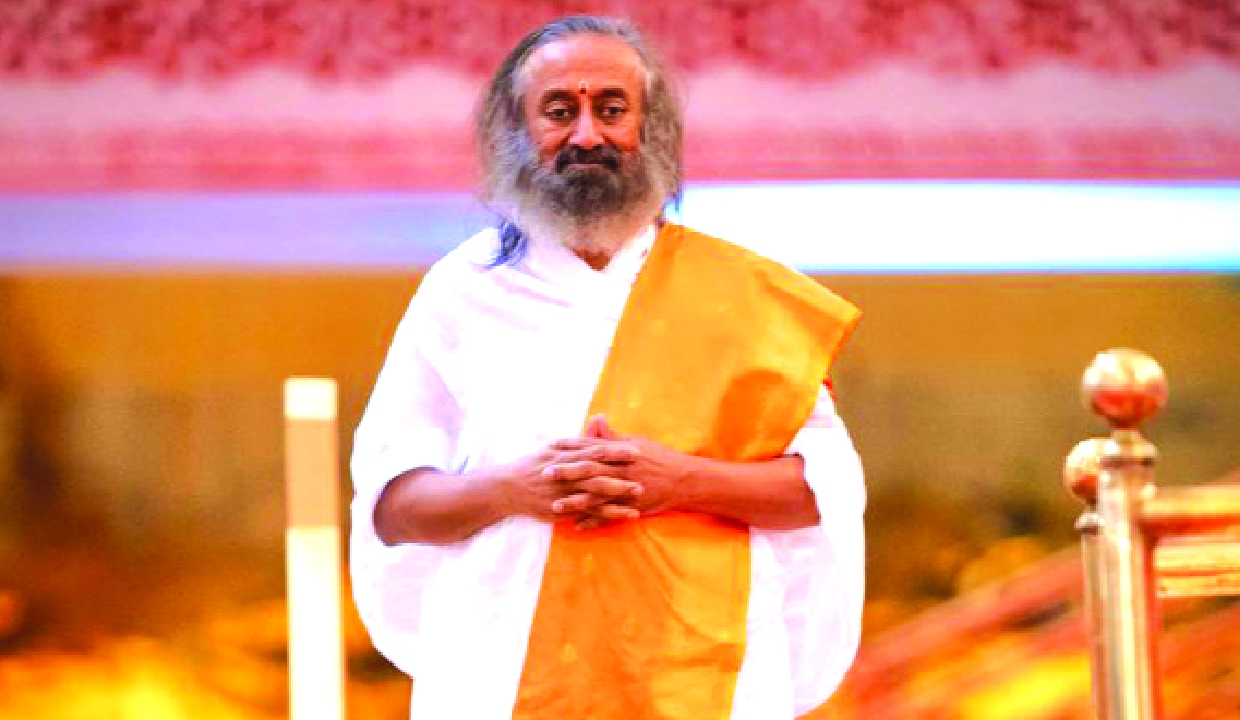
Nothing in the world can bother you as much as your own mind, I tell you. In fact, others seem to be bothering you, but it is not others; it is your own mind.
Yet, there is still a lot of stigma attached to mental health. People suffering from mental health conditions often do not want to talk about it or seek help for fear of judgment. We must do away with all types of stigma attached to mental health. People go to the gym to keep a robust body. The rise of Yoga studios has shown that people are not just looking to be physically fit but mentally fit as well. We brush every day to take care of our dental hygiene; similarly, we need to take care of our mental hygiene too. Meditation is for mental hygiene what brushing is for the teeth.
Health is not just the absence of disease. It is a positive state of well-being. Fortunately, today we hear a lot of talk about wellness and lifestyle changes. But when it comes to the mind, we still wait for illness to arrive. It is necessary to take a preventive step rather than trying to cure.
Health is complete when it attends to four aspects-physical, mental, social, and spiritual. You may be physically fit but mentally weak. You may be mentally fit but physically not that strong. Then there is the social factor, where a person’s behaviour in society is not palatable. Many people struggle to make new connections, and the few they have, they cannot keep them. This is a lack of social health. Spiritual health is the broad vision of who one is and what life is all about. Our feelings are not in our control, and they change with time. One day you feel secure; the next you feel insecure. The mind is like that. You never know what type of feelings will come. People say, “I can’t live without you.” A few years later, they say, “I can’t stand you.” It is the same person! Our emotions are constantly changing, but when they come over you, you do not know how to handle them. We have been told not to get angry, not to be sad. But neither in school nor in our homes have we been taught how to handle these challenging emotions.
Today there is a global epidemic of loneliness. In the UK, there is a dedicated Loneliness Ministry to address it at a policy level.
It is normal to feel alone. Even those who have riches, a good family, and a loving partner can still feel lonely. When you find that life is meaningless, a sense of emptiness dawns on you. This can either take you towards depression, or the same emptiness can become a vehicle for you to rise to a higher consciousness, once you know how to take care of this mind.
To have robust mental health, we need to know what the mind is, how it functions, and where it is. Recently, scientists have said that the mind is not in the brain but all over the body. Usually, we think our mind is inside the body. But actually, the body is inside the mind. The mind is bigger than the body. Once you see this, you understand what happens within you when you are happy, and what happens when you are not. When someone says, “You are so good-looking,” you feel yourself expanding. Whenever you are happy, your mind expands. And when you feel unhappy, the mind shrinks. You feel something is crushing, something is shrinking. You feel hopeless, as if nothing is working. That is the negative energy of a shrinking mind.
When this shrinking increases further, people want to harm themselves. What shrinks is the life force, or the prana. The subtle body becomes smaller than the physical body. It is like a scarf tightening around the neck. You want to remove it. When prana goes this low, suicidal tendencies arise. But suicide doesn’t really help. It is like someone stepping out in severe cold and removing the jacket.
But with just a few minutes of breathing, meditation, and dance, the subtle body comes back to its normal shape. These activities help increase the prana, or the life force energy. Your breath has a message for you. It says, “I am here, flowing in and out of you day and night. Why don’t you give me a little attention? If you give me attention, I will make you happy.”
Just look at a baby, the way it breathes, the way it smiles, the way it connects. A baby is crying one moment and laughing the next, from every cell of its body. Babies have not yet accumulated stress. As you grow up, these qualities get covered in stress, tension, and too many impressions. You do not realise you are breathing unless you run to catch a bus or get a cold.
There is a rhythm in nature, in the seasons, and in the body too. We feel hungry and sleepy at certain times. Each emotion creates a certain sensation in a certain part of the body. This is linked to a rhythm in the breath. When you are happy or smell a flower, the inhalation is slow, steady, and strong. When you are sad or grieving, the exhalation is longer and the breath heavier. If we know something about our breath, we can manage our emotions very well.
If the mind is a kite, the breath is the thread. The longer the thread, the higher the kite can go. With the practice of Sudarshan Kriya, a powerful breathing technique, you can remove stress from every body cell and cleanse negativity. Doctors from America, Canada, and Japan shared the impact that Sudarshan Kriya and meditation have had on the mental health of patients around the globe.
For fear and anxiety, do Ujjayi breath for a few minutes. Breathe in and out through the nose while constricting your throat. You will see all the knots in the heart region open up, and then the fear disappears. Anxiety and fear are connected to the heart region. Lift the energy from there. When it is stuck, it is like ploughing snow to get your car moving.
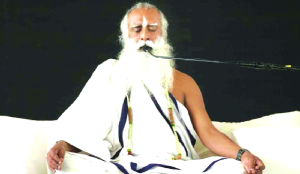
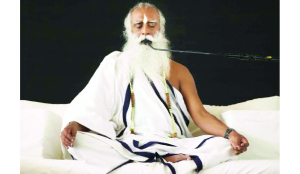
Breathing practices help us go deeper into meditation, and meditation calms an anxious mind. To meditate effortlessly, I give three principles. You simply need to keep these in mind, without much effort. The first is, ‘I want nothing.’ When you sit to meditate, bundle up all your desires and keep them aside. You can have them back later. Second is, ‘I do nothing.’ Meditation is not about focusing, chasing thoughts away, or trying to concentrate. You have to just let go. The third principle is, ‘I am nothing.’ We put so many labels on ourselves- I am intelligent, I am stupid, I am rich, I am poor... Drop all of these labels. For those few moments, be nobody. When you say I want nothing, I do nothing, I am nothing, the mind becomes free. You slip into that beautiful space of nothingness, and that nothing is the basis of everything.
On this World Mental Health Day, let us take a vow to help all those in need. If you walk down the street and find someone unhappy, you should not just pass by. Wherever possible, stop and exchange a few words with them. It may seem a little strange in the beginning. But when you start doing it, you will be helping people tremendously. In many parts of India and the world, the Art of Living volunteers went door to door asking people, “Are you happy?” Many said it was the first time someone had asked. That question itself kindles so much comfort and such a positive emotion in the other. Let us find that happiness within ourselves and bring happiness to people around us.