Modi at 25 and the road to 2047
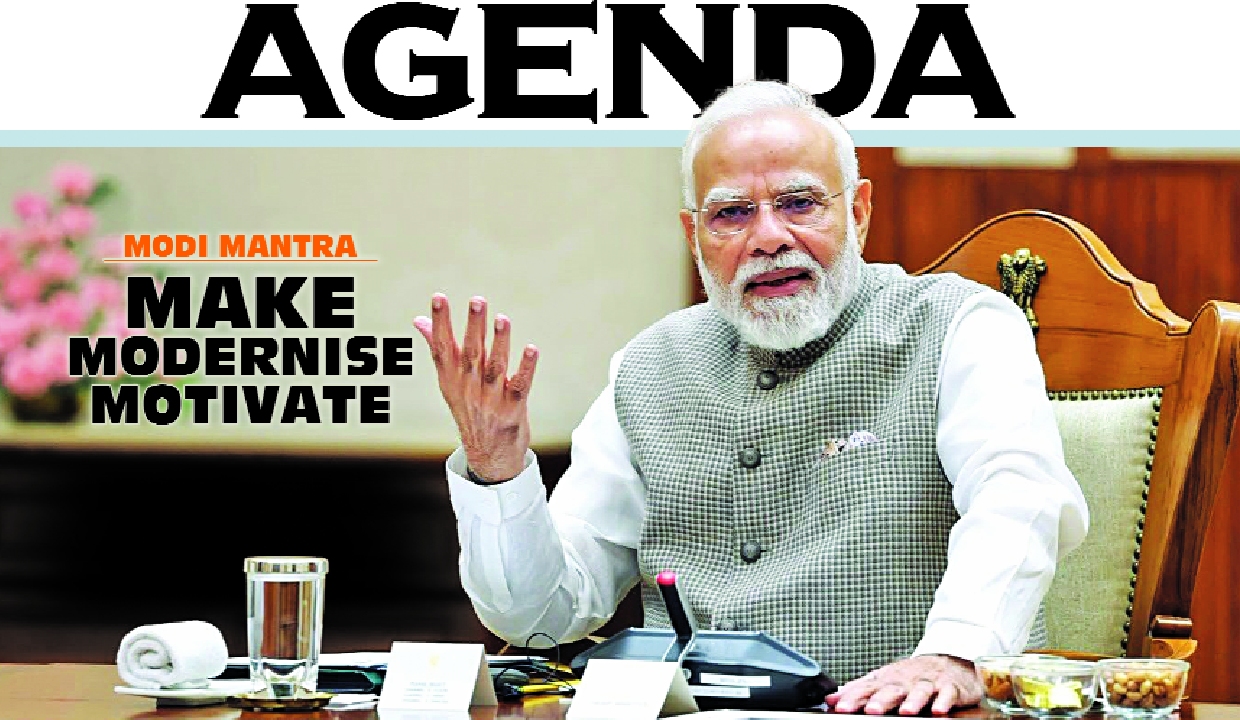
On October 7, 2026, Narendra Modi marked a quarter-century of executive leadership, a journey that began as Gujarat’s Chief Minister in 2001 and continued as India’s Prime Minister from 2014. His combined tenure is the longest for a head of government in India. The significance of this milestone lies in what sustained leadership can accomplish: carrying reforms through implementation and building institutions capable of serving a vast democracy. Three electoral victories in Gujarat and three terms as Prime Minister provided the time to pursue this institutional change. That experience now informs India’s ambition of becoming a developed nation by 2047.
Gujarat offered an early lesson in how administrative reform could improve everyday life. Jyotigram, launched in 2003, separated agricultural electricity feeders from those serving households and other users. Farmers received a scheduled eight-hour supply, while non-agricultural users received round-the-clock power. Reliable electricity also strengthened services beyond the power sector: a peer-reviewed study published in 2019 found improvements in primary health centres’ operating capacity, vaccination and antenatal care. The lesson was clear: solving one infrastructure problem could improve several aspects of development.
That understanding shaped the national emphasis on removing obstacles between citizens and essential services. Financial inclusion became a foundation for this approach. By August 19, 2026, Pradhan Mantri Jan Dhan Yojana had 59.09 crore accounts, including 32.92 crore held by women. These account numbers indicate the reach of formal banking, enabling direct benefit transfers and access to savings. For households previously dependent on intermediaries, accessible banking can reduce uncertainty and the costs of receiving assistance.
Once banking access expanded, digital payments widened its economic possibilities. UPI recorded approximately 241.62 billion transactions in 2025-26. Shared, interoperable infrastructure allowed banks and competing applications to serve merchants and consumers without each building a separate payments network. Modi’s contribution has been to give inclusion and digital delivery sustained political priority, integrating institutional capabilities at population scale. Banks, regulators, technology professionals and state administrations have been indispensable partners in that expansion.
The benefits of reliable systems extend from financial transactions to necessities at home. Jal Jeevan Mission began in August 2019 with 3.23 crore rural households having tap-water connections. States and Union Territories reported 15.89 crore connections by July 18, 2026, covering 82.09 per cent of rural households. This expansion can release time previously spent collecting water. Maintaining water quality and a dependable supply must now consolidate the gains from creating connections. Together with rising incomes and employment, better services contribute to improved living conditions. The World Bank’s October 2026 Macro Poverty Outlook estimates that extreme poverty fell from 27 per cent in 2011 to 2.6 per cent in 2023. Since the baseline predates Modi’s premiership, the entire decline cannot be attributed to one government. It nevertheless demonstrates the progress that economic growth, state-level action and welfare delivery can collectively achieve.
Sustaining that progress requires an expanding economy capable of financing public services. The Union government’s capital expenditure allocation has risen from roughly Rs 2 lakh crore in 2014-15 to Rs 12.2 lakh crore in 2026-27. These are nominal budget figures, whose effectiveness depends on spending and project quality. Physical capacity has expanded alongside them: the national highway network grew from 91,287 kilometres in March 2014 to 146,572 kilometres by February 2026, connecting businesses with wider markets.
Those connections can make private investment more productive and spread opportunity geographically. Official estimates show real GDP growing by 7.8 per cent in April-June 2026, with real gross fixed capital formation increasing by 11.9 per cent. Although one quarter cannot establish a lasting trend, strong investment supports future capacity. The objective should be to translate infrastructure into competitive enterprises and better employment beyond the largest metropolitan centres.
Manufacturing illustrates how that translation is taking place. Official figures show mobile-phone production rising from Rs 18,900 crore in 2014-15 to Rs 6.27 lakh crore in 2025-26, with exports reaching Rs 2.60 lakh crore in the latter year. This nominal expansion establishes a substantial industrial presence. The opportunity is to deepen it through domestic components, engineering and research, allowing India to retain more value from the products it manufactures.
Industrial depth also strengthens strategic autonomy. Defence exports increased from Rs 686 crore in 2013-14 to Rs 38,424 crore in 2025-26. Building domestic capabilities can support skilled employment and reduce dependence on external suppliers. Procurement that rewards quality, innovation and timely delivery will ensure that manufacturing growth also strengthens the armed forces.
Greater domestic capability, in turn, gives diplomacy stronger foundations. India’s 2023 G20 presidency helped secure the African Union’s permanent membership through agreement with other members. This demonstrated the practical value of convening power in advancing developing countries’ representation. Such influence can help India build partnerships that widen access to technology, investment and markets.
These opportunities sharpen the next development challenge: converting expanded capacity into dependable livelihoods. Better technical education, employer-linked apprenticeships and easier growth for small firms can raise productivity and earnings. Women’s financial inclusion must similarly lead to greater opportunities for paid work and enterprise.
Rising productivity will also require progress from Make in India to Design in India. Indian firms need stronger capabilities in technology and intellectual property, supported by testing facilities, competitive research funding and university-industry partnerships. Artificial intelligence should advance the same purpose through skills and applications that improve business efficiency and public services.
Such progress must be supported by institutions that remain effective across electoral cycles. Transparent measurement, independent evaluation and responsive grievance systems can improve implementation. Cooperation with states and meaningful citizen participation will make these achievements more durable.
Viksit Bharat @2047 gives these priorities a common destination: a developed India at the centenary of independence. Modi’s first 25 years have established capabilities on which that ambition can build. The next test is whether a bank account enables enterprise, infrastructure creates productive employment and manufacturing generates Indian innovation. A developed nation will be recognised in the security of its households and the opportunities available to its young people. The most enduring measure of Modi’s quarter-century will be how firmly it places that promise within every Indian’s reach.
On October 7, 2001, Narendra Modi took charge as Gujarat Chief Minister. Twenty-five years later, his uninterrupted leadership spans more than a decade in the state and more than 12 years at the Centre, reshaping India’s politics, governance and political discourse
The writer is a professor of Finance and a PT Member - Economic Advisory Council to the Prime Minister; Views presented are personal.