Sharad Navratri - The nine nights of culinary tradition
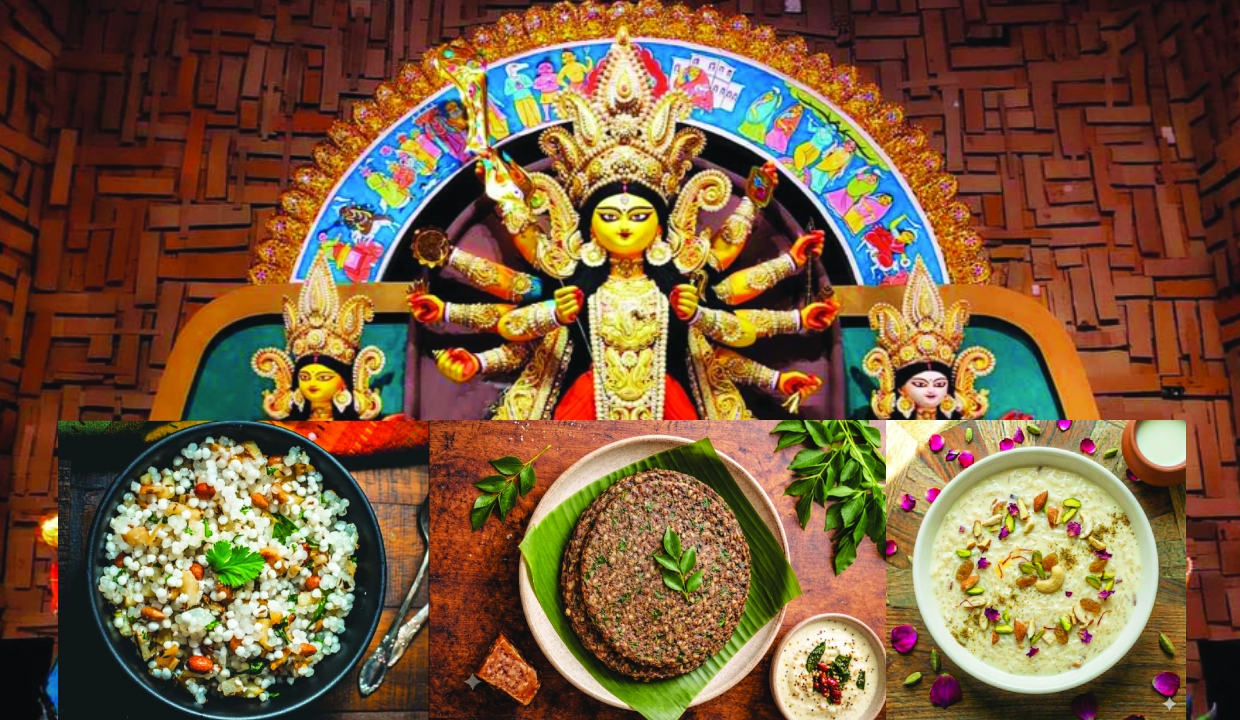
Sharad Navratri is celebrated as a period of devotion to Shakti, the divine feminine power, and as a reaffirmation of the victory of righteousness over destructive forces. One of its central traditions recalls Goddess Durga’s battle with Mahishasura, culminating in his defeat and symbolising the triumph of courage, dharma and divine strength. Across nine nights, devotees worship different manifestations of the Goddess, seeking qualities such as strength, wisdom, prosperity, courage and spiritual clarity.
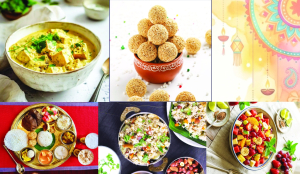
As garba preparations begin, lamps are lit and homes fill with the sounds of prayer, another transformation is already taking place in the kitchen. Wheat flour may disappear from the countertop. Ordinary rice and table salt may be put aside. In their place arrive ingredients that, for many families, are used most intensely during periods of fasting: kuttu or buckwheat, singhara or water chestnut flour, rajgira or amaranth, samak or barnyard millet, sabudana, makhana, nuts, roots, dairy and sendha namak. Yet travel a few hundred kilometres and the Navratri kitchen changes again. In Tamil Nadu, chickpeas may be soaking for sundal to be offered to visitors who come to see the Golu. In Gujarat, farali snacks sit beside nights of garba. In Maharashtra, sabudana, peanuts and rajgira enter an entirely different repertoire. Sharad Navratri is therefore not represented by one festive plate. It is a festival during which many Indian kitchens temporarily rearrange their rules, ingredients and rhythms.
In 2026, Sharad Navratri begins on Sunday, 11 October, on Ashwin Shukla Pratipada. The first day is associated with Ghatasthapana, when a kalash is ceremonially established, and with the worship of Goddess Shailputri, the first of the nine forms of Durga honoured through Navratri. The festival belongs to Sharad Ritu, the autumn season from which it takes its name, and unfolds across nine nights before Vijayadashami on 20 October. While this spiritual framework binds the observance together, Navratri has never been confined to one cultural expression. Gujarat celebrates through garba and dandiya. Parts of northern India combine fasting and worship with the larger cultural landscape of the Ramayana and Ramlila. Maharashtra observes Ghatasthapana and household traditions of worship. In Tamil Nadu, Karnataka and Andhra Pradesh, arrangements of dolls known as Golu or Bommai Golu become centres of visiting, music, prayer and exchange. In eastern India, the same sacred season gathers momentum towards the great celebrations of Durga Puja.
Food follows these regional differences, but one principle is especially striking in the fasting traditions of northern and western India. Navratri does not simply remove foods from the table. It creates another culinary system in their place. Families observing vrat commonly avoid cereal grains such as wheat and conventional rice, and many also set aside pulses, onion, garlic and ordinary salt. The precise rules differ by family, sect and region, but ingredients such as buckwheat, water chestnut, amaranth, barnyard millet, sago, milk, yoghurt, fruit, nuts and selected vegetables become unusually important. These are not merely replacements. Each behaves differently in the cook’s hands, demanding knowledge that is often learned within the household.
Consider singhare ke atte ki mathi, a fasting counterpart to the crisp North Indian savoury. Water chestnut flour is combined with mashed potato, ghee and rock salt into a stiff dough, rested, rolled into small discs, pricked so that they remain crisp rather than puffing dramatically, and fried slowly until firm and golden. The same flour can be pushed much further in singhare ke atte ka samosa. Here the dough is cooked with water and ghee before it is shaped, while the filling can be made from soaked and coarsely ground chironji or charoli seeds, seasoned with cumin, cardamom, chilli and sendha namak. A familiar snack is thus reconstructed around the rules of the fast, but its character remains unmistakably festive.
Chironji produces another remarkable preparation in chironji ki dal. Although no conventional pulse is required, the small charoli seeds are soaked, rubbed to loosen their skins and partly ground. They are then cooked in ghee with cumin, ginger, green chilli and yoghurt until the mixture develops the comforting consistency associated with a dal. It is an excellent example of the ingenuity of the vrat kitchen: the aim is not simply to eat less, but to understand how permitted ingredients can assume entirely new roles. Colocasia, or arbi, offers similar possibilities. For arbi ki kadhi, cooked arbi and fasting flour can be used to create a tangy yoghurt preparation, with cumin, ginger and rock salt providing depth without the usual gram flour base.
Barnyard millet, variously called samak, sama, samvat or vrat ke chawal, creates another branch of Navratri cooking. Despite its rice-like appearance and common English nickname of “fasting rice”, it is not ordinary rice. One particularly interesting preparation is vratwala chawal dhokla. The millet is soaked, ground and allowed to develop a light fermented character before being steamed into a soft, savoury cake. This is a clever fasting interpretation of a western Indian technique that normally relies on ingredients excluded during vrat. Samak can also be ground into a batter with singhara flour to make a thin samak dosa, cooked on a hot tawa until crisp at the edges and paired with a vrat-friendly filling or coconut-peanut chutney. Rather than reducing the fast to boiled food, such dishes show how fermentation, grinding and griddle cooking continue to create variation.
Gujarat contributes one of the richest farali repertoires. Farali pattice is especially revealing. Boiled raw banana, sweet potato or potato may form the outer covering, sometimes strengthened with singhara flour, while the centre holds a coarse mixture of roasted peanuts, sesame, coconut, coriander, ginger, chilli and a touch of sweetness and acidity. The sealed patties are fried until the exterior develops a crust and the centre remains soft and nutty. Farali chevdo offers another texture entirely, bringing together crisp components such as fried or roasted potato strands, peanuts, nuts and permitted seasonings into the sweet-salty balance loved in Gujarati snacks. Moraiyo, the Gujarati name commonly used for barnyard millet, can also become moraiyo dhokla, while rajgira flour can be worked into rajgira rotis or rajgira theplas served with yoghurt-based accompaniments. These dishes demonstrate that the language of farali food is not one of deprivation. It has its own techniques, flavours and pleasures.
Across Maharashtra, the fasting pantry intersects with a different culinary vocabulary. Upvasacha thalipeeth can be made by combining fasting flours or ground sabudana with potato, roasted peanut powder, chillies and cumin, then patting the mixture by hand into a flat disc and cooking it with ghee on a hot tawa. Sabudana vada, although now familiar across India, remains particularly at home in this western fasting tradition. Properly soaked sago pearls are mixed with crushed roasted peanuts, potato, cumin and green chilli before being shaped and fried. Its success depends on technique: too much water can make the sago sticky and heavy, while correct soaking allows the pearls to remain distinct and the exterior to turn crisp. Rajgira also appears as rajgira thalipeeth, rajgira roti and other crisp preparations, its nutty character making it more than a substitute flour.
The cuisine changes noticeably as Navratri travels south. In Tamil Nadu, the festival is closely associated with Golu, the tiered display of dolls and sacred or cultural figures arranged in homes. Visiting other households is part of the social rhythm, and sundal becomes inseparable from hospitality and prasadam. Kondakadalai sundal begins with chickpeas soaked and cooked until tender, then tossed in a tempering of mustard seeds, curry leaves and chillies before fresh coconut is folded through. Karamani sundal uses black-eyed peas, while pachai payaru sundal uses green gram. Other households may prepare peanut sundal. The principle is beautifully adaptable: the pulse changes, but the restrained tempering and fresh coconut allow each ingredient to retain its identity. These foods should not be forced into the rules of the North Indian vrat. They belong to another Navratri tradition in which an offering is prepared, shared with visitors and often varied from one evening to the next.
Sweetness, too, takes many forms during the nine nights. Rajgira laddoo is among the most recognisable, made by combining popped or roasted amaranth with melted jaggery so that the tiny seeds bind into light, crisp spheres. The same ingredient can become rajgira sheera, where its flour is roasted patiently in ghee until aromatic, then loosened with milk or water and sweetened before cardamom and nuts are added. Singhare ka halwa follows a similar principle but has its own texture: water chestnut flour is roasted in ghee before hot water or milk and sugar transform it into a glossy, dense sweet. Singhara can also become singhara barfi when cooked with milk or khoya, spread into a tray and allowed to set before being cut.
Makhana kheer offers a gentler contrast. Fox nuts are roasted in ghee, sometimes crushed lightly, then simmered in milk until they soften and the milk begins to thicken. Cardamom, nuts and saffron may complete the dish. Sabudana kheer uses soaked sago pearls instead, their translucence giving the milk pudding a completely different texture. Samak can also be simmered slowly with milk into samak kheer. Then there are sweets that transform vegetables and roots. Shakarkandi halwa cooks mashed sweet potato with ghee, milk and sugar until it becomes rich and cohesive, while kacche kele ki barfi turns raw banana into an unexpected confection by cooking it with milk, sugar and flavourings before setting it into pieces. Pumpkin halwa, slowly cooked with ghee and sweetener and finished with nuts, adds still another seasonal possibility. Together these dishes prevent Navratri sweetness from becoming dependent on a single grain, flour or technique.
Beverages form a quieter but important part of the fasting day. Depending on household custom, milk may be blended with almonds, saffron or cardamom to make badam milk, while lassi or lightly seasoned chaas can accompany permitted meals in families that consume yoghurt during vrat. Coconut water and fresh fruit drinks offer simpler refreshment, particularly when a fast extends across much of the day. Shikanji made with lemon, water, rock salt and permitted flavourings can be especially welcome in warmer regions, while nut and date milkshakes provide a richer option. As with the food itself, there is no universal Navratri drinks list. The household’s fasting rules remain the final guide.
What makes this cuisine worth preserving is not simply the number of dishes attached to Navratri. It is the knowledge hidden inside them. Someone has to know that water chestnut flour will not behave like wheat. Someone has to judge how long sabudana should soak, how firmly farali pattice must be sealed, when amaranth has roasted enough for rajgira sheera, or how tender a chickpea should be before it enters a sundal. These details rarely survive through written recipes alone. They survive because one generation stands beside another in the kitchen and demonstrates them. That may be the most meaningful way to think about Sharad Navratri as it begins this year. The festival asks devotees to renew an ancient relationship with Shakti, discipline, community and faith, but its cuisine also asks us to renew a relationship with inherited knowledge. We can attend the garba, arrange the Golu, light the lamp and offer our prayers, but we should also invite younger hands into the kitchen, explain why ingredients change during these nine nights and teach the preparations that make each region’s observance distinctive. Festivals endure when their rituals are remembered, but cultures remain alive when their skills are practised. If the next generation inherits Navratri without learning how its food is made, how much of the tradition will truly have been passed on?
The writer is Secretary, Cuisine India Society; Views presented are personal.