The umpire problem: The countdown begins
On October 7, the day Narendra Modi completed 25 years at the head of a government, Delhi Police hauled Priyanka Gandhi and other opposition leaders off the streets of the capital to stop them reaching Jantar Mantar. Roads across New Delhi were sealed. As Rahul Gandhi was bundled into a police bus, Congress workers deflated the tyres of a few police vans and delivered their verdict on the quarter-century: “Modi ki hawa puncture ho rahi hai.” Tyres, unlike television anchors, cannot be told what to say.
A government — Modi’s government — that claims to be celebrating the people’s trust felt it had to unleash the brute force of Delhi Police on citizens, civil society and opposition politicians to protect the referee of the Indian elections from Indian people.
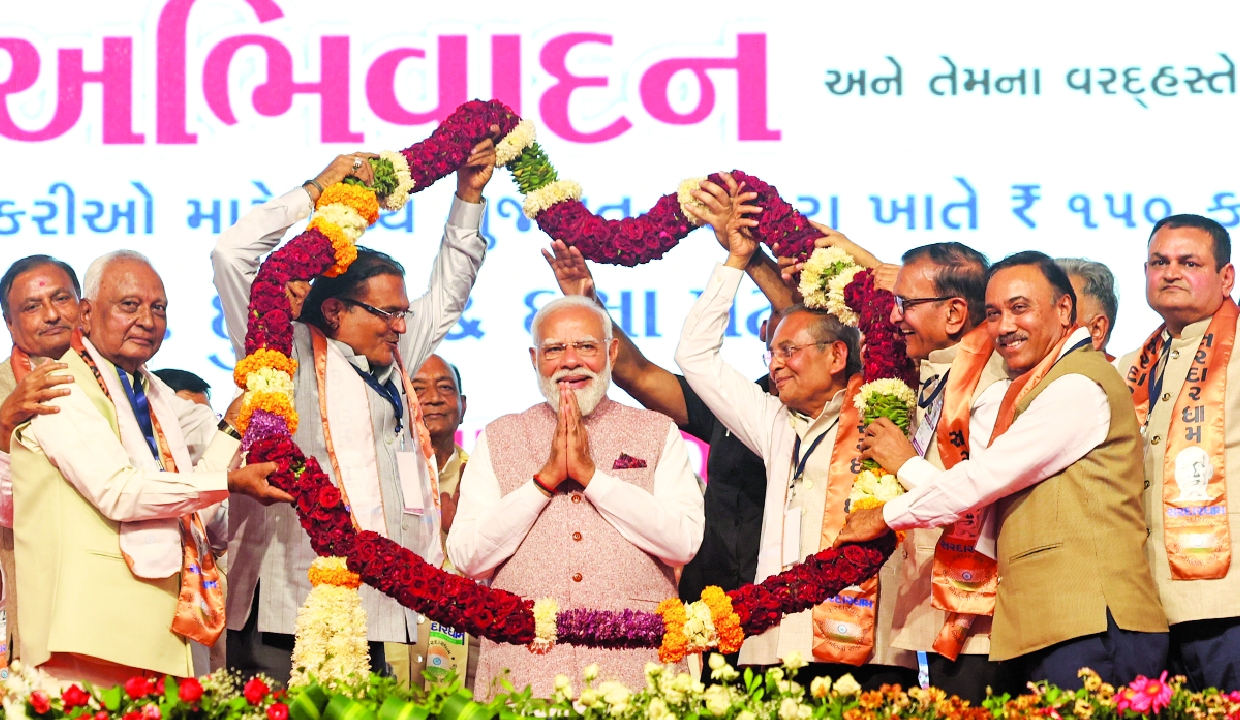
On his anniversary, the Prime Minister thanked voters for choosing him. Voters deserve to know who chose the Chief Election Commissioner. The answer is the Prime Minister, his own minister, and a two-to-one vote held 48 hours before the Supreme Court could step in.
If Modi trusts the people as much as his speech claims, the remedy costs him nothing. Back the CEC’s impeachment. Disband the current Commission. Restore the Chief Justice to the appointment panel. Let a neutral committee review the SIR process. Make the Commission publish every objection its own members have filed. Repeal the SIR, restore the voting rights of 13.30 crore citizens disenfranchised illegally through the SIR, dismiss the governments which have been formed on the basis of Vote Chori and go back to elections on ballot paper. A mandate that is manufactured through the choice of a favourable umpire is not a mandate. It is a fixed match.
But Modi cannot afford to do it if he wants to stay in power. So he keeps stealing mandates and governments to create a fake sense of popularity and power. The Prime Minister said that “whether Assembly or Lok Sabha, people have chosen me for their service for 25 years.” It is a lovely sentence. Like most lovely sentences in politics, it collapses when you count.
Day one. The clock started on October 7, 2001, when Modi took the oath as Gujarat’s Chief Minister. On that day, not one voter had chosen him for anything. He was not even a member of the Assembly. The BJP’s central leadership removed Keshubhai Patel and sent Modi to replace him, and he won a by-election only months later. The 25-year mandate begins with a nomination, not an election.
The national record. In 2024, the BJP won 36.56 per cent of the vote. Across three national elections, with all its money and machinery, it has never won a majority of Indian votes. The party that promised “400 paar” got 240. It lost Ayodhya, and its margin shrank in Varanasi. In the South, it barely registers. And where it has grown fastest, in West Bengal, the voter rolls have shrunk fastest: 27 lakh names struck off. The Election Commission still cannot tell the Supreme Court who filed 16 lakh further deletion appeals in its name.
Modi’s castle is built on the disenfranchisement and suffering of millions of poor, rural, uneducated and desperate Indians who ‘need’ the State to restore dignity and well-being to their lives. So clearly, there is nothing about these 25 years that deserves collective celebration. There has been no shortage of allegations. There has been a shortage of investigations.
In 2012, the CAG flagged a Rs 5,000 crore loss at GSPC and gas sold below cost to Adani Energy. The report was tabled on the last day of the Assembly session, an excellent day for tabling reports you would rather nobody discussed. PM CARES carries the Prime Minister’s name and the public’s money. Yet when a student filed an RTI, the PMO replied that it is not a “public authority”. Public money, public name, not public. Quite an achievement.
Nearly $2 billion flowed through electoral bonds, over half to the BJP. The Supreme Court unanimously struck the scheme down. The data that followed showed companies under investigation bought bonds worth $223 million after being raided. In economics, that is a correlation. In Hindi, there is a simpler word, and the Court politely did not use it. Abroad, the American regulator charged Gautam Adani over alleged bribes to Indian officials. At home, India’s agencies have stayed silent.
So yes, he can say no allegation has touched him. It is a remarkable claim, mainly for how much effort has gone into keeping it true.
Parties that agree on almost nothing have signed the same notice seeking the removal of his Chief Election Commissioner. The Supreme Court is questioning why a Cabinet Minister sits on the panel that selects the umpire, and how certain decisions were taken — and by whom. Allies and frenemies alike are turning up at demonstrations. Public anger against Modi is growing, and Amit Shah’s police are abjectly failing to “contain and neutralise” it. The Sangh has hinted at retirement. Modi’s days in office are numbered.
But there is one enduring truth about Durbars: they bury the truth and project permanence right up to the moment they collapse. His ministers may have no choice but to applaud and flatter the man who appoints them. But if only they stopped applauding for a moment, Modi might finally hear the countdown. The real pressure points, however, are close: the 2027 Presidential election and Uttar Pradesh.
If the BJP loses UP, powerful voices within the Sangh will push for a change at the top. If Yogi wins a highly unlikely third consecutive term, expect an equally forceful push to end Modi’s tenure.
Either way, the Prime Minister can keep flying. He can address another diaspora rally, pose with another President who taxes Indian exports, and collect another honorary award. But all the spectacle in the world cannot conceal the reality of a man who has presided over the destruction of our democracy, fears confronting the magnitude of the damage, and hopes to cling to power with Amit Shah’s brute force.
A leader confident of his people does not fear protest. A leader secure in his mandate does not need the police to defend his legitimacy. It is a leader who fears that the people have turned against him who must deploy the entire machinery of the state to silence their dissent.
Modi is no longer celebrating. These are the last few flickers of a candle that mistook itself for the sun.
In other words - “Hawa nikal chuki hai.”
The writer is a Member of Parliament in the Rajya Sabha since June 2026. He is the chairman of the media and publicity wing of the Indian National Congress party; Views presented are personal.