Will examine correctness of 1978 verdict on definition of ‘industry’: SC
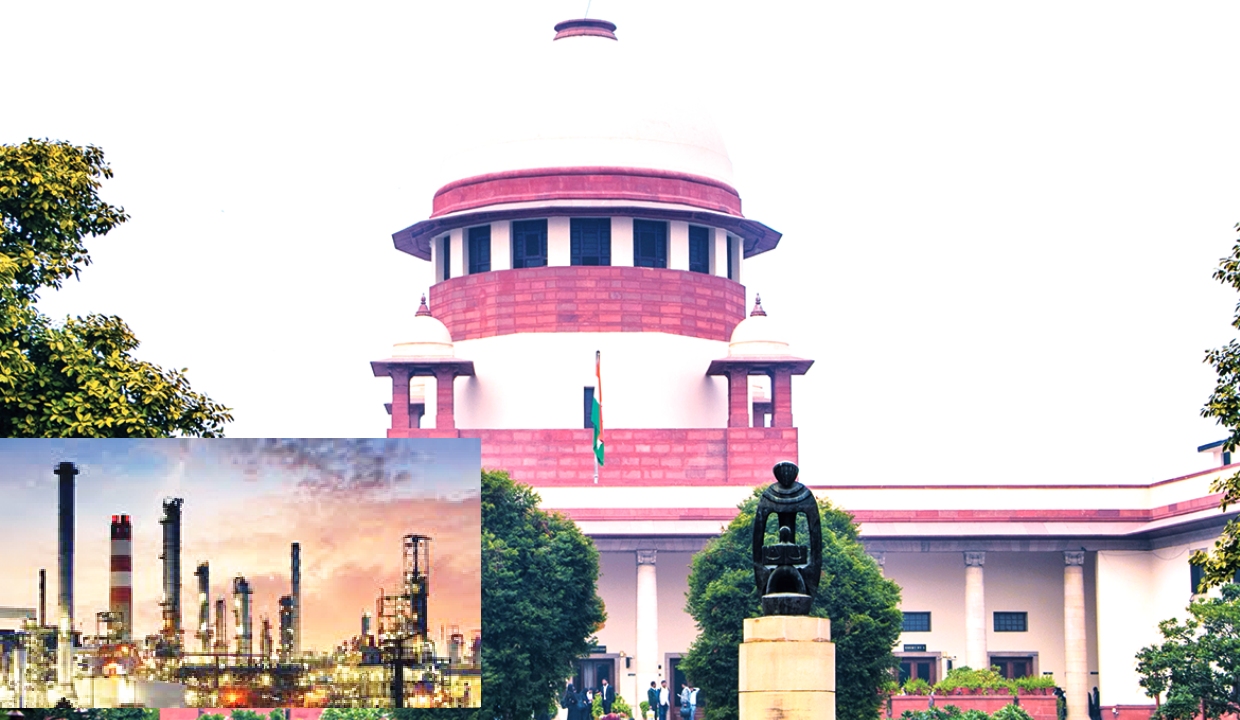
A nine-judge Constitution bench of the Supreme Court on Tuesday said it will examine the legal correctness of the 1978 judgment of a seven-judge bench giving an expansive interpretation of the term “industry” to govern labour relations.
On February 21, 1978, a seven-judge bench delivered a verdict on the definition of the term “industry” while deciding the plea of Bangalore Water Supply and Sewerage Board and expanded the definition, which brought millions of employees in hospitals, educational institutions, clubs and Government welfare departments under the protection of the Industrial Disputes (ID) Act, 1947.
On Tuesday, the nine-judge bench headed by Chief Justice Surya Kant commenced the hearing on a batch of petitions to determine the legal correctness of the decades-old definition of “industry”.
The CJI made it clear that the bench would not deal with the definition of term ‘industry’ referred to in the 1982 legislation, as that law “never came into force” and hence, cannot be relied upon.
He also said that the bench will not deal with the term as defined in the Industrial Relations Code, 2020, which became operative in 2025, as it may be challenged in court.
“That does not mean we are helpless. There is a reference before us. We are directly examining the question whether the interpretation of the original provision itself in the Bangalore (case) was correct or not,” the CJI said.
“If that interpretation was wrong, if that provision has been completely misconstructed by giving such a wide meaning, then we will correct our mistake,” said the bench, which also comprises Justices B V Nagarathna, P S Narasimha, Dipankar Datta, Ujjal Bhuyan, Satish Chandra Sharma, Joymalya Bagchi, Alok Aradhe and Vipul M Pancholi.
The bench, earlier, formulated the broad issues for its adjudication and the first issue reads: “Whether the test laid down in paragraphs 140 to 144 in the opinion rendered by Justice V R Krishna Iyer in Bangalore Water Supply and Sewerage Board’s case (of 1978) to determine if an undertaking or enterprise falls within the definition of ‘industry’ lays down correct law?
“And whether the Industrial Disputes (Amendment) Act, 1982 (which seemingly did not come into force), and the Industrial Relations Code, 2020 (with effect from November 21, 2025), have any legal impact on the interpretation of the expression ‘industry’ as contained in the principal Act?” it said.
At the heart of the dispute is the 1978 ruling delivered by Justice V R Krishna Iyer, as it expanded the definition of the term ‘industry’ and established the “Triple Test” to define it.
According to the ID Act, the term ‘industry’ means any business, trade, undertaking, manufacture or calling of employers and includes any calling, service, employment, handicraft, or industrial occupation or avocation of workmen.
The 1978 verdict expanded the definition and provided the triple test and said that if there was “systematic activity” undertaken by an organisation and there is cooperation between employer and employees in carrying out that activity and production of goods and services, then the entity can be termed as ‘industry’ and workmen will be entitled to protection under the ID Act.
This wide interpretation brought hospitals, educational institutions and even charitable organisations under the ambit of labour laws.
Commencing the arguments, Attorney General R Venkataramani dealt with the issue of whether the “over-inclusive” definition has led to a “glut of litigation” and whether it unfairly categorises sovereign and welfare functions of the State as “industrial”.
The top law officer said that while the Triple Test is “logically correct” in a vacuum, its “indiscriminate application” has led to the over-inclusion of activities that do not resemble trade or business.
He argued that modern constitutional states perform welfare activities that, while not strictly “sovereign”, like policing or defence, should perhaps not be treated as “industries”.
Justice Nagarathna said that the 1978 judgment was a product of the 1970s socialist era. “We are now in 2026. We have had many years of LPG (Liberalisation, Privatisation and Globalisation),” Justice Nagarathna said. She questioned whether the scope of “industry” should remain expansive or if a balance must be struck, given that many functions previously reserved for the State are now handled by the private sector. Justice Datta raised a procedural question regarding the validity of the reference itself.
He questioned how a five-judge bench in the Jai Bir Singh case in 2005 could question the authoritative judgment of 1978 of the seven-judge bench in the Bangalore Water Supply case.
The hearing will continue on Wednesday.
The 1978 verdict had come following a dispute that originated when several employees of the Bangalore Water-Supply and Sewerage Board were penalised for alleged misconduct. The employees challenged the punishment before the Labour Court under the ID Act, claiming that the disciplinary action violated principles of natural justice.
The Board raised a preliminary objection, arguing that it was a statutory body performing essential civic functions such as providing water supply and sewerage facilities and, therefore, did not qualify as an “industry” within the meaning of the Act.
The labour court rejected the objection, a decision that was subsequently upheld by the Karnataka High Court.