Will anti-incumbency matter in Kerala poll?
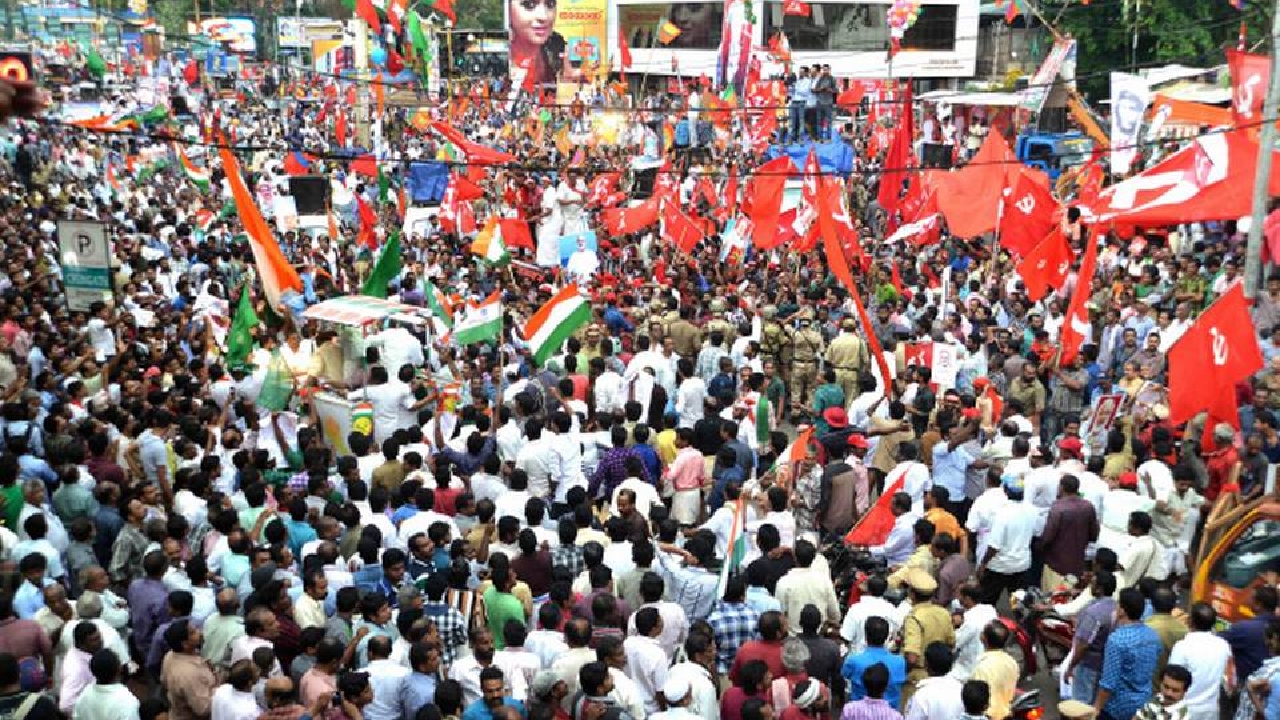
Kerala the most literate state of all, is going to the polls on April 9, 2026. Just a week away, yet there is no clarity on voters' preferences and what they actually have in mind when they vote. Kerala has a simple electoral matrix - the United Democratic Front (UDF) and Left Democratic Front (LDF) have ruled the state, alternating each time. But this rhythm was broken in 2021 when Kerala's Chief Minister Pinarayi Vijayan took the oath of office for his second consecutive term and has gone on to rule the state for an unprecedented ten-year tenure. What people voted for was his strong governance credentials- welfare delivery, and crisis management during floods and the COVID-19 pandemic.
But the last five years have not been very smooth for the LDF; the challenges are mounting - with ever-growing unemployment and deteriorating law and order, people are weighing their options of finding an alternative. There is little doubt that anti-incumbency sentiment exists. Independent surveys suggest that nearly half the electorate desires change. Centralised decision-making, governance lapses, and the state's financial stress have dented the government's image. Delays in welfare payments, corruption charges, and administrative inefficiencies have further eroded its image. But what goes in LDF's favour is that Kerala's voters are discerning; dissatisfaction does not automatically translate into regime change unless the opposition presents a credible alternative. For the UDF, this election is both an opportunity and a challenge. It benefits from latent anti-incumbency and has demonstrated organisational resilience, particularly in recent local body polls. However, its perennial weakness-internal factionalism-continues to undermine its prospects. Leadership tussles and disputes over candidate selection dilute its message, while the perception of lacking a coherent developmental vision persists. This time around, the presence of the BJP-led NDA, which, though limited, has the potential to split anti-LDF votes in closely contested constituencies. The issues shaping voter choices in 2026 go beyond traditional welfare politics. Economic distress is central, with youth unemployment exceeding 15 per cent and migration continuing unabated, people are looking for a change. Additionally, identity and regional issues-ranging from church disputes to human-wildlife conflicts-add layers of complexity to electoral behaviour. So this is not going to be a single-issue election on anti-incumbency but a layered one, and it is hard to predict the voters' minds. Most surveys point to a razor-close contest, with seat projections overlapping significantly between the LDF and the UDF. What emerges clearly is the absence of a decisive wave.
So, is anti-incumbency real? Yes, but it is neither uniform nor overwhelming. It is issue-specific, local rather than pan State. This makes the election less a referendum on the government and more a constituency-by-constituency contest. In a state known for its political maturity, the verdict is likely to be finely balanced - decided not by sweeping sentiment but by a host of issues that may be haunting the voters' minds.