Why Talent Is Not Enough in the Corporate World
Talent is important, but talent alone is not enough. How this talent is executed is equally valuable. A person may be extremely capable, but if the mind is stressed, restless, or distracted, that talent cannot be expressed or executed effectively. Even the most talented person may struggle to perform well. On the other hand, when the mind is calm and focused, even someone with moderate ability can achieve extraordinary results.
Studies have found that people from previous generations had stronger ACC (Anterior Cingulate Cortex), a specific functional region in the frontal part of the brain involved in emotion, decision-making, and impulse control, which helps someone become resilient. Today, we see that attention span and patience have considerably shrunk. Unless you take care of their mental wellness, no matter how talented a person you hire, you end up seeing that they are not doing what they are supposed to do, or at least as well as they are supposed to do. This is something organisations across the world are beginning to realise.
Twenty years ago, when I talked about wellness, people were not necessarily concerned about it. Today, it has become a part of the language that corporates speak. Today, firms are keen to know how to de-stress and bring the enthusiasm from within their people.
There is a big difference between motivation and inspiration. Motivation is short-lived - it comes from outside. You give an increment or a promotion, people work well for some time, then the motivation dies out. But inspiration comes from within and endures for a long time. When people are inspired from within, they continue to excel. That is what we call IT — not Information Technology but Inner Transformation. Wherever there is sincerity and talent, it does get recognized. All that is needed is patience. One should not be feverish about success. When there is feverishness, one ends up making wrong decisions. It is not difficult to climb up the corporate ladder by hook or by crook, but then you fall down the ladder faster than you climbed. If your goal is clear, and you have the patience to move in that direction, nature supports you.
A major aspect of good leadership is letting go of control. Are you in control of your body functions? Are you in control of your thoughts? No. When you realise that the idea that you are in control is an illusion, you will be able to relax. A relaxed mind is a sharp mind and becomes a far more effective decision-maker.
The one who manages this universe does not make it obvious that He is in control. Similarly, leading from behind the scenes is the best. There is a saying in Sanskrit: Paroksha Priyahi Vai Devaha — the Gods like to do things indirectly. They give people the joy of feeling that they are doing it, but in reality, it is the Divine energy that does it subtly. The same principle applies to building high-performing teams. Just imagine if everyone in the organisation walks around feeling insecure, depressed, unhappy, and lonely — what sort of company would you be building? Can you make any progress? The secret of management begins with developing trust among leaders. When you walk around with your mind saying, ‘I don’t trust you,’ the same thing reflects in the world outside. Those managers who deal with an equanimous mind handle challenges far better. Those who are not impulsive — their perception is better, their expression is better, and their observation is better.
A sense of belongingness with everyone makes one a better leader than someone who thinks, ‘I am different, and I know better.’ In any business setup — whether it is a factory, your office, or business — there is a clerk working day and night for you. If you take a few moments to personally wish them, interact with them, deal with them, that human relationship, that sense of being one among them, is a vital quality of leadership. A leader is also one who has a good attention span, has the patience to listen to the other person, and can put himself in the shoes of the other person to see the point of view from the other side. This amounts to having a multi-dimensional understanding of any situation.
Just talent is not enough, but one must lead by example, too. Being totally open and honest is its foundation. If you make a mistake, you simply admit it. If you try to cover one mistake, it leads to another mistake, then another. That only makes you weak. A true leader will neither complain nor explain, and is open to learning all the time. A leader has to strike a balance between diplomacy and straightforwardness. It is like tuning a guitar — if the strings are stretched too tight, you cannot play it, and if the strings are too loose, you cannot create music either. How we give feedback to someone is also important. Often, we point out someone’s mistake because their mistake hurts us. When you go to correct someone’s mistake with this attitude, it never brings transformation. What we need to say is: ‘What you are doing will eventually hurt you, so change.’ That brings the transformation. A good leader creates leaders, not followers. He takes good care of those whom he is leading. He delegates responsibility. A shortsighted leader creates a mob; a leader with wisdom creates a movement.
We are all looking for ways to make our workforce more productive, positive, inspired, and enthusiastic. For this, we need to give them tools to energize their bodies and minds. There are largely four sources of energy that we know of: food, sleep, breath, and a calm and meditative state of mind. Among these, breath and meditation often go unnoticed, yet they help in bringing transformation within. When you begin to understand the rhythms and patterns of the breath, you gain the ability to release negative emotions, whether it is anger, frustration, tiredness, stress, or even depression. When the mind is restless or impulsive, you tend to react quickly and push people away. But when the mind is calm, you are able to listen to both sides of a story and make wiser decisions.
A simple practice can help. Whenever you have an important decision to make, pause for fifteen seconds and take a couple of deep breaths. In that small gap, clarity arises. Decisions made from that space rarely go wrong.
At times, when you are in leadership positions for a long time, the ability to be a follower diminishes. Even if you happen to follow, you find fault with another’s leadership, which results in resistance. The best leaders know how to be a leader and a follower at any time. When you are a leader, do not stop being a student — else you will lose something very precious. A leader never stops learning. He considers himself to be a perpetual student and learns from everybody, even from a child. Celebration, relaxation, sense of belongingness, and constantly updating oneself with different skillsets — these are avenues we should never stop exploring.
A good leader is satyadarshi — truthful; samdarshi — equanimous; priyadarshi — pleasant personality; pardarshi — transparent; and doordarshi — farsighted. He or she has a mission, a vision, a spirit of sacrifice, compassion, and commitment. All this may sound utopian, but in reality, if you look keenly into the lives of the most successful leaders, you will find all these qualities naturally manifest at some time or other. You don’t have to do much to inculcate these leadership skills — just their awareness is good enough to make a good leader.
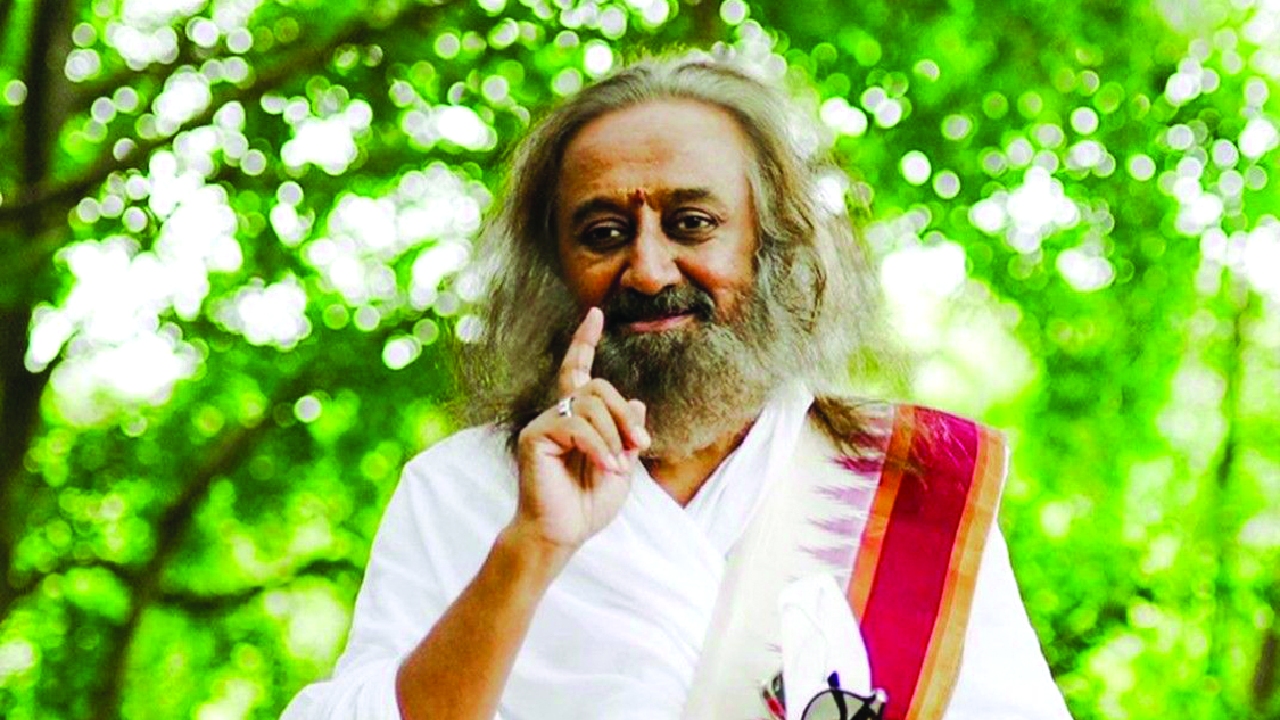
“A simple practice can help. Whenever you have an important decision to make, pause for fifteen seconds and take a couple of deep breaths. In that small gap, clarity arises” — Gurudev