Geopolitics and Nepal’s path ahead
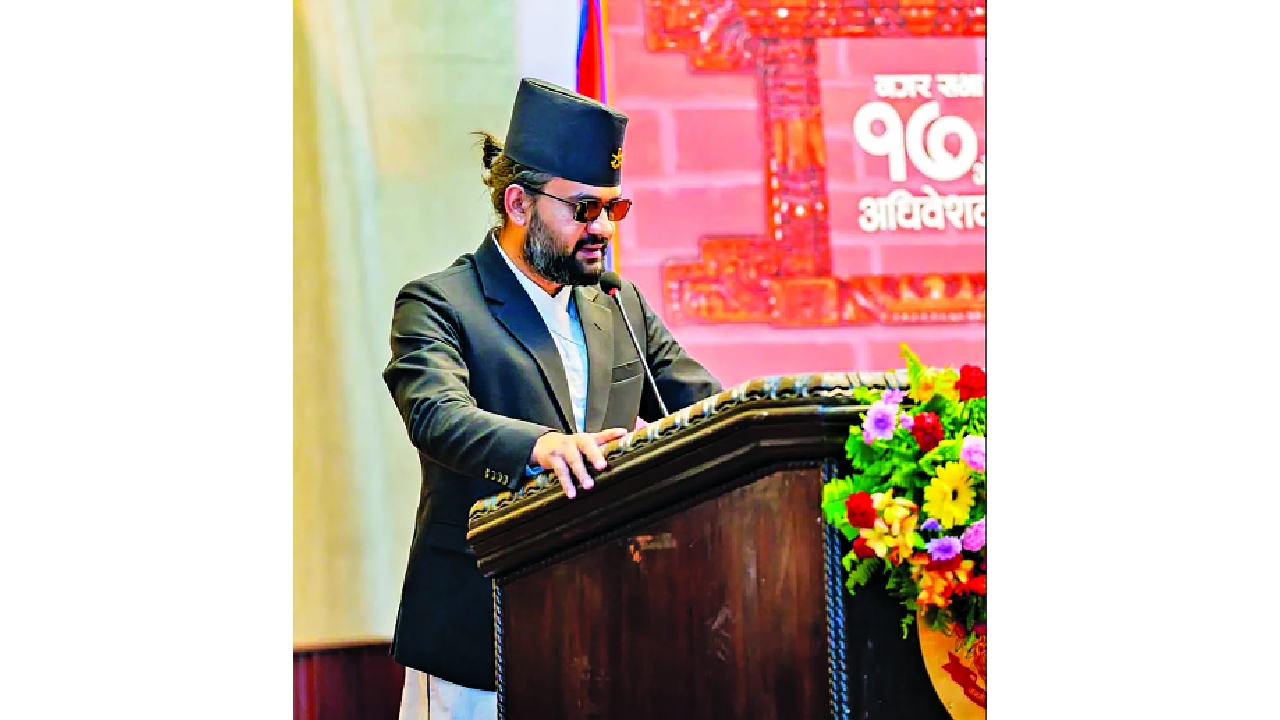
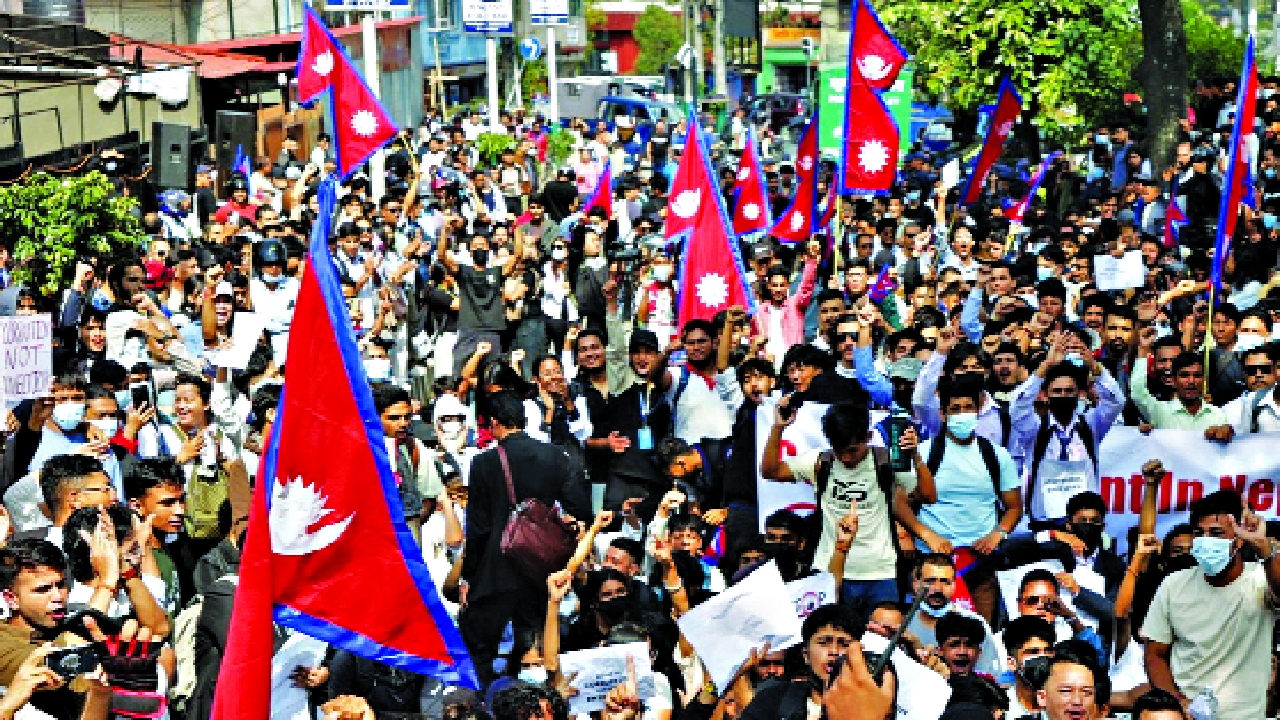
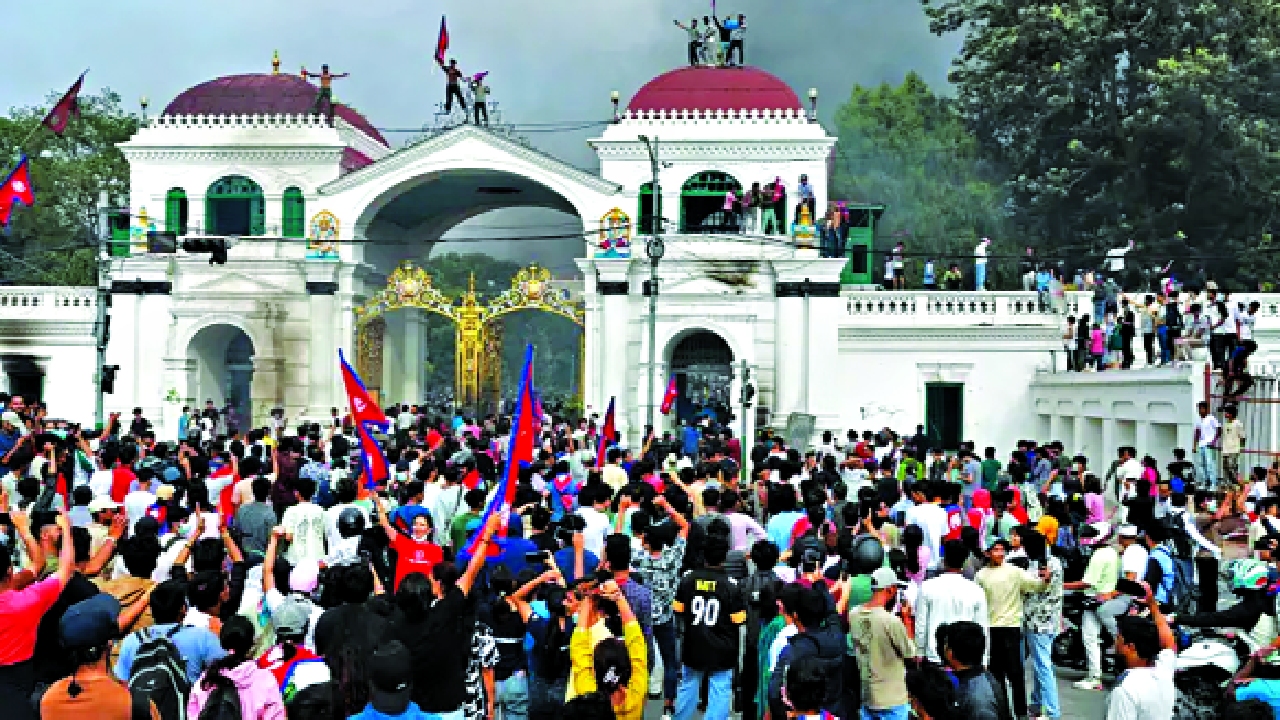
The Gen-Z movement that took place in Nepal on September 8th and 9th laid the foundation for a political transformation. In the election held under the leadership of Sushila Karki that followed, the Rastriya Swatantra Party emerged as the largest party in Parliament, securing nearly a two-thirds majority. The traditional parties that had long struggled to establish democracy — particularly the Nepali Congress and CPN-UML —suffered a significant defeat in the election.
This clearly shows how dissatisfied the people had become with parties that believed they could do anything once in power. The fact that not even one-third of the electorate supported them in the polls reflects the depth of public frustration and disenchantment with the traditional ruling elite. These parties had grown accustomed to blaming neighbouring or other foreign countries for their inability to deliver, invoking the fear of external threats to capture power. This time, however, the people rejected them decisively. Forgetting that power is never permanent, these parties had entrenched themselves across all state institutions, assuming they could remain in power indefinitely through corruption and misgovernance.
This illusion was shattered as voters turned against them.
In the 2026 general election, the people gave a majority to the Rastriya Swatantra Party, electing 182 representatives out of 275 seats in the House of Representatives. By doing so, they entrusted the nation’s future to a younger generation, appointing 35-year-old Balendra (Balen) Shah as Prime Minister. The new government faces the primary task of addressing widespread misgovernance and poverty and improving the standard of living of the people. At the same time, it must strengthen democratic practices, maintain mutually beneficial relations with neighbouring countries, and coordinate effectively with international powers. Nepal’s neighbours, China and India, are already established global powers.
Maintaining balanced relations with both, while also fostering friendly ties with Western countries, is a major challenge for Nepal. Being situated between democratic India and communist China, Nepal must also balance the interests of the United States, a distant but influential advocate of democracy. Understanding US interests in India and China and shaping diplomacy accordingly is a complex task. Nepal must anticipate what these powers expect and respond with diplomatic skill.
Nepal, located between India and China, is not only geographically significant but also politically important to global powers. Amid growing polarisation among major powers, Nepal has become strategically important.
As the United States expands its global influence, its approach towards China and India is likely to have direct implications for Nepal. The United States may seek, in some way, to use Nepali territory to keep China within its strategic radar while maintaining relations with India. This possibility cannot be ruled out. Agreements with China prohibit the use of Nepali territory against China, and similarly, agreements with India prohibit its use against India. In such a context, there may be a perception that Nepal, situated between the two, provides a convenient base for strategic planning. Nepali diplomacy must remain alert to this possibility. This concern is already present among the general public. If Nepal fails to adopt a balanced diplomatic approach, the country risks being caught in the pressures of global powers.
The old political forces, particularly the Nepali Congress and CPN-UML, which alternated in power by leveraging relations with India and China, have now been rejected by the people. The time has passed when parties could win votes by blaming India or China for development failures. These parties failed to recognise this shift. Attempts to mask incompetence by criticising neighbouring countries no longer resonate with the electorate. Blaming neighbouring countries for internal political instability while ignoring internal conflicts and declining public trust has cost these traditional parties dearly. A balanced neighbourhood policy is a hallmark of strong diplomacy, and the newly formed government must prioritise this approach.
There has been much speculation regarding the MCC (Millennium Challenge Corporation) agreement between Nepal and the United States. Along with MCC, the proposed SPP (State Partnership Programme) agreement may also bring elements of US security policy. If Nepal assumes that India and China will naturally accept the presence of US security frameworks in the region, such thinking would reflect immature diplomacy. China is already cautious regarding US involvement in Tibet-related matters, and India may perceive US interest in its northeastern states as a security concern.
Nepal’s strategy in addressing these legitimate concerns will play a crucial role in determining its future. Although the United States may have no intention beyond assisting Nepal, public suspicion remains that such involvement could lead to interference in Nepal’s internal politics. The government must take wise and transparent steps to address these concerns. If Nepal, under the influence of American power, allows itself to become a strategic platform between India and China, there is a real possibility that these two countries could come together and determine Nepal’s future themselves.
China, for instance, might even urge India to manage Nepal in its own way if it perceives Nepal’s diplomacy as inadequate. Nepal must not remain under the illusion that if India undermines it, China will come to its rescue, or vice versa. This way of thinking is outdated. It may have been somewhat relevant in the past, but in today’s age of information and technology, it is no more than a simplistic argument.
It is natural for neighbouring countries to remain alert to the possibility that Nepal could be used in ways that threaten their security. It is equally important for Nepal to be cautious about foreign-funded NGOs and INGOs potentially raising border disputes in ways that could strain relations with India. Whether with India or China, Nepal must resolve border issues through mutual agreement based on historical evidence. Following the formation of Sushila Karki’s government, the fact that the Dalai Lama was among the first to offer congratulations may have raised concerns in both China and India. Similarly, the increase in Rohingya refugees in Nepal’s Terai region along the Indian border — from Purnia to Champaran — and the increased presence of Americans in the Himalayan region after the formation of the new government may have been perceived as security concerns by neighbouring countries.
While Nepal cannot compromise on its sovereignty and self-respect, it is its diplomatic responsibility to address such concerns and dispel the suspicions of its neighbours. The United States may primarily seek to expand its trade in the vast populations of India and China, while also maintaining a strategic balance. In that context, it may view Nepal as a convenient vantage point to observe China. However, India may fear that U.S. presence in Nepal could also extend its gaze towards India. Under such mutual suspicions, India and China could find common ground and jointly influence Nepal’s future. A country that fails to formulate a clear foreign policy yet complains that others do not act in its interest reflects weakness. Nepal must move beyond the flawed policies of the past and define a clear national strategy. Nepal may find success by adopting a cultural diplomacy approach — presenting Pashupatinath to India as a symbol of Sanatan Hindu spirituality.
At the same time, Nepal’s economic, social, religious, and cultural ties with India are deeply embedded in everyday life, making the relationship naturally unique and special. These bonds have evolved over centuries and must be acknowledged with equal depth. Nepal’s goal should be to establish itself as a strong and prosperous nation by maintaining relations with the United States, Europe, and other countries based on the principles of Panchsheel and peaceful coexistence. By developing as a centre of Eastern philosophy and spirituality, Nepal can position itself as a global hub of peace on the world stage.
The writer is a Kathmandu-based geopolitical analyst and South Asia observer; views are personal