Why India’s youth deserve a seat at the decision-making table
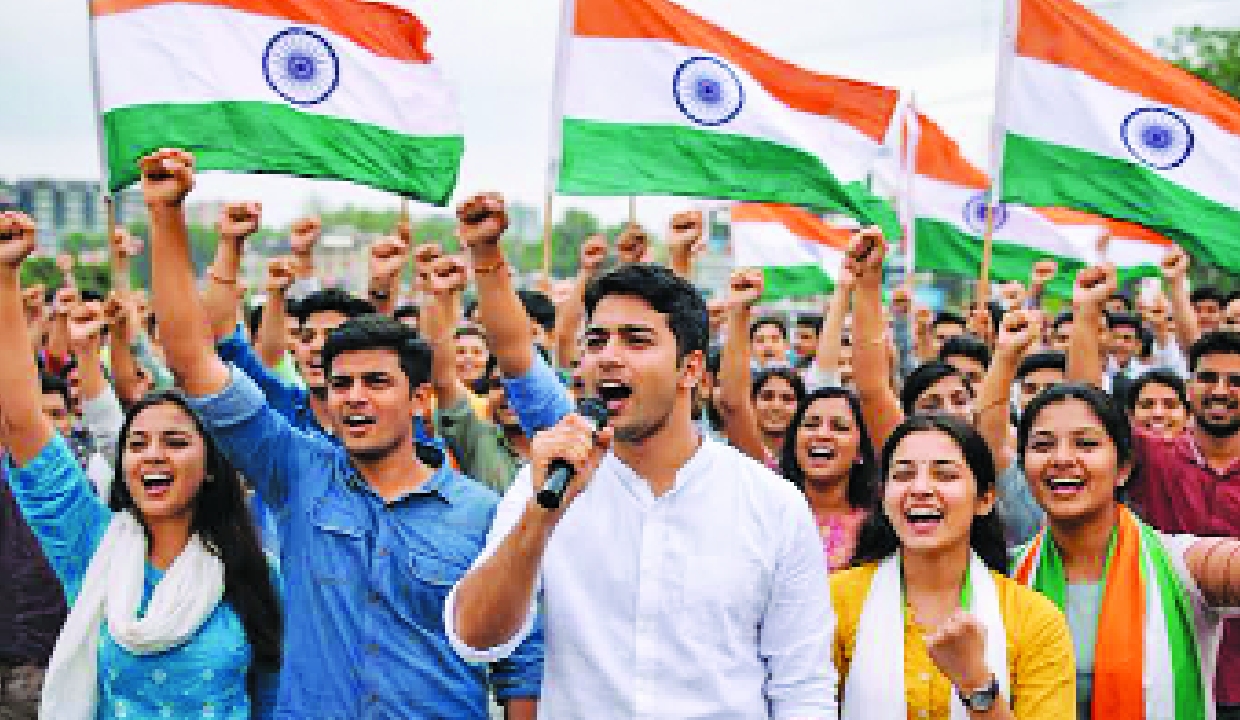
By all demographic measures, India is a young nation. Nearly 65 per cent of its population is below the age of 35, and the country’s median age hovers around 28 years. Political leaders across party lines proudly refer to India’s youth as its greatest asset, its demographic dividend, and the driving force of a rising global power. Yet, there is an uncomfortable reality that rarely finds space in political speeches: while young Indians dominate the population, they remain conspicuously absent from the institutions that make decisions on their behalf. India may be one of the youngest democracies in terms of population, but its Parliament and Legislative Assemblies tell a completely different story. The contradiction is glaring. According to available data from the 18th Lok Sabha elected in 2024, fewer than one in ten Members of Parliament are between 25 and 40 years of age. The average age of the House is approximately 56 years - one of the highest in independent India’s history.
The question, therefore, is straightforward: how can a democracy claim to represent its people when its largest demographic group remains significantly underrepresented in its highest decision-making bodies? It is a question of democratic legitimacy. Historically, the situation was far more encouraging. In the first Lok Sabha constituted in 1952, nearly 30 per cent of MPs were aged 40 years or below. Seven decades later, despite India’s youthful population growing substantially, youth representation in Parliament has sharply declined to around 10 per cent. Instead of becoming more inclusive and accessible, Indian politics appears to have become increasingly exclusive. Political parties across the ideological spectrum frequently celebrate young voters. Election campaigns are designed around social media outreach, youth conventions, campus interactions, digital engagement and promises of employment and opportunity. Every political party understands the electoral value of young voters. However, when it comes to distributing party tickets, leadership responsibilities and positions of influence, the enthusiasm for youth participation suddenly diminishes. Young Indians are encouraged to vote. But they are rarely encouraged to lead.
The barriers are both visible and invisible. Electoral politics increasingly demands substantial financial resources, extensive organisational networks and years of political patronage. For first-generation aspirants, the path is extraordinarily difficult. This brings us to another uncomfortable truth: dynastic politics. A significant proportion of younger politicians entering Parliament and Assemblies today belong to established political families. While many of these leaders are capable and deserving in their own right, their presence highlights a deeper structural issue.
For every young leader with a political surname, thousands of equally talented young Indians without such advantages remain excluded from the system. The result is a political ecosystem where youth representation exists, but genuine youth inclusion remains limited. Representation should mean creating opportunities for talented young Indians from diverse social, economic and regional backgrounds to participate in governance.
The implications of this democratic deficit are profound. The twenty-first century presents challenges fundamentally different from those faced by previous generations. Artificial intelligence, cyber security, climate change, digital governance, start-up ecosystems, gig-economy employment, mental health concerns, educational reforms and technological disruptions are shaping the lives of millions of young Indians. Yet the voices most directly affected by these issues remain insufficiently represented in legislative discussions. A Parliament that lacks youth perspectives risks creating policies that are disconnected from contemporary realities. This does not mean experience is unimportant. Governance requires wisdom that often comes with experience. But democracy functions best when experience and innovation coexist. The challenge becomes even more evident at the state level.
Youth wings exist within almost every major political party, but they often function as mobilisation platforms rather than genuine leadership pipelines. Many young leaders spend years organising events, managing campaigns and mobilising supporters without receiving meaningful opportunities to contest elections. This creates frustration, disengagement and cynicism. When politics appears inaccessible, talented individuals increasingly look elsewhere. Entrepreneurs build start-ups. Professionals join corporations. Scholars enter academia. Few see electoral politics as a realistic avenue for public service.
The solution is not symbolic tokenism. The solution lies in structural reform. Political parties should voluntarily allocate a meaningful percentage of tickets to candidates below the age of 40. Internal party elections must become more transparent and merit-based. Campaign finance reforms should reduce the overwhelming financial barriers that discourage young entrants. Structured mentorship programmes should connect experienced legislators with emerging leaders.
Equally important is the creation of institutional pathways. Youth Parliaments, student legislatures, public policy fellowships and civic leadership initiatives should not remain ceremonial exercises. They must become genuine training grounds that connect young citizens with real political opportunities. India, despite possessing one of the youngest populations globally, risks lagging behind if it fails to address this imbalance.
The responsibility does not rest solely with political parties. Young Indians themselves must move beyond political spectatorship. Democracy cannot be strengthened merely through social media commentary. It requires active participation, organisational engagement, public service and leadership. However, participation can flourish only when opportunities exist. The real question is whether India’s political establishment is ready to trust them with it. For decades, political leaders have referred to young people as the future of India. That statement is no longer sufficient. India’s youth are not simply the future. They are the present. They are taxpayers, entrepreneurs, innovators, students, professionals, farmers, workers and voters. They are shaping the country’s economy, society and global reputation every day. Surely, they deserve a greater role in shaping its laws as well. If India truly believes that its youth are its greatest strength, then the time has come to offer them not just a voice in election campaigns, but a seat in Parliament and Legislative Assemblies where the nation’s future is ultimately decided.
The writer is an advocate and columnist; Views presented are personal.