Viksit Panchayat for Viksit Bharat
India added a third tier of governance by the 73rd Constitutional Amendment Act, 1992, which, however, fell short of integrating PRIs with the federal structure. While the Union and State Governments derived their powers from the 7th Schedule of the Constitution, viz., the Union, State, and Concurrent Lists, the PRIs derived their powers from an Act of devolution by the State Governments. A simple reading of the Constitution makes it clear. Article 243G provides that “… a state may, by law, endow the Panchayats with such powers and authority…”. The use of the word “may” in Article 243G, in contrast to the use of “shall” in Article 243B, that is, for the Constitution of Panchayat, debilitated PRIs from the inception. An amendment in Article 243G would correct this congenital weakness.
On 24 April 2026, PRIs completed three decades of operationalisation, yet the statutory devolution of powers, functions and funds remains profoundly uneven and largely half-hearted across the States. The latest report of the Ministry of Panchayati Raj on devolution to Panchayats in states shows that on the six identified dimensions of devolution, viz. Framework, Functions, Finances, Functionaries, Capacity Enhancement and Accountability, most of the states score poorly. On the one hand, state governments have remained reluctant; on the other hand, and rather unseemingly, the Union Government has provided funds, functions and functionaries. Its various rural development, social welfare and other programmes have helped in strengthening the PRIs. The successive Finance Commissions, especially the 13th, 14th, 15th and 16th, have further strengthened PRIs by providing grants-in-aid, directly from the Consolidated Fund of India, as a share of the divisible pool. Notwithstanding the congenital weakness in the constitution of PRIs, noticeable progress has been achieved in institutionalising them. Some of them can be highlighted.
Firstly, the constitution of the PRIs through democratic elections every 5 years, on the basis of universal adult franchise, has become regular, predictable and irreversible. There are some cases of delays in conducting panchayat elections, often on some technical, administrative and judicial grounds, but inordinate delay is now rare. People go to the court for directions on how to conduct elections.
Secondly, 2.55 lakh GPs, 6600 IPs and 660 ZPs, and about 32 lakhs PRI representatives, including about 50 per cent women, directly elected by the people, make them the world’s largest body corpus of elected representatives and network of grassroots democratic institutions.
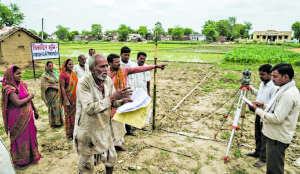
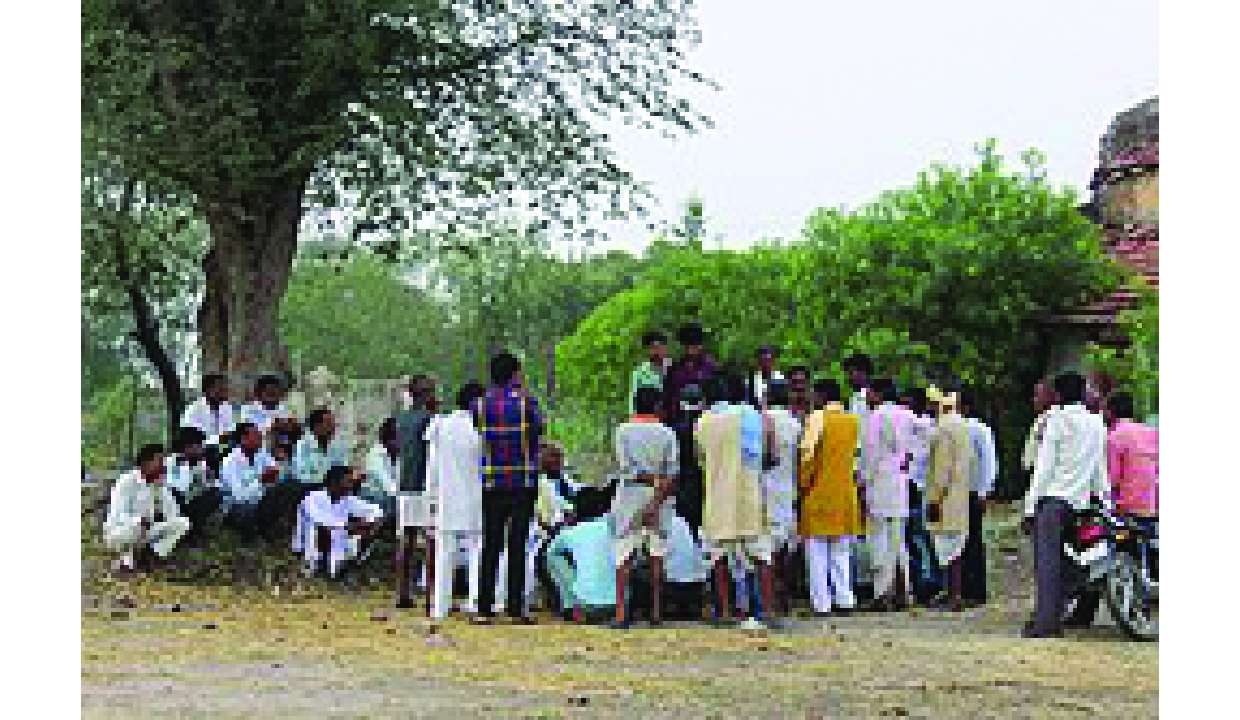
Thirdly, PRIs have moved beyond elections and have become grounded in many ways. In the past, GPs in many places used to function from the residence of the GP heads. Now almost every GP has its own office. Every GP has a bank account, an independent fund, designated functionaries, and a functioning office. A number of centre-sponsored schemes have made PRIs the nodal agency for planning and implementation. Fourthly, Gram Sabha meetings have become regular. There are fixed dates on which holding of the G.S. meeting is mandatory. Also, some projects need mandatory approval of the Gram Sabha. Though participation level in the Gram Sabha meeting remains low, and sometimes pre-decided projects are placed for formal approval, the holding of the Gram Sabha meeting is itself an important development. In some places, Gram Sabha meetings are lively as well. Most of the GPs now also prepare a GP development plan. Fifthly, GP elections have become highly contested and competitive. Younger generation and qualified professionals like engineers, management graduates, etc. have shown interest in contesting elections. Some of them have won as well. Many of the GP representatives graduate to a higher level of political participation. In a way, GPs are increasingly becoming a nursery of democratic politics.
While these developments are welcome, challenges remain in terms of:
1. Variation in the devolution of the 3Fs across states
2. Heavy dependence of PRIs on FC and state grants
3. Reluctance on the part of PRIs to mobilise their own resources
4. Low level of human resources
5. Stringent administrative control by the State Government
FCs have duly recognised the role and significance of PRIs. The 13th FC made a departure by recommending the share of PRIs in the divisible pool. The 14th FC enhanced allocation; so did the 16th FC, which recommended allocation of Rs. 4,35,236 crore for 2026-27 to 2030-31, 84 per cent higher than the allocation of the 15th FC.
Allocation of resources is important, but not sufficient. PRIs should not be seen merely as a body of local self-government for providing water, sanitation facilities and issuing birth and death certificates. Its role should be visualised beyond that. PRIs are institutions in nation-building, and therefore, their role should be defined in fulfilling the goals of Viksit Bharat. One, while development goals are defined and targets are set at the national and state levels, they are to be achieved at the local level. Further, national and state-level achievements are a summation of the local-level results.
Two, Rural India contributes about half of India’s national income and employs 67.68 per cent of the workforce. About 65 per cent of the total population continues to reside in rural areas. PRIs are their first contact with governance. PRIs have the principal responsibility for providing them with basic services, including amenities that are crucial to their well-being. It is also important for enhancing the productivity of rural workers.
Three, the call for environmental action and disaster management is essentially local. PRIs can play a crucial role in these two vital services.
Fourth, a higher level of urbanisation is also associated with a higher level of development. However, urbanisation should be natural and healthy and should not be driven by distress and poor living conditions in rural areas. Five, PRIs can bridge the rural-urban divide in living conditions by providing those facilities essential for good living conditions. Urban areas are increasingly becoming unlivable due to air pollution, water shortage, and traffic congestion. Rural areas can become an attractive destination for housing and living. In the era of the internet and work from home, this is greatly feasible. To conclude, PRIs have completed three decades of operationalisation. Though progress in institutionalisation has been slow, achievement in democratisation has been remarkable. It is high time that the PRIs role should be envisaged beyond conventional responsibilities.
The writer is Professor at Council for Social Development, New Delhi; Views presented are personal.