Unshaken: The week Dubai proved its resilience

When our family moved to Dubai about 50 years ago, beyond the tiny cluster of Bur Dubai lay nothing but a rolling ocean of sand. In family gatherings, my father-in-law has often regaled us with nostalgic stories of how neighbourhoods in Dubai’s city centre today were perceived as the middle of the desert at that time. The population of no more than 20,000 then felt like a close-knit community.
Dubai, unlike some of the other emirates, had no oil. So the city and its economy had to be built from the ground up by the sheer ambition, vision, and hard work of its residents. There were signs then of the first stirrings of a global metropolis, but none that could have revealed Dubai’s mighty future.
Dubai, where oil still accounts for less than one per cent of its GDP, is home to 200 nationalities — of which about five per cent are local Emiratis. Dubai’s distinct skyline proudly shines, towering over the surrounding raw, untamed beauty of sand dunes and the rugged Hajjar Mountains. It is a city that has offered the world a new model for city culture by being safe, progressive, and incredibly diverse. Contrary to popular perception, personal freedom in Dubai far exceeds that offered in the eight more westward-located countries such as France and Switzerland where I have lived. Today, it is this magnificent city that is under attack.
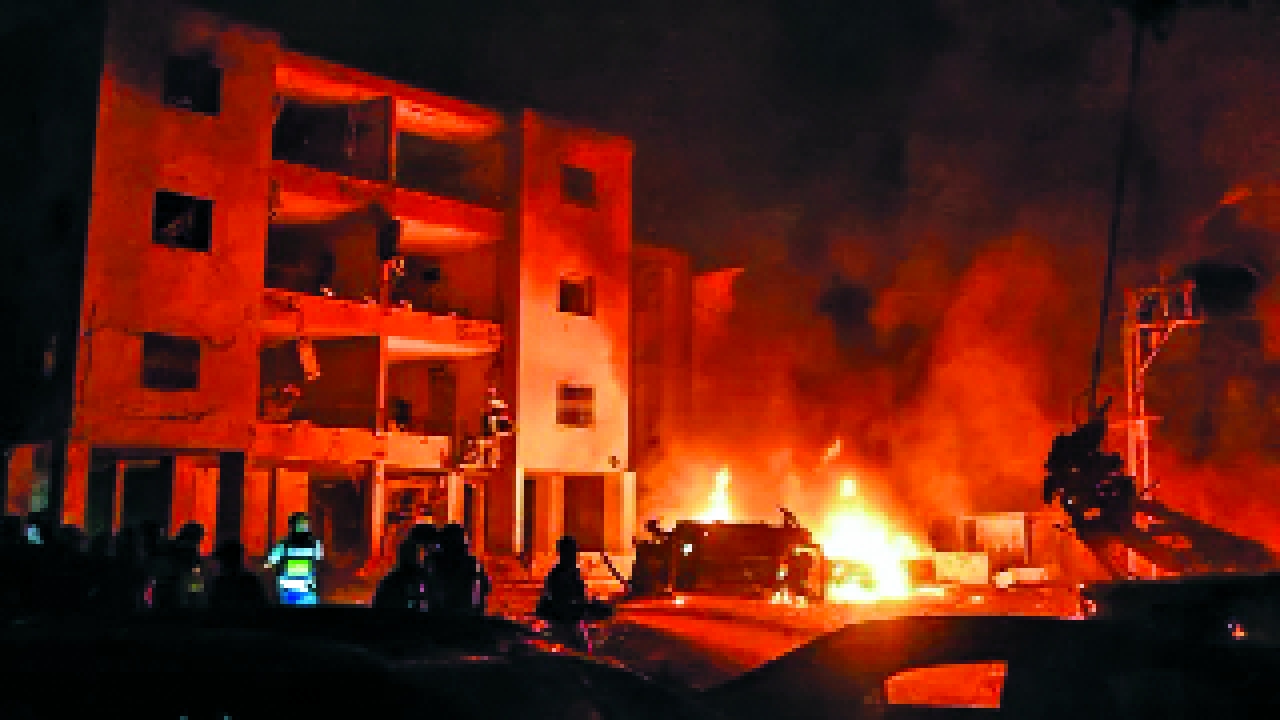
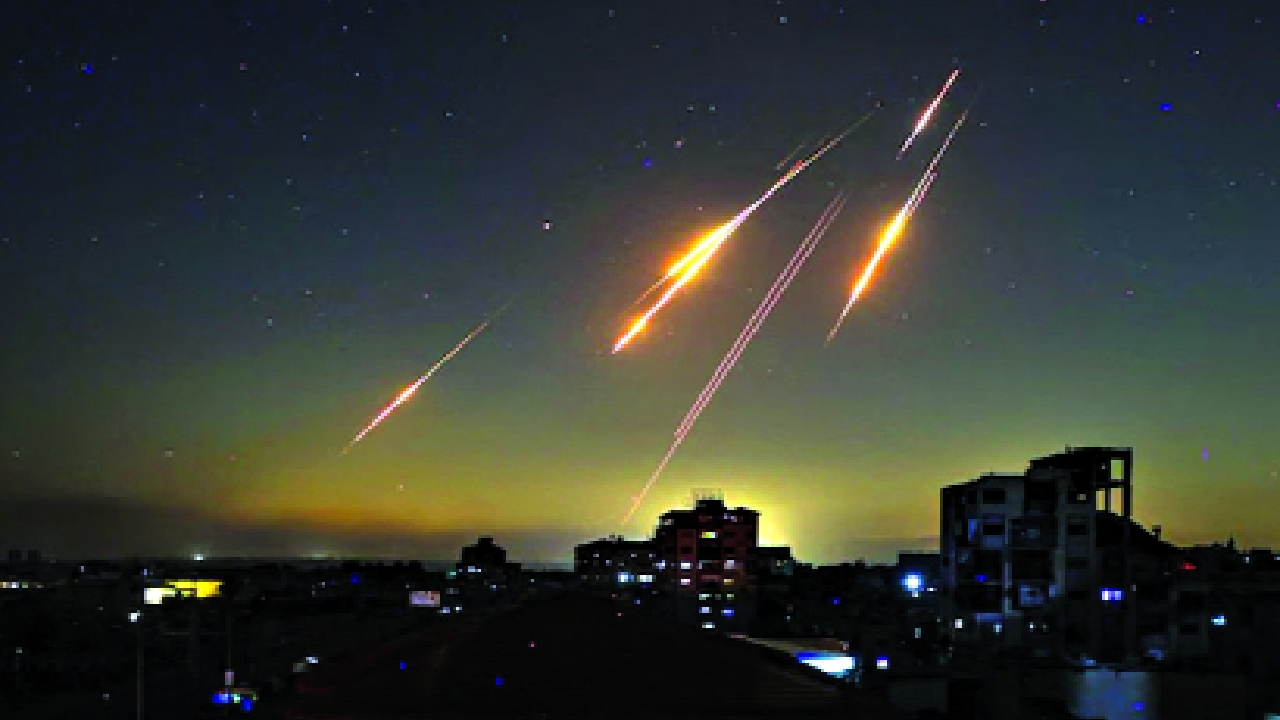
On the 12th day of the US-Israel versus Iran war, the city woke up to an alert of another missile attack. The UAE military has so far intercepted 278 ballistic missiles, 15 cruise missiles and 1,540 UAVs from over our homes. We hear the bangs in the day and during the night, often accompanied by the rattling of our walls.There is shock. On the sunny Saturday morning of 28 February, no one could have, in their wildest dreams, expected to be hit by 167 missiles and more than 200 drones.
There are unanswered questions. What does a peaceful country such as the UAE have to do with the war between the US-Israel and Iran? If it is the US bases located in the UAE that are indeed being targeted, then why are missiles and drones being shot at airports, ports, hotels, and residential buildings in Dubai?
There is uncertainty. Where will the debris of the next intercepted missile fall? There are changes. We have shelters within our homes to walk into when we are informed by the government of an approaching missile attack. We have altered our place of sleep, moving to basements or ground floors where possible, and away from windows. Our lives have adapted to the indoors to stay safe from falling debris from intercepted missiles and drones.
There is bafflement. As we face the Iranian attacks, the reaction by those who have never lived in the UAE has included unbridled snark, a catharsis of vicious envy, horrific AI-generated fake news, and an inexplicable glee at our perceived suffering.
Yet there is no fear.Dubai’s first line of resilience is its uncompromising approach to security. The UAE has invested heavily in world-class, multi-layered air defence systems that have demonstrated a high rate of success in intercepting the Iranian attacks. This technical capability is matched by a composed and calm leadership that has clearly prioritised de-escalation and maintained a neutral stance.
For the city’s millions of residents and expatriates, this translates into a daily life that remains largely uninterrupted. Malls, schools, and offices continue to operate normally, reflecting a deep-seated public trust in the state’s protective measures.
The UAE has chosen to prioritise its people by opting for regional de-escalation and peace. It has demonstrated humility and an attitude of deep responsibility and service to its people. The UAE President, Sheikh Mohamed bin Zayed Al Nahyan, has said:“As for the residents who live amongst us, they are our guests and
our extended family. They have truly honoured us with their stance. We hope they will forgive us if we have fallen short in any way. I promise them that we will fulfil our duty, because it is our obligation to protect our people and our country.”
The UAE Ministry of Foreign Affairs has also stated that “the UAE officially confirms it remains in a strictly defensive state against this direct aggression. The UAE strongly emphasises that it actively avoids being drawn into broader, unnecessary, destructive regional conflicts.” Dubai’s residents are led by the composure of the government, confidence in the country’s military strength to defend the skies, and the knowledge that the leadership will not give them away in exchange for power, ego, and war.
Pragmatism and calm remarkably rule over knee-jerk reactions, even amongst Dubai’s business leaders. In an interview that took place well after the advent of the Iranian attacks on Dubai, prominent UAE businessman Mohammad Alabbar praised the Iranian people and the beauty of their country. He said that once things settle down, there is no reason why he would not invest in Iran. “We cannot change the map,” he said thoughtfully.
The fate of the US-Israel versus Iran war is unknown, as the conflict engulfs more countries every day. Yet only those who have the strength not only to defend themselves but also to choose not to retaliate will be the real winners as they emerge unscathed. There is a belief among residents that, through the leadership’s stance of non-violence and compassion, the UAE will be excluded from the ongoing regional conflict.
The city of Dubai has risen like a phoenix from the sand, overcoming unfathomable challenges along the way. Much of that is attributed to the lack of drama, knee-jerk reactions, reckless tweets, anger, and emotional outbursts — which are now far too common in global political theatrics.
Its progressive policies do not always make world headlines. Legislation has dramatically changed in recent years to attract new residents and businesses, passing supportive labour laws and liberal visa rules. Toppling global business centres such as London, the ease and opportunities of doing business in Dubai are unparalleled. Its art district in an industrialised zone and its inimitable youth football culture are all remarkable, even if they do not always make the cut for some of the Western highbrow. Dubai’s landscape too celebrates human ingenuity and triumph over adversity. It is not difficult for Dubai to deal with discomfort. These Iranian attacks too shall pass.
The past 12 days have shown the world that the true beauty of Dubai lies in its resilience. It would serve as proof that Dubai, in all circumstances, continues to be a safe haven with unscathed skies, infrastructure, and spirit.
Dubai under attack
Dubai is facing an unprecedented wave of drone and missile attacks from Iran.
Impact on Key Infrastructure: The attacks have targeted the very pillars of Dubai’s economy, disrupting its aviation, finance, and logistics.
Dubai International Airport (DXB):
The world’s busiest airport for international travel has been struck multiple times. Incidents include a drone strike on March 7 that caused widespread disruption.
Economic Disruption: Operations at the Jebel Ali Port — the world’s ninth busiest-were interrupted by fires caused by falling debris from intercepted projectiles.
Tourism and Luxury Landmarks:
High-profile sites have not been spared. Debris from interceptions caused fires at the Fairmont The Palm and the Burj Al Arab hotels.
Civilian Safety: As of March 10, the UAE reported six deaths and 131 injuries primarily due to shrapnel and falling debris.
The writer is CEO, Sustain Labs Paris and a Global Leadership Fellow alumna of the World Economic Forum; views are personal