Tiny mites, hidden viruses, and a growing threat to wheat crops
Wheat is not merely another crop in India. It is the backbone of national food security, a lifeline for millions of farming families, and a staple that feeds more than 800 million people every day. Yet scientists are increasingly warning about a hidden agricultural threat that remains largely unknown outside research circles: microscopic wheat curl mites and the dangerous viruses they transmit. Recent research from the University of Nebraska-Lincoln in the United States has shed light on how these mite-transmitted viruses are spreading not only through wheat but also through other cereal crops such as barley, oats, rye, and triticale. The findings have important implications for countries like India, where mixed cropping systems, climate variability, and fragmented agricultural practices may create ideal conditions for these diseases to spread silently before erupting into full-scale outbreaks.
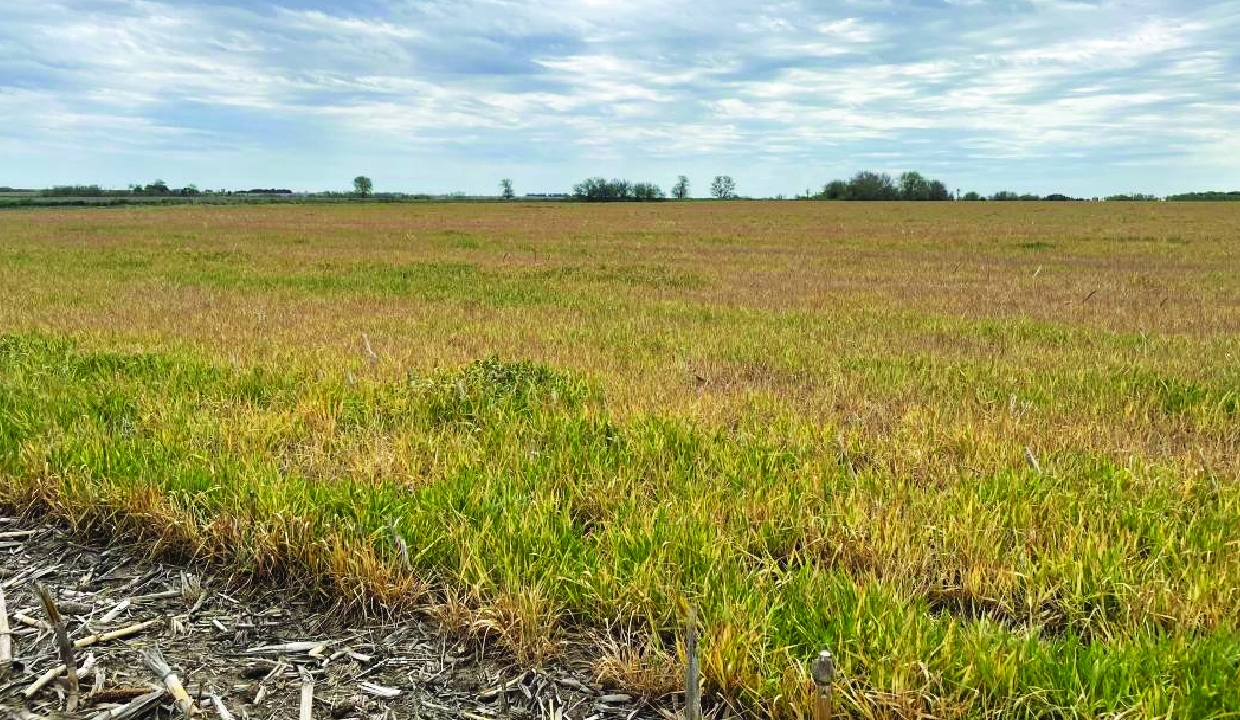
The study focused on what scientists call the Wheat Streak Mosaic Disease Complex, a group of viral diseases spread by wheat curl mites. These tiny pests are invisible to the naked eye, but the damage they cause can be enormous. Infected plants develop yellow streaks, become stunted, and suffer severe reductions in grain yield. In major outbreaks, entire fields can become economically unviable.
In the United States alone, wheat curl mite-transmitted viruses are estimated to cause annual losses worth $50-100 million. A single infected field can lose between 50 and 80 percent of its yield. If a similar outbreak were to occur in India, the consequences could be devastating for both farmers and consumers.
The danger lies not only in the viruses themselves but also in the way they survive between cropping seasons. Researchers describe the existence of a “green bridge” - a network of forage crops, volunteer wheat plants, grasses, and cereal crops that allow mites and viruses to persist throughout the year. In India’s agricultural landscape, where multiple crops often overlap across seasons, such conditions already exist on a large scale.
What makes the threat especially alarming is that India currently has no comprehensive surveillance system for these viruses. Globally, wheat curl mite-transmitted viruses have already been documented in at least 25 countries across six continents, including the United States, Iran, Kazakhstan, Australia, Turkey, and several European and Latin American nations.
Yet India, despite being the world’s second-largest wheat producer, officially shows zero documented cases. This absence of data should not be mistaken for safety. Scientists warn that it likely reflects a complete lack of systematic monitoring rather than the actual absence of disease. In many cases, symptoms caused by these viruses resemble drought stress, nutrient deficiency, or fungal infections. Farmers may dismiss the early warning signs without realising that a viral outbreak is taking hold.
India’s vulnerability is unique because of the sheer scale and structure of its wheat economy. The country produces nearly 100 million tonnes of wheat annually, valued at more than Rs 2 lakh crore. Unlike large mechanised farms in North America, Indian wheat cultivation is spread across millions of small and marginal farmers, particularly in Punjab, Haryana, Uttar Pradesh, and Madhya Pradesh. These farmers often rely on mixed cropping systems and informal seed exchanges, conditions that can unknowingly accelerate disease spread. A severe outbreak affecting even a fraction of India’s wheat-growing regions could trigger widespread economic distress. For small farmers already struggling with rising input costs and climate uncertainty, a 50-80 percent crop loss would not simply mean lower profits; it could mean debt, poverty, and food insecurity. The threat also extends beyond agriculture into the broader economy. Wheat price inflation can quickly affect household budgets, government food distribution systems, and national reserves.
Climate change is further increasing the risk. Wheat curl mites thrive in cool and dry conditions and survive on alternative host plants during off-seasons. Warmer winters and shifting rainfall patterns are extending their survival periods and expanding the range in which they can thrive. In South Asia’s densely cultivated agricultural zones, mites may now survive year-round instead of dying off seasonally. Another major challenge is the lack of diagnostic infrastructure. Detecting these viruses requires advanced molecular tools and trained specialists. India, despite its strong agricultural research institutions, has no dedicated regional effort focused specifically on wheat curl mite-transmitted viruses.
This gap in preparedness could prove extremely costly. Scientists warn that by the time visible symptoms become widespread, the disease may already have spread across multiple districts or states. Without baseline surveillance data, authorities cannot estimate infection levels, identify hotspots, or implement targeted containment strategies. The problem is not confined to India alone. South Asia as a region remains dangerously underprepared. Pakistan, Bangladesh, and Nepal also depend heavily on wheat but possess limited research and monitoring capacity. Since plant diseases do not respect national borders, regional coordination will be essential.
Experts are now calling for urgent preventive action before the disease reaches crisis levels. The first step is nationwide surveillance across major wheat-growing states using modern molecular diagnostic tools. India also needs regional laboratories capable of identifying both the viruses and the mites that spread them. Equally important is the development of resistant wheat varieties. Scientists must begin screening Indian wheat strains to determine which are vulnerable and which possess natural resistance. For a country where wheat is central to food security and rural livelihoods, this is not an optional precaution but a national necessity.
The warning signs are already visible globally. The disease has spread steadily across continents, moving closer to South Asia through trade routes, climate shifts, and interconnected agricultural systems. The question is no longer whether India will eventually encounter wheat curl mite-transmitted viruses. The real question is whether the country will act early enough to prevent a silent biological threat from becoming a full-scale food and economic crisis.
Tiny mites may seem insignificant, but history has repeatedly shown that some of the greatest threats to food security begin invisibly. India still has time to prepare - but that window may not remain open for long.
The writer is a Postdoctoral Researcher in the Department of Entomology at the University of Nebraska-Lincoln; Views presented are personal.