The rising security challenges in Northeast India
The recent arrest of American national Matthew Aaron VanDyke and six Ukrainian citizens by the National Investigation Agency (NIA) has exposed a sophisticated grey-zone network operating along the Indo-Myanmar border. Charged under Section 18 of the Unlawful Activities (Prevention) Act (UAPA), the group is accused of training Myanmar-based Ethnic Armed Groups (EAGs) and coordinating the illegal import of drone technology-activities that the NIA claims directly threaten India’s internal security and sovereignty.
Who is Matthew VanDyke? From “Documentary Filmmaker” to Mercenary
Matthew VanDyke is not a typical NGO activist. His trajectory reflects the evolution of the modern “independent” combatant who blurs the lines between journalism, activism, and private military contracting.
Between 2011 and 2013, VanDyke gained international notoriety during the Libyan Civil War, where he transitioned from a filmmaker to an armed rebel fighter against Muammar Gaddafi. He was captured and spent nearly six months in a prison in Tripoli. Later, he appeared in Syria, ostensibly to film, but admitted to advising rebel groups.
In 2014, VanDyke founded Sons of Liberty International (SOLI), which he describes as a non-profit security organisation. Unlike traditional private military companies such as Blackwater, SOLI claims to provide military training and tactical advice to “oppressed” groups free of cost, funded through private donations.
In 2025, VanDyke claimed on social media to have been running covert operations with Venezuelan rebels since 2019. His arrest in India suggests a shift in focus towards the Myanmar conflict, leveraging the vacuum created by instability following the 2021 military coup.
The NIA’s investigation reveals a methodical breach of Indian border protocols to facilitate insurgent support. The group, comprising VanDyke and 14 Ukrainians (seven of whom are still being tracked), reportedly entered India on tourist visas. This “hiding in plain sight” tactic enabled them to move through major hubs such as Delhi, Lucknow, and Kolkata before converging in the Northeast.
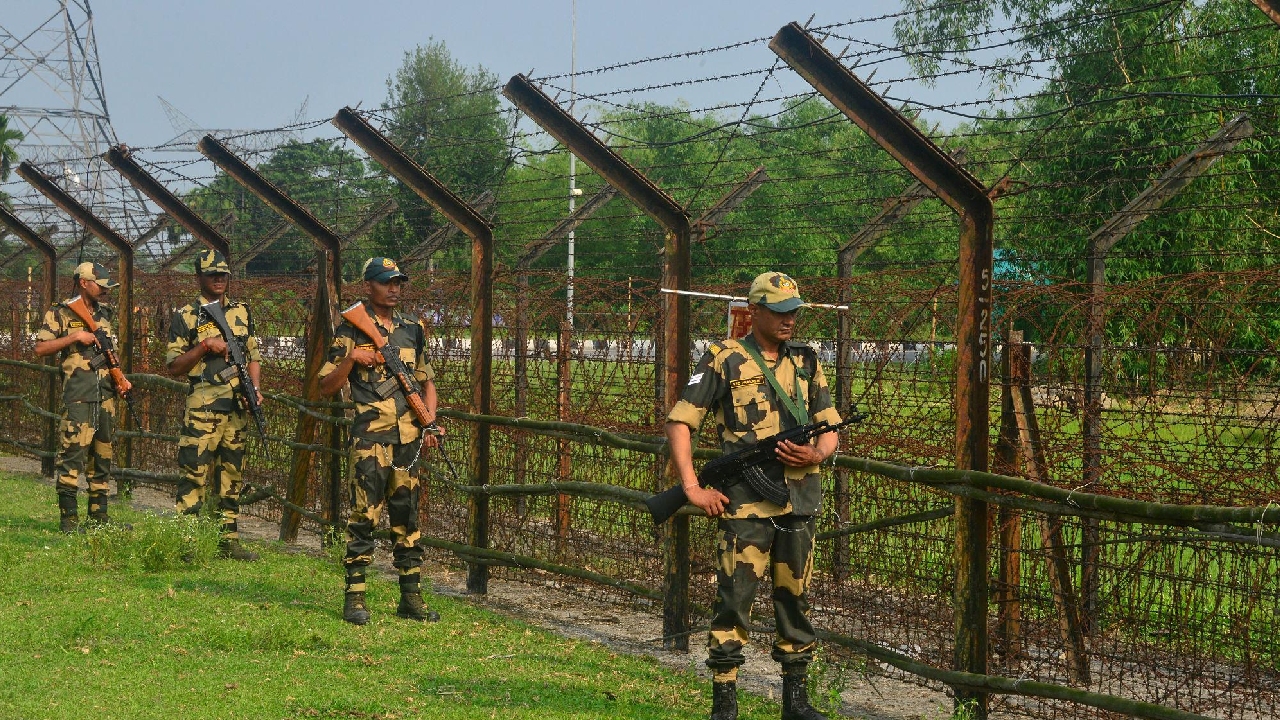
The accused allegedly bypassed the mandatory Protected Area Permit (PAP) to enter Mizoram. From there, they are believed to have crossed the porous 1,643-km border into Myanmar. A central pillar of the NIA’s case is the alleged illegal shipment of drones from Europe via India. In modern guerrilla warfare, drones function as “force multipliers”, used for surveillance and improvised explosive device (IED) delivery. Supplying such technology to Myanmar-based EAGs-many of whom share ethnic ties and logistical routes with Indian insurgent groups-creates a direct security risk for Indian forces.
Against this backdrop, the recent influx of thousands of Myanmarese nationals warrants closer examination. The arrival of Chin refugees in Mizoram has reinvigorated discourse around Zo reunification-the idea of unifying Mizo, Chin, and Kuki communities. Rooted in shared Tibeto-Burman ancestry and a common Christian identity, this movement has evolved from a fringe cultural aspiration into a central element of regional political rhetoric. Mizoram Chief Minister Lalduhoma has been particularly vocal, taking the issue to international platforms. During his 2024 visit to the United States, he called for the unification of the “Zo” people under a single administrative framework, arguing that colonial-era borders have unjustly divided a single nation. This position echoes that of his predecessor Zoramthanga, who frequently invoked the “same womb” (chhul khat chhuak) philosophy to justify extending sanctuary to Myanmar’s Chin and Manipur’s Kuki populations, often in defiance of central directives.
The narrative of a “unified Christian state” has attracted intense scrutiny, particularly regarding possible Western influence. Some analysts argue that a unified “Zo-land” could serve as a pro-Western buffer zone between India, China, and Myanmar’s military regime. Concerns have also emerged about potential extra-territorial loyalties. Allegations-though contested-suggest that Western agencies may view the Chin-Kuki-Mizo belt as a strategic foothold to counter Chinese influence in Myanmar’s Sagaing Division and the
Bay of Bengal.
The Government of India views these “Greater Mizoram” aspirations with caution, as they could challenge the territorial integrity of Manipur, Tripura, and Assam, complicating New Delhi’s Act East Policy and its delicate engagement with Myanmar’s military establishment. While the movement is rooted in genuine ethnic solidarity, its intersection with global power dynamics has turned it into a sensitive geopolitical flashpoint in Northeast India. The presence of a high-profile American “security analyst” alongside Ukrainian nationals-at a time when Ukraine remains central to global intelligence activity-raises further questions about the possible role of foreign agencies. Mercenaries like VanDyke can function as “deniable assets”, advancing the strategic interests of external powers without formal state involvement.
The involvement of Ukrainian nationals also suggests the transfer of battle-hardened expertise. With the ongoing war in Ukraine serving as a testing ground for advanced drone warfare, the potential migration of such skills to the Myanmar theatre is a significant concern for Indian agencies.
While the US Embassy has maintained a “no comment” stance, there are indications that Russian intelligence may have shared inputs with India-possibly to counter Western influence in the region and safeguard its strategic interests, including defence ties with Myanmar’s military.
The involvement of foreign nationals using advanced technology under the guise of activism or documentary filmmaking presents a complex legal and diplomatic challenge. For India, tightening border management remains a priority. Re-evaluating the Free Movement Regime (FMR) and strictly enforcing PAP and Restricted Area Permit (RAP) norms are now key focus areas.
Equally important is tracking the technological supply chain-particularly drone components entering through civilian channels-to ensure that India’s sensitive border regions do not become arenas for international proxy conflicts.
The NIA’s ongoing probe into the masterminds and funding sources behind this network will be crucial in determining whether this was an isolated operation or part of a broader, coordinated effort to reshape the geopolitics of the Bay of Bengal region.
Key facts about the Indo-Myanmar border
- The Indo-Myanmar border is 1,643 km long.
- India shares this border across four northeastern states: Arunachal Pradesh, Nagaland, Manipur, and Mizoram.
- Security challenge driven by ethno-nationalist movements, porous terrain, and geopolitical instability within Myanmar.
- These risks have increased significantly since the 2021 military coup.
- Over 64,000 people have crossed the India-Myanmar border into India seeking refuge since the February 2021 military coup.
NE: the roots of Insurgency
Insurgency in India’s Northeast has been one of the most complex internal security challenges since Independence. Rooted in issues of identity, autonomy, and ethnic assertion the region witnessed multiple armed movements across states such as Nagaland, Assam, Manipur, Tripura, and Mizoram.
Naga insurgency: The earliest and most influential of these was led by the Naga National Council, which declared independence in 1947, setting the stage for decades of conflict.
Multiple groups emerge : Over time, other groups emerged, including the Mizo National Front, the United Liberation Front of Asom, and the National Socialist Council of Nagaland, each articulating distinct political and ethnic demands.
Mizoram Peace Accord: The insurgencies were marked by cycles of violence, counter-insurgency operations, and political negotiations. The movements, led by MNF, culminated successfully in the Mizoram Peace Accord, leading to lasting peace.
The transformation: Over the past two decades, a combination of sustained security operations, peace talks, economic development initiatives, and improved connectivity has led to a marked decline in violence. Key agreements, such as the 1997 ceasefire with NSCN (IM), and Bodo accords and peace deals with various militant factions have reduced tensions in Assam.
(The author is presently the General Secretary of the think tank SHARE); views are personal