The perils of unrestrained selfhood
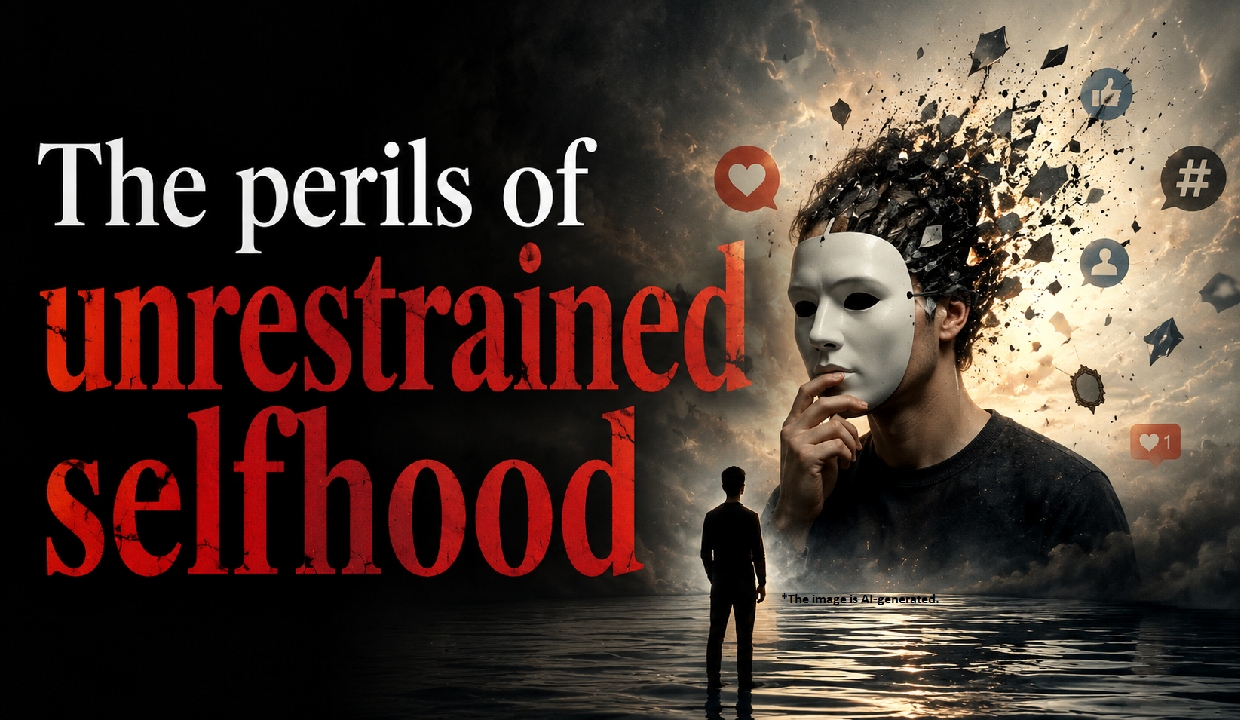
A peaceful and harmonious society is a universal aspiration, yet it cannot be sustained if individuals and groups remain narrowly self-centred. A society defined by competing interests, rather than shared purpose, loses its essential cohesion. Without a unifying sense of common good, it becomes merely a loose arrangement of communities, classes, and institutions, each seeking advantage over the other. In such a setting, when faced with a choice between collective welfare and individual gain, the latter often prevails, giving rise to conflict, division, and instability.
This tendency weakens the moral and social fabric. Pressures from ego-driven cultural, religious, ethnic, caste, and political groups intensify tensions across social, economic, and political spheres. Law and order suffer, and the collective pursuit of progress is disrupted. Though individuals may outwardly appear civilised, demonstrating manners and etiquette in daily life, their actions can be guided by narrow self-interest. In pursuit of personal or group advantage, they may adopt unfair or harmful means, often at the cost of others and, ultimately, society itself.
Everyday examples illustrate this reality. A well-connected individual may manipulate influence to secure scarce resources, bypassing those who have waited their turn. Similarly, organised groups may demand preferential treatment in exchange for political support, disregarding fairness or broader social harmony. Such actions reveal that superficial civility does not guarantee a just or stable society. True progress requires a willingness to subordinate narrow interests to the larger good.
The path forward lies in embracing values that promote collective well-being. The ancient Sanskrit ideal “Sarve bhavantu sukhina, sarve santu niramaya” — may all be happy and free from illness — offers a guiding principle for building a just society. It calls for an inclusive vision where prosperity and well-being are shared, not monopolised. Complementing this is the philosophy of “Vasudhaiva Kutumbakam”, which views the entire world as one family. This perspective encourages individuals to move beyond divisions and recognise the interconnectedness of all human lives.
Adopting these principles is not merely a moral exercise but a practical necessity. A society grounded in empathy, cooperation, and mutual respect is better equipped to ensure stability and sustainable progress. When individuals understand that their own well-being is tied to that of others, they are more likely to act with responsibility and fairness.
However, such transformation must begin at the individual level. Values like truth, non-violence, compassion, and cooperation cannot be imposed solely through institutions; they must be cultivated in daily life. Homes, schools, and workplaces play a crucial role in shaping this ethos. When these spaces become centres of ethical practice and mutual respect, they collectively contribute to a more value-based society. Ultimately, the future of Bharat — and indeed of humanity-depends on how sincerely these timeless principles are implemented. Peace and prosperity cannot be achieved through policy alone; they require a shift in mindset. By aligning personal conduct with the greater good, society can move towards genuine harmony and enduring progress. The responsibility rests with each individual, and the time to act is now.
The writer is a spiritual teacher and a popular columnist; Views presented are personal.