The Monroe Doctrine returns in the 21st century
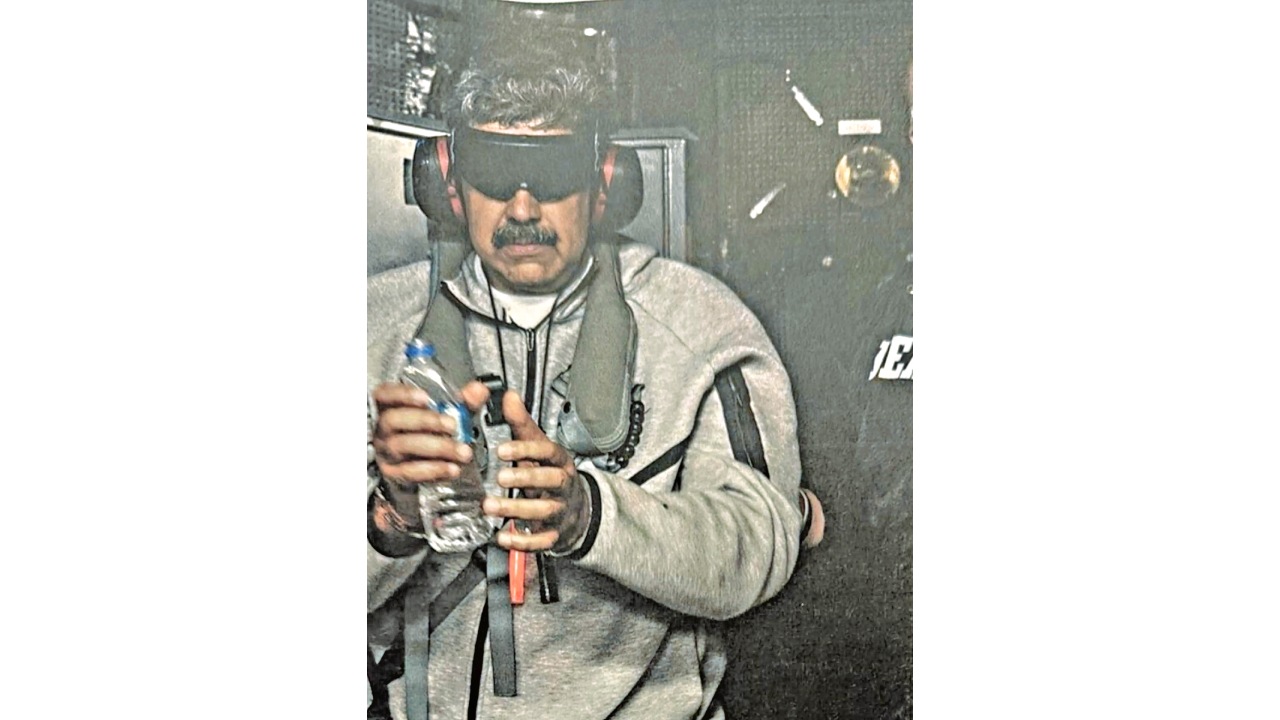
The United States’ abduction of Venezuelan President Nicolás Maduro is not entirely surprising. For months, Washington’s intent to engineer regime change in Caracas was evident, accompanied by what appeared to be one of the largest US military build-ups in the Caribbean, effectively encircling Venezuela. What unfolded overnight was a highly precise and coordinated military operation — clearly a calculated move to extract President Maduro from power. How exactly this was achieved will only become clear with time. Even Vice President Delcy Rodríguez has reportedly sought proof that they are alive.
The larger and more consequential question, however, is how the Venezuelan military reacts. Maduro’s grip on power rested almost entirely on military backing. As long as the armed forces supported his repressive regime, he remained secure — even to the extent of denying electoral victory to the genuine winner, Edmundo González, in the 2024 elections. Once Maduro is removed from the scene, Venezuelan politics will enter uncharted territory. I see no realistic possibility of the military restoring him to power, but how internal alignments evolve will determine the country’s immediate future. From India’s perspective, this episode raises serious concerns. The US appears to be reverting to an era when it acted with impunity in its South American backyard.
History offers uncomfortable parallels: the abduction of Manuel Noriega from Panama under the guise of ‘rendition,’ the invasion of Grenada, and the overthrow of Salvador Allende in Chile, followed by the installation of General Pinochet. If such unilateral actions go unchallenged, any superpower with sufficient military strength may believe it can act without restraint. This opens a Pandora’s box for international law. Where, then, is the world order? The United Nations today appears moribund, with a Security Council unable to take meaningful decisions. India, understandably, has been cautious in its response — much as it has been on Russia’s invasion of Ukraine — balancing principles with national interest. There is simply too much at stake in its relationship with the United States. Within Venezuela, the situation remains uncertain.
There is surface calm and palpable relief among those opposed to Maduro, but no clarity yet on what follows. Interestingly, President Trump appears to have ruled out Maria Corina Machado, Venezuela’s most popular opposition leader and a Nobel Peace Prize winner. Edmundo González, who reportedly won the May 2025 election, remains in exile in Spain. I met Nicolás Maduro during my tenure in Caracas, when he was foreign minister. He did not project intellectual depth, having begun his working life as a bus driver, but he was personally charming. Ultimately, though, it was the army that sustained him. If the military remains unified behind Vice President Delcy Rodríguez, events may unfold very differently from what Washington anticipates. If, however, the armed forces fracture or compromise — as is entirely possible — the Venezuelan constitution could mandate elections within 30 days.
I am also unconvinced by the US claim that Maduro was a central figure in drug trafficking into America. Colombia and Mexico bear far greater responsibility for narcotics flows, and China’s role in exporting fentanyl cannot be ignored. President Trump has accused these countries as well; whether regime change will be attempted there remains an open question. What is undeniable is that this operation signals a profound shift. The US has demonstrated its willingness to act unilaterally, reinforcing a muscular interpretation of the Monroe Doctrine. The implications — for international law, the rules-based order, and smaller states worldwide — are deeply troubling.