A life framed by conflict and service
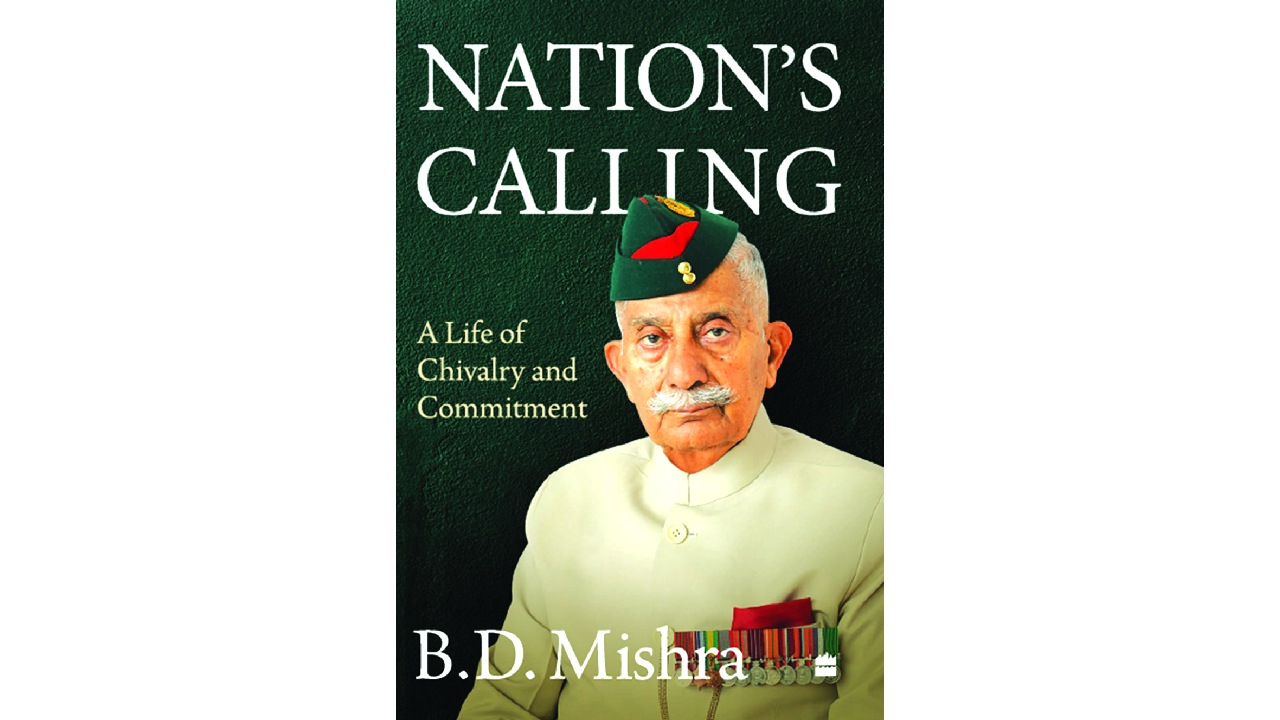
Born in Kathauta, a well-known village near Varanasi in Eastern Uttar Pradesh, in 1939, Bal Dutt Mishra was commissioned in December 1961 as a Second Lieutenant in the 18th Battalion of the Madras Regiment (18 Madras), the oldest infantry regiment in the Indian Army.
The first four of twenty-four chapters of the book dwell on scenarios of the author’s family, village, district and school days, and memories of colonial days, Partition and thereafter.
Ten months after the author got commissioned — in October 1962 — when the Chinese launched massive, coordinated assaults in Ladakh and NEFA (North-East Frontier Agency), following months of failed diplomacy and border clashes, 18 Madras began preparing for induction into that war by conducting field exercises, but did not get mobilised.
However, a chapter has been devoted to this war and its aftermath, as it exposed significant flaws in the Indian Government’s leadership and policies - political myopia, inadequate military preparedness, and diplomatic miscalculation. The Government’s flawed “Forward Policy”, which placed military outposts in disputed areas on the assumption that China would not use force, proved unsound and helped trigger the conflict. India lacked the military strength, equipment and logistics to sustain such a posture. Further, Prime Minister Jawaharlal Nehru and Defence Minister VK Krishna Menon meddled with Army leadership, leaving troops — once the best in World Wars I and II — underequipped, without adequate winter clothing or modern weapons, and ultimately facing defeat with high casualties.
The 1962 debacle was followed by a major revamp of the armed forces. Krishna Menon and Army Chief Gen PN Thapar were removed; new raisings of fighting arms units, an increase of officers by way of emergency commissions, and weapons modernisation were approved. At long last, the Army’s over six-decades-old .303 Lee Enfield bolt-action rifle got replaced by the 7.62 self-loading rifle.
In April 1965, 18 Madras moved to Jammu & Kashmir (J&K) for the second India-Pakistan war, again waged by Pakistan. The battalion fought various actions in the areas of J&K and Punjab, for which it was awarded battle and theatre honours. Prior to the 1971 India-Pakistan war, fought on two fronts - West Pakistan and erstwhile East Pakistan, which became the newly liberated nation called — the author got posted to the Eastern theatre.
As this review is being written, a great irony is being played out in Bangladesh. In early 1971, the Pakistani Army, dominated by Muslim Punjabis of West Pakistan, began an orgy of killing East Pakistan’s thousands of Bengali men and raping millions of Bengali women, till the Indian Army surrounded East Pakistan and liberated it on 16 December 1971. Fifty-four years later, in August 2024, Bangladesh’s peace and progress were shattered by the US deep state, changing the regime there and causing problems for India. Since then, with the added involvement of Pakistan, China and Turkiye, Bangladesh has been in a state of arson and anarchy.
It was a year after becoming a Brigadier that the author faced the first of two very challenging assignments. The first was moving his Brigade to Sri Lanka as part of the Indian Peace Keeping Force (IPKF) for Operation Pawan in 1987. The primary mission was to disarm Tamil militant groups, particularly the Liberation Tigers of Tamil Eelam (LTTE), and restore peace under the 1987 Indo-Sri Lanka Accord. The Indian Government’s handling of this accord and the deployment of the IPKF mission in Sri Lanka were politically deeply flawed. While the Indian Army performed creditably in adapting to an unforeseen counter-insurgency role, the overall operation is often cited as a failure due to political missteps and a lack of clear objectives. An unexpected and unwelcome development was that the LTTE turned hostile after the initial phase of the operation.
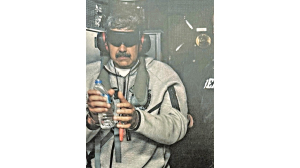
The next very challenging task for the author was in 1993, when, as Commander of the National Security Guard’s Counter Hijack Task Force, he led a successful operation to rescue the passengers and crew of the hijacked Indian Airlines Flight 427. For his leadership and bravery during this crisis, he received the Prime Minister’s appreciation.
Four years after retiring from service, in 1999, when the Indian Army reacted to the Pakistani Army’s intrusion in the Kargil area, Brig Mishra volunteered to join the Army again. While that application was not accepted, the Army Chief’s gratitude and appreciation were conveyed to him. In October 2017, the author was appointed as Governor of Arunachal Pradesh, and in October 2022, he was given additional charge as the Governor of Meghalaya. In February 2023, he was appointed as Lieutenant Governor of Ladakh, becoming the second person to hold this position after the region became a Union Territory in 2019. In July 2025, Brig Mishra resigned owing to health reasons.
Reading about the author’s time in 18 Madras was good fun for this reviewer, who coincidentally was commissioned into 19 Madras three decades after the author was commissioned, and who also had a very pleasant association with Lt Gen SL Malhotra, prominently mentioned in the book. The accounts and anecdotes covering the author’s stages of life before and during his military career, and thereafter his tenures as Governor/Lieutenant Governor, make the book interesting, informative, and one which can be enjoyed by both servicemen and civilians.
(The author is VSM (Retd), a strategic affairs analyst and former spokesperson, Defence Ministry and Indian Army); views are personal